

Tori Spelling and Stella McDermott share their journey with eczema, promoting the Free to Be Me campaign and discussing innovative treatments like roflumilast.
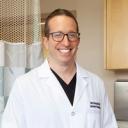
Adam Friedman, MD, FAAD is Professor and Chair of Dermatology and serves as Residency Program Director, Director of Translational Research, and Director of the Supportive Oncodermatology Program in the Department of Dermatology at The George Washington University School of Medicine & Health Sciences. Dr. Friedman completed his undergraduate training at the University of Pennsylvania and graduated with Distinction in Dermatologic Research at the Albert Einstein College of Medicine in New York. He completed his internship at New York Hospital Queens, and returned to Einstein for his Dermatology residency and was appointed Chief Resident during his final year. Dr. Friedman joined the Einstein faculty after graduation from 2010-2015, during which time he was the Director of Dermatologic Research, Director of the Translational Research Fellowship, and the Associate Program Director.
Tori Spelling and Stella McDermott share their journey with eczema, promoting the Free to Be Me campaign and discussing innovative treatments like roflumilast.

A panelist discusses how mechanistic insights and head-to-head data are reshaping systemic therapy development, trial design, and personalized treatment strategies.

Renata Block, DMSc, MMS, PA-C, interviews Adam Friedman, MD, FAAD, about his research into cannabidiol’s photoprotective potential, clinical trial design, and future directions.

Adam Friedman, MD, shares tips for recognizing and addressing tinea at the DERM 2025 conference.

DERM 2025 featured tips and tricks for a thorough pruritus diagnosis and treatment strategy from Adam Friedman, MD.
Adam Friedman, MD, FAAD, outlines a stepwise approach to treating chronic hand eczema, from vehicle selection to systemic therapies and future innovations.
Adam Friedman, MD, FAAD, breaks down how to differentiate chronic hand eczema from similar conditions using history, morphology, and key clinical clues.

Renata Block, DMSc, MMS, PA-C, speaks with Adam Friedman, MD, FAAD, on innovative teledermatology initiatives in Washington, DC, addressing health care disparities and enhancing community access.

In part 3 of this conversation, Adam Friedman, MD, FAAD, discusses the need for unity in advancing lichen planus care and research.
In part 2 of this conversation, Adam Friedman, MD, FAAD, discusses new data on lichen planus treatment trends, unmet needs, and the promise of innovative therapies.
Friedman discusses survey findings revealing inconsistent screening, outdated assumptions, and lack of FDA-approved therapies for lichen planus.

Along with his session insights on diet and chronic spontaneous urticaria, Friedman shares tips for navigating the largest dermatology conference in the US.

The top videos under the hashtag, #spironolactone” had low scores on the mDISCERN and GQS scales, according to Adam Friedman, MD, FAAD, senior author of the study.
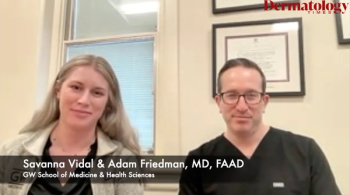
George Washington University recently earned a Skin Smart Campus designation, championing skin cancer prevention through education, free sunscreen, and UV safety measures.
Personalized care is key to managing hyperhidrosis, blending therapies, addressing adverse effects, and empowering patients with tailored solutions.
Adam Friedman, MD, FAAD, takes a closer look at the emerging landscape of oral treatments for hyperhidrosis and what lies ahead in advancing patient care.
In addition to recapping key highlights from his session, Friedman discusses what is new or upcoming in dermatology that most excites him.

Grant applications are open from now until August 24, 2023, with an anticipated project start/end date of January 2024 through July 2025.