

Opinion|Videos|July 21, 2026
Assessing Disease Burden and Transitioning to Advanced Therapy in CSU
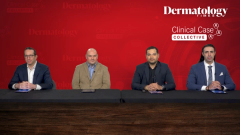
The panel explores how to assess the full impact of CSU when the skin looks normal, and how to approach the transition to advanced targeted therapy.
Advertisement
Episodes in this series
Dr. Chovatiya asks the panel how to assess disease burden in a patient who appears completely normal on exam—a common challenge in a visual specialty like dermatology. Dr. Cotter acknowledges the tension and describes his approach: he leads with a simple, open-ended question—"What is your disease preventing you from doing?"—which usually yields more clinically meaningful information than any formal score. Most patients describe their burden readily. He may supplement with structured patient-reported outcome tools like the DLQI (Dermatology Life Quality Index) in more complex cases, but emphasizes that the history is the anchor. In an older male patient like this one, he also screens for autoinflammatory syndromes or hematologic conditions—asking about fevers, night sweats, and lymphadenopathy—before pivoting to discussion of advanced therapy.
Dr. Friedman addresses the oral therapy landscape directly, since this patient has expressed a clear preference. He begins with a categorical rejection of oral corticosteroids: even short courses frequently cause rebound, creating a cycle of temporary improvement followed by worsening, and the guidelines explicitly advise against their use in CSU. He then reviews off-label oral options historically used in refractory CSU—including cyclosporine (fast-acting but limited to short courses of around six months), mycophenolate mofetil (slower but effective), and other agents such as dapsone, colchicine, and hydroxychloroquine—all with modest and variable levels of evidence.
He then transitions to the first FDA-approved oral option for CSU: a BTK inhibitor, remibrutinib, which brings a new level of confidence because FDA approval requires a demonstrable standard of evidence. He notes that a subset of patients on this oral therapy respond remarkably quickly—in some cases within days of starting twice-daily dosing—a meaningful feature for a patient whose disease is "running and ruining" his life. He adds a note of caution against overpromising speed of response: if a patient expects to feel better overnight and doesn't, it can jeopardize adherence even if the drug is ultimately working.
In the next episode, "Remibrutinib in CSU: Mechanism of Action and Clinical Trial Evidence," Dr. Hawkes provides a detailed breakdown of how a BTK inhibitor works in CSU and reviews key findings from the pivotal clinical trials.
Advertisement
Related Content
Latest CME


Advertisement
Advertisement
Trending on Dermatology Times
1
FDA Grants Priority Review to Zasocitinib for Moderate-to-Severe Plaque Psoriasis
2
How Emerging Androgenetic Alopecia Therapies Target DHT at the Scalp Level
3
FDA Approves Ameluz Red Light PDT for Superficial Basal Cell Carcinoma
4
Tildrakizumab Partially Reverses Epigenetic Aging in Psoriasis, Pilot Study Shows
5