

News|Articles|September 14, 2026
FDA Approves Ameluz Red Light PDT for Superficial Basal Cell Carcinoma
Author(s)Shannon Heaning, Content Associate
Listen
0:00 / 0:00
Key Takeaways
- Regulatory clearance establishes a rigorously evaluated, office-deliverable, nonsurgical option for appropriate sBCC cases, including multifocal disease or cosmetically/tissue-sensitive sites.
- Phase 3 data showed 66% composite clinical/histologic complete response with Ameluz-PDT versus 5% with placebo-PDT at 12 weeks after the final cycle.
The expanded indication makes Ameluz with RhodoLED the first FDA-approved photodynamic therapy for the treatment of a skin cancer.
Advertisement
The US Food and Drug Administration (FDA) has approved Ameluz (aminolevulinic acid hydrochloride) topical gel, 10%, in combination with photodynamic therapy (PDT) using the BF-RhodoLED lamp series for the treatment of superficial basal cell carcinoma (sBCC) in adults.1,2
The approval of Biofrontera’s
“For many patients with superficial basal cell carcinoma — those with multiple lesions, lesions in cosmetically sensitive locations, or for whom surgery would not be preferred — treatment options have been limited,” M. Shane Chapman, MD, MBA, a board-certified dermatologist and professor and founding chair of the Department of Dermatology at Dartmouth Hitchcock Medical Center and the Dartmouth Geisel School of Medicine, said in the announcement.1
I see this as a meaningful expansion in the use of this treatment — M. Shane Chapman, MD, MBA
“This FDA approval for Ameluz and the RhodoLED gives us a rigorously studied, non-surgical option that we can deliver in our office,” Chapman continued. “As someone who has worked with PDT for many years, I see this as a meaningful expansion in the use of this treatment.”1
Phase 3 Trial Supports Approval
The approval was supported by a multicenter, randomized, double-blind, vehicle-controlled phase 3 trial involving 187 adults with histologically confirmed sBCC.1
The study’s primary end point was a composite of clinical and histological complete response of a main target lesion 12 weeks after initiation of the final PDT cycle.1
Among
Histological clearance of the main target lesion was observed in 76% of patients treated with Ameluz PDT compared with 19% of those receiving placebo-PDT. Additionally, 83% of Ameluz-treated patients achieved complete clinical clearance of all target lesions compared with 21% of patients receiving placebo-PDT.1
The most common adverse reactions were
Expanding Nonsurgical Options for sBCC
BCC is the most common form of skin cancer in the United States, with approximately 3.6 million cases diagnosed annually. Superficial BCC is estimated to account for approximately 15% to 20% of BCC cases.1,3
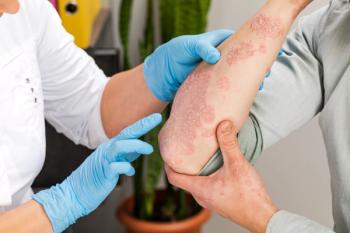
Unlike other BCC subtypes, sBCC commonly presents as erythematous, scaly patches or plaques and may occur as multiple lesions. Lesions are frequently found on the trunk and extremities, creating circumstances in which tissue-sparing approaches may be considered.1
The newly approved indication provides dermatologists with another nonsurgical approach for appropriate adult patients with sBCC, including those with multiple lesions or lesions in locations where minimizing tissue removal may be a consideration.
Ameluz Moves From Precancerous Lesions to Skin Cancer
Prior to the sBCC label expansion, Ameluz PDT was used in the US for the treatment of AK, a precancerous skin condition. The latest approval expands the platform from the treatment of precancerous lesions to an FDA-approved skin cancer indication.1,2
“FDA approval of Ameluz for superficial basal cell carcinoma is a defining milestone for Biofrontera,” Hermann Luebbert, CEO and chairman of
Biofrontera plans to officially launch the sBCC indication between late in the fourth quarter of 2026 and the first quarter of 2027. The new indication uses the same Ameluz topical product and red-light device used for the therapy’s existing AK indication.1
References
- Biofrontera Inc. Biofrontera announces FDA approval of Ameluz red light PDT for the treatment of superficial basal cell carcinoma. Published September 14, 2026. Accessed September 14, 2026.
Biofrontera announces FDA approval of Ameluz red light - Ameluz (aminolevulinic acid hydrochloride) topical gel. Prescribing information. US Food and Drug Administration. Revised 2026. Accessed September 14, 2026.
https://www.accessdata.fda.gov/drugsatfda_docs/label/2026/208081s040lbl.pdf - Scrivener Y, Grosshans E, Cribier B. Variations of basal cell carcinomas according to gender, age, location and histopathological subtype. Br J Dermatol. 2002;147(1):41-47.
https://pubmed.ncbi.nlm.nih.gov/12100183/
Advertisement
Related Content
Advertisement
Advertisement
Advertisement
Trending on Dermatology Times
1
How Emerging Androgenetic Alopecia Therapies Target DHT at the Scalp Level
2
Tildrakizumab Partially Reverses Epigenetic Aging in Psoriasis, Pilot Study Shows
3
FDA Grants Priority Review to Zasocitinib for Moderate-to-Severe Plaque Psoriasis
4
Merz Expands BELOTERO Portfolio With Two New FDA-Approved Hyaluronic Acid Fillers
5