

Opinion|Videos|July 28, 2026
Remibrutinib in CSU: Mechanism of Action and Clinical Trial Evidence
The panel provides a detailed breakdown of how a BTK inhibitor works in CSU and reviews key findings from the pivotal clinical trials
Advertisement
Episodes in this series
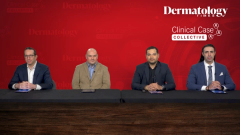
Dr. Chovatiya asks Dr. Hawkes to explain the mechanism of action of a BTK inhibitor and how it fits the underlying biology of CSU. Dr. Hawkes begins by reorienting the audience away from the T-cell-centric framework used for psoriasis and atopic dermatitis: in CSU, the central player is the mast cell. Mast cells contain preformed granules packed with histamine and other mediators; when activated, they degranulate and drive the wheal, flare, and swelling responses that define CSU.
A BTK (Bruton's tyrosine kinase) inhibitor is a small molecule that enters the mast cell and blocks the intracellular BTK signaling pathway. This is significant because both the high-affinity IgE receptor (central to Type 1, autoallergic CSU) and the low-affinity IgE receptor converge through this pathway. Similarly, IgG-mediated autoantibody signaling (central to Type 2B CSU) also passes through BTK. This means a BTK inhibitor can simultaneously disrupt both major pathophysiologic mechanisms driving mast cell activation in CSU. Additionally, BTK is expressed in basophils, B cells, and platelets, which may account for broader immunomodulatory effects beyond mast cell inhibition—including a potential reduction in autoantibody burden, which is particularly relevant in patients with comorbid autoimmune conditions.
Regarding clinical trial evidence, Dr. Hawkes highlights that the pivotal phase 3 trials of remibrutinib (Remix 1 and Remix 2) confirmed what the mechanism predicted: rapid onset of action. Approximately half of patients showed a meaningful response within the first month, with the drug reaching close to its full effect very quickly and then plateauing. He describes cases of patients with 10 to 15 years of disease reporting dramatic improvement within days of starting treatment. The drug demonstrated efficacy in patients with wheals only and in those with wheals plus angioedema, and it worked regardless of baseline IgE levels—high or low. The tolerability profile was favorable, with the main signal being mild mucocutaneous events such as petechiae or minor bruising, which most patients do not notice and which do not represent true bleeding events or hematologic compromise.
In the next episode, "Shared Decision-Making in CSU: Choosing Among Oral and Injectable Advanced Therapies," the panel discusses how to navigate treatment selection when patients have preferences and how to compare the available advanced therapies.
Dr. Chovatiya asks the panel how to assess disease burden in a patient who appears completely normal on exam—a common challenge in a visual specialty like dermatology. Dr. Cotter acknowledges the tension and describes his approach: he leads with a simple, open-ended question—"What is your disease preventing you from doing?"—which usually yields more clinically meaningful information than any formal score. Most patients describe their burden readily. He may supplement with structured patient-reported outcome tools like the DLQI (Dermatology Life Quality Index) in more complex cases, but emphasizes that the history is the anchor. In an older male patient like this one, he also screens for autoinflammatory syndromes or hematologic conditions—asking about fevers, night sweats, and lymphadenopathy—before pivoting to discussion of advanced therapy.
Advertisement
Related Content
Latest CME


Advertisement
Advertisement
Trending on Dermatology Times
1
FDA Grants Priority Review to Zasocitinib for Moderate-to-Severe Plaque Psoriasis
2
How Emerging Androgenetic Alopecia Therapies Target DHT at the Scalp Level
3
FDA Approves Ameluz Red Light PDT for Superficial Basal Cell Carcinoma
4
Tildrakizumab Partially Reverses Epigenetic Aging in Psoriasis, Pilot Study Shows
5