

Opinion|Videos|July 14, 2026
Stepping Up Treatment: Antihistamines, Guidelines, and When to Escalate in CSU
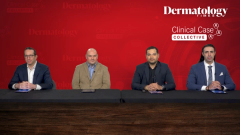
The panel turns to treatment strategy—discussing appropriate antihistamine use, dose escalation, and when to move to advanced therapies.
Advertisement
Episodes in this series
Dr. Chovatiya focuses the conversation on treatment, starting with the antihistamine approach for Case 1. Dr. Cotter explains that the patient has effectively already failed first-line therapy—standard-dose over-the-counter antihistamines—without having followed the guideline-recommended step of escalating to four times the normal dose of a single second-generation H1 antihistamine. He favors fexofenadine 180 mg for its efficacy and low sedation profile. Rather than forcing patients through another month of antihistamine escalation, he first elicits a detailed history of how they tolerated previous doses: did they experience dry mouth, drowsiness, or other side effects? If so, he uses that as the clinical rationale to escalate to advanced therapy more quickly.
For an antihistamine-naive patient, his typical approach is a four-week ramp: one tablet daily in week one, increasing to twice daily, three times daily, and then four times daily. He sets an expectation that if the patient cannot tolerate higher doses at any point, they should contact his office so he can move directly to the next step. For patients like this one who have tried but not strictly followed the escalation protocol, he offers them a choice: complete a structured antihistamine trial, or move forward to advanced therapy. In his experience, about half choose one and half choose the other.
Dr. Friedman highlights what makes CSU unique in the treatment timeline: if antihistamines are going to work, they work quickly. This is different from many other dermatologic conditions where biologics may take months to reach peak effect. He recommends a virtual check-in at one to two weeks to assess response, then dose escalation from double to triple to quadruple over about three weeks. By the three-to-four-week mark, it should be clear whether the patient is antihistamine-responsive. He also draws attention to the 2026 guidelines, which now place three FDA-approved advanced therapies side by side with antihistamines and explicitly discourage waiting three months before escalating care.
In the next episode, "Dermatology vs. Allergy: Defining Specialty Roles in CSU Management," the panel addresses the role of allergy and immunology in CSU care and argues for a collaborative, access-focused approach between specialties.
Advertisement
Related Content


Latest CME


Advertisement
Advertisement
Trending on Dermatology Times
1
FDA Grants Priority Review to Zasocitinib for Moderate-to-Severe Plaque Psoriasis
2
How Emerging Androgenetic Alopecia Therapies Target DHT at the Scalp Level
3
FDA Approves Ameluz Red Light PDT for Superficial Basal Cell Carcinoma
4
Tildrakizumab Partially Reverses Epigenetic Aging in Psoriasis, Pilot Study Shows
5