

Opinion|Videos|July 7, 2026
Diagnostic Workup and Ruling Out Mimickers in CSU
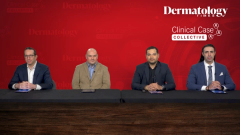
The panel examines how to distinguish CSU from other urticaria subtypes, how to approach angioedema, and how limited—or expansive—the diagnostic workup should be.
Advertisement
Episodes in this series
Dr. Chovatiya invites the panel to discuss what clinicians should do when a patient doesn't volunteer a complete history and how to round out the diagnostic workup. Dr. Cotter shares practical tips for redirecting verbose patients: asking specifically how many weeks or months the "spells" of hives have been occurring, then asking how long each individual lesion lasts (under 24 hours), whether it leaves a mark, whether it hurts or burns, and whether the patient has fevers or joint pain—to screen for autoinflammatory syndromes. He also offers a patient-friendly reframe, calling it "chronic spontaneous urticaria" rather than "idiopathic" because the word "spontaneous" communicates that there is no known trigger to chase. He notes that he has not personally seen acute urticaria persist beyond six weeks.
Dr. Hawkes addresses angioedema directly, clarifying that the fear around it largely stems from its association with anaphylaxis—but these are fundamentally different presentations. Angioedema in CSU is subtler: patients may describe a hand feeling warm, rings feeling tighter, or a tongue feeling slightly odd. True anaphylaxis has a much more acute, dramatic course. He offers a useful clinical rule: hives with angioedema means managing as CSU; angioedema without hives raises red flags for ACE inhibitor-induced disease, acquired angioedema, or hereditary angioedema, requiring a different workup.
Dr. Tarbox describes her workup philosophy as guided by the clinical picture. In a classic CSU presentation, the history and physical are the workup. She may review a CBC or inflammatory markers like CRP or ESR if already available, but she does not order broad food panels, environmental allergy batteries, or extensive autoimmune panels unless red flags are present—such as lesions lasting more than 24 hours, painful or bruising hives, or systemic features like recurrent fevers, bone pain, or joint symptoms. Mild elevations in inflammatory markers can be part of CSU itself and should be interpreted conservatively unless accompanied by other concerning findings. She reserves more extensive workup for presentations that suggest something beyond CSU, emphasizing that the priority should always be getting the patient into effective treatment.
In the next episode, "CSU vs. Inducible Urticaria: Distinguishing Spontaneous from Triggered Disease," the panel explores how to differentiate CSU from chronic inducible urticaria and acute urticaria, including the potential for overlap between subtypes.
Advertisement
Related to this article
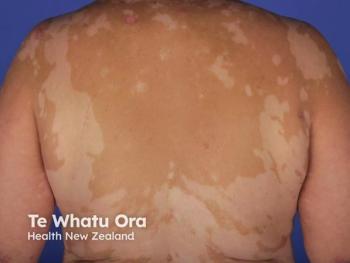
The FDA clearance allows Edesa to expand an ongoing placebo-controlled study of the CXCL10 antibody EB06 to US sites, with topline data expected in the fourth quarter of 2027.

The novel oral helicase-primase inhibitor demonstrated significantly higher rates of complete lesion healing compared with investigator’s choice treatment in the phase 3 PRIOH-1 trial.
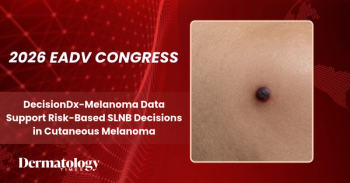
Prospective data suggest DecisionDx-Melanoma may help refine SLNB decisions and identify recurrence risk beyond conventional staging.

Falk G. Bechara, MD, discusses long-term tunnel control, structural damage, and the evolving role of biologics and surgery in HS care.
Galderma has agreed to acquire ZO Skin Health for $1.5 billion, adding the physician-dispensed skincare brand to a portfolio that already includes Cetaphil and Alastin.

New dermatology research explores hidden steroids in OTC products, infant eczema, melanoma prevention, cutaneous lymphoma, and pediatric AD.

SYX-5219 improved disease severity and itch in a Phase 1b trial of adults with moderate to severe atopic dermatitis.

In a survey of 301 employed adults, overall work impairment attributable to CHE was 31.8%, and quality of life worsened in step with self-reported disease severity.
Advertisement
Advertisement
Trending on Dermatology Times
1
FDA Approves Pritelivir for Refractory Mucocutaneous HSV in Immunocompromised Adults
2
GLP-1 Agonists Address Metabolic Risk in Psoriatic Disease
3
EB06 Phase 2 Vitiligo Study Receives FDA IND Clearance
4
EADV 2026 Atopic Dermatitis Highlights: Tilrekimig, RAC2 Inhibition, and Level Up Data
5