A retrospective claims analysis of 2897 matched pairs found hazard ratios of 0.48 to 0.67 for new atopic disease with dupilumab vs systemic corticosteroids in children.
Omar Noor, MD, shares pearls on type 2 inflammation, including dupilumab insights for atopic dermatitis, prurigo nodularis, and CSU at Horizons in Advanced Practice.
Dermatology Times recently concluded its second annual
During the first half of breakout sessions, Omar Noor, MD, FAAD, dermatologist and co-owner of Rao Dermatology in New York, New York, and a Dermatology Times editorial advisory board member, presented patient cases related to type 2 inflammation and available treatment options.
“When you see that patient with [AD], you look at them from a broader perspective to say, ‘Yes, I see your eczema, but we know this systemic component of this eczema is actually being driven by type 2 inflammation,’” Noor said.
Noor kicked off his first breakout session by presenting 3 patient cases: moderate to severe AD, prurigo nodularis (PN), and chronic spontaneous urticaria (CSU).
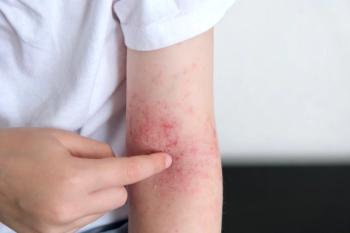
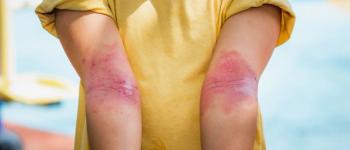
A 10-year-old boy with long-standing moderate to severe AD involving approximately 15% body surface area presents with persistent flexural and facial disease, severe pruritus, sleep disruption, and psychosocial impact. He has comorbid allergic rhinitis, mild asthma, and a strong atopic family history. Prior topical therapies and cyclosporine failed to provide adequate control. After shared decision-making, weight-based dupilumab (Dupixent; Sanofi and Regeneron) every 4 weeks was initiated, with follow-up planned to assess clinical and quality-of-life outcomes.
Noor then highlighted post hoc data from the phase 3 LIBERTY AD PEDS trial (
“What if I told you that the new data show that patients with moderate to severe [AD] are shorter than patients without, and [that] if you go on dupilumab between 6 and 11 years old, you can grow 5% taller?” Noor said about the long-term findings.1
Regarding fear of injections among young children, one attendee said: “The conversation I’ve had with a mom is, ‘He’s going to have 15 seconds of being uncomfortable. He can do 15 seconds. And then that means him not waking up with blood under his nails from itching.’”
A 54-year-old woman with a 3-year history of PN presents with intensely pruritic nodules on the extremities and upper back, complicated by sleep disruption, scarring, and psychosocial distress. Comorbidities include hypertension, hyperlipidemia, obesity, allergic rhinitis, and mild asthma. Prior topical and systemic therapies provided limited benefit. Given her refractory disease and severe chronic pruritus, dupilumab was initiated at a 600-mg loading dose followed by 300 mg every 2 weeks.
Noor explained that although both dupilumab and nemolizumab (Nemluvio; Galderma) are effective for PN, the choice of treatment often depends on the patient’s broader inflammatory profile. If the patient has overlapping type 2 features (asthma/AD), dupilumab is preferred; if they have isolated PN or are needle phobic (requiring fewer injections), nemolizumab is preferred.
“If they have more type 2 inflammation, like [AD] and rhinitis, I go more with [dupilumab] because it helps treat the whole picture. [But] if it’s just [PN], I consider [nemolizumab],” an attendee said.
A 46-year-old man presents with a 9-month history of CSU characterized by daily hives and recurrent angioedema involving the lips and periorbital region, with severe pruritus and sleep disruption. Lesions resolve within hours but recur daily without identifiable triggers. His history includes allergic rhinitis, childhood eczema, and controlled hypertension. Despite high-dose second-generation H1 antihistamines, intermittent corticosteroids, and omalizumab therapy, he continues to experience persistent breakthrough symptoms without adequate disease control.
Noor reviewed data from the phase 3 LIBERTY-CSU CUPID trial (
Shared pathway targeting: Recognizing overlapping inflammatory pathways across AD, PN, CSU, and asthma supports selecting therapies that address multiple comorbid conditions.
Tailored biologic choice: Biologic selection should align with disease phenotype, favoring dupilumab for type 2 comorbidities and nemolizumab for isolated PN or patients preferring less frequent dosing.
Evolving CSU care: Targeted biologics are shifting CSU management into dermatology, moving beyond antihistamine-only strategies.
Steroid-sparing comorbidity care: In patients with steroid sensitivity or cardiometabolic risk, type 2–directed therapies offer safer, long-term disease control.
1. Cork MJ, Thaçi D, Eichenfield LF, et al. Dupilumab safety and efficacy in a phase III open-label extension trial in children 6-11 years of age with severe atopic dermatitis. Dermatol Ther (Heidelb). 2023;13(11):2697-2719. doi:10.1007/s13555-023-01016-9
2. Maurer M, Casale TB, Saini SS, et al. Dupilumab in patients with chronic spontaneous urticaria (LIBERTY-CSU CUPID): two randomized, double-blind, placebo-controlled, phase 3 trials. J Allergy Clin Immunol. 2024;154(1):184-194. doi:10.1016/j.jaci.2024.01.028
3. Metz M, Giménez-Arnau A, Hide M, et al; REMIX-1 and REMIX-2 Investigators. Remibrutinib in chronic spontaneous urticaria. N Engl J Med. 2025;392(10):984-994. doi:10.1056/NEJMoa2408792
8 months ago
Topical JAK Inhibition for Chronic Hand Eczema