Christophe Piketty discusses 3-year ARCADIA data demonstrating sustained efficacy and long-term safety of nemolizumab in atopic dermatitis.
Douglas DiRuggiero, DMSc, MHS, PA-C, reviewed clinical cases highlighting the distinct roles of topical ruxolitinib, tapinarof, and roflumilast in managing itch, inflammation, and long-term disease control in atopic dermatitis.
Dermatology Times recently concluded its second annual
During the second half of breakout sessions, Douglas DiRuggiero, DMSc, MHS, PA-C, a board-certified physician assistant at the Skin Cancer & Cosmetic Dermatology Center in Rome, Georgia, reviewed patient cases and clinical trial data supporting topical ruxolitinib (Opzelura; Incyte), tapinarof (Vtama; Organon), and roflumilast (Zoryve; Arcutis Biotherapeutics), emphasizing their distinct roles in itch control, barrier support, and long-term disease management.
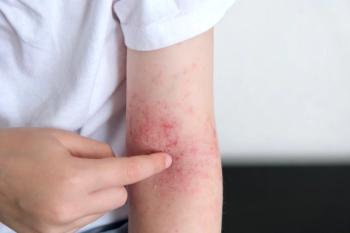
A 14-year-old adolescent boy with long-standing AD presents with flexural eczematous plaques involving the elbows and knees, with intermittent facial and neck flares. Disease burden is driven by daily pruritus, exacerbated by heat, sweating, and evening hours. Prior management included intermittent topical corticosteroids, limited by parental steroid concerns, and topical tacrolimus (Protopic; Astellas), limited by intolerance. Given localized but symptomatic disease and adherence challenges, once-daily tapinarof cream 1% was initiated as a nonsteroidal treatment option.
Tapinarof cream 1% works uniquely through its aryl hydrocarbon receptor–mediated effects on inflammation and barrier restoration. In the phase 3 ADORING 1 (NCT07265479) and ADORING 2 (NCT05032859) trials, tapinarof demonstrated significant EASI 75 (≥ 75% improvement from baseline in Eczema Area and Severity Index) responses at week 8, including in pediatric patients and those with moderate disease. Long-term extension data from the phase 3 ADORING 3 trial (NCT05014568) showed durable disease control, with mean treatment-free intervals of approximately 75 to 80 consecutive days after achieving clear or almost clear skin.1
These findings support a proactive, intermittent treatment strategy that may resonate with patients concerned about continuous topical use, DiRuggiero said.
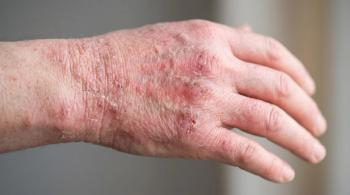
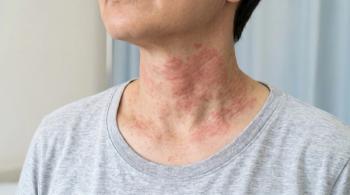
A 45-year-old man with long-standing AD presents with eczematous involvement of approximately 10% body surface area (BSA), predominantly affecting the neck and arms, accompanied by severe pruritus disrupting sleep and work productivity. Despite prior partial AD control with midpotency topical corticosteroids and subsequent tacrolimus, disease activity has progressed over the past year. Because of the patient’s reluctance to initiate injectable systemic therapy, ruxolitinib cream was started twice daily as an alternative nonsteroidal option for persistent, symptomatic disease.
Topical ruxolitinib, a Janus kinase 1 (JAK1)/JAK2 inhibitor, demonstrates rapid antipruritic efficacy, with phase 3 studies showing significant itch reduction within minutes to hours and higher rates of a Numeric Rating Scale itch score of 0 or 1 vs the vehicle. Pediatric data from the phase 3 TRuE-AD3 trial (NCT04921969) further support its use in children aged 2 to 11 years with mild to moderate AD, with Investigator Global Assessment treatment success observed across both concentration arms, including a population with nearly half having skin of color.2
A 3-year-old African American boy with AD diagnosed in infancy presents with approximately 20% BSA involvement affecting the face, arms, and legs. The disease is characterized by persistent xerosis and severe nocturnal pruritus with frequent scratching. Prior management included over-the-counter emollients, limited by application discomfort, and intermittent low-potency topical corticosteroids with rapid relapse after discontinuation. DiRuggiero noted that the case reflects moderate pediatric AD with ongoing symptom burden and challenges related to tolerability and sustained disease control.
Roflumilast cream 0.05%, a topical PDE4 inhibitor, has expanded the treatment options for very young patients. In the phase 3 Integument-PED trial (NCT04845620), children aged 2 to 5 years with mild to moderate AD achieved meaningful improvements in disease severity after 4 weeks of once-daily treatment, with favorable tolerability across a diverse patient population.3
“I usually treat until clear, and I’ll have [the patient] go off of it and tell them to start using it again if they flare. I have one patient who was clear within a month and has stayed clear for 5 months,” one attendee said, regarding roflumilast cream.
DiRuggiero emphasized that selecting among these agents should be guided by patient age, disease distribution, itch severity, caregiver preferences, and long-term management goals. Together, these data reinforce the growing role of nonsteroidal topicals as more than steroid alternatives—they are increasingly central to individualized AD care.
References
1. Bissonnette R, Stein Gold L, Kircik L, et al. Skin clearance, duration of treatment-free interval, and safety of tapinarof cream 1% once daily: results from ADORING 3, a 48-week phase 3 open-label extension trial in adults and children down to 2 years of age with atopic dermatitis. J Am Acad Dermatol. 2025;93(3):707-714. doi:10.1016/j.jaad.2025.05.1391
2. Eichenfield LF, Stein Gold LF, Simpson EL, et al. Efficacy and safety of ruxolitinib cream in children aged 2 to 11 years with atopic dermatitis: results from TRuE-AD3, a phase 3, randomized double-blind study. J Am Acad Dermatol. 2025;93(3):689-698. doi:10.1016/j.jaad.2025.05.1385
3. Eichenfield LF, Serrao R, Prajapati VH, et al. Efficacy and safety of once-daily roflumilast cream 0.05% in pediatric patients aged 2-5 years with mild-to-moderate atopic dermatitis (INTEGUMENT-PED): a phase 3 randomized controlled trial. Pediatr Dermatol. 2025;42(2):296-304. doi:10.1111/pde.15840
7 months ago
Topical JAK Inhibition for Chronic Hand Eczema7 months ago
Treatment Considerations for Type 2 Inflammation