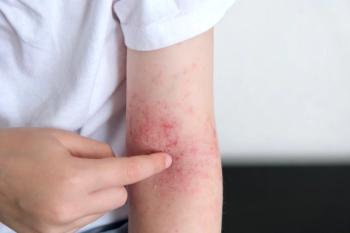
In a survey of 301 employed adults, overall work impairment attributable to CHE was 31.8%, and quality of life worsened in step with self-reported disease severity.
Lakshi Aldredge, MSN, ANP-BC, DCNP, FAANP, highlighted that CHE is often mischaracterized and frequently involves overlapping subtypes.
Dermatology Times recently concluded its second annual
During the first half of breakout sessions, Lakshi Aldredge, MSN, ANP-BC, DCNP, FAANP, a dermatology nurse practitioner at the Veterans Affairs Portland Health Care System in Oregon, presented evolving strategies for recognizing disease heterogeneity, assessing severity, and integrating newer nonsteroidal therapies into long-term management.
CHE is defined by persistence—disease lasting longer than 3 months or relapsing at least twice annually—and commonly presents with pain and itch that directly interfere with occupational function. More than half of patients exhibit overlapping etiologic or morphologic subtypes, including irritant and allergic contact dermatitis, hyperkeratotic eczema, vesicular disease, and protein contact dermatitis. Aldredge emphasized that this clinical overlap reflects underlying immune heterogeneity, with contributions from helper T cell subtypes TH2/TH22 and TH1/TH17 pathways, depending on subtype and exposure, which complicates both diagnosis and treatment selection.
Because accurate severity assessment is critical for escalation decisions, Aldredge reviewed use of the Investigator’s Global Assessment of Chronic Hand Eczema (IGA-CHE), which captures both inflammatory features (erythema, scaling, hyperkeratosis) and structural damage (vesiculation, edema, fissuring). Pathophysiologically, multiple cytokines implicated in CHE signal through the JAK-STAT pathway, providing a mechanistic rationale for topical Janus kinase (JAK) inhibition across subtypes.
“When I think about the JAK‑STAT pathway, I really think about a key fitting into a lock.... If we can stop this signaling from happening, that lock doesn’t turn and the key doesn’t work,” Aldredge said.
Aldredge also reviewed phase 3 DELTA 1 (
“My husband has really bad hand eczema.... Nothing had worked. [Delgocitinib] actually worked in a week,” said one attendee.
Importantly, symptom relief paralleled skin clearance. Patients reported rapid and clinically meaningful reductions in itch and pain, with significantly more patients achieving at least a 4-point improvement on the Hand Eczema Symptom Diary as early as week 2 for itch and week 4 for pain, sustained through week 16. Exploratory analyses suggested benefit across CHE subtypes, and long-term extension data demonstrated maintained responses with as-needed use through 36 weeks.1
“What I tell patients is after 2 weeks of using delgocitinib, they’re going to have significant improvement, but after that, the improvement is going to continue to get better,” Aldredge said.
Notably, many attendees discussed their approach to explaining long-term use with patients, citing conversations surrounding continued use of delgocitinib, even if patients have achieved clear skin, to keep flares at bay.
Despite strong clinical data, insurance access to delgocitinib remains a practical challenge. As Aldredge discussed, Medicare patients are often caught in an income paradox, earning too much to qualify for assistance programs while facing high out-of-pocket costs. Prior authorization requirements place a significant administrative burden on dermatology practices, with payers frequently enforcing step therapy and demanding objective documentation of disease severity before approval. Coverage may be further restricted when patients are already receiving systemic biologics, delaying or limiting access to advanced topical therapy for appropriate
CHE candidates.
“With [ruxolitinib], if a patient is on a biologic, you can’t give it,” said one attendee. “Insurance won’t cover it. What I like about [delgocitinib] is that if it’s just for the hands, you can get it approved, even if [the patient is] on a biologic.”
Aldredge concluded that for patients with moderate to severe CHE who cycle through topical corticosteroids with incomplete or unsustained control, topical JAK inhibition represents a targeted, nonsteroidal option that aligns with disease biology while addressing safety concerns related to chronic steroid use.
Reference
1. Bissonnette R, Warren RB, Pinter A, et al. Efficacy and safety of delgocitinib cream in adults with moderate to severe chronic hand eczema (DELTA 1 and DELTA 2): results from multicentre, randomised, controlled, double-blind, phase 3 trials. Lancet. 2024;404(10451):461-473. doi:10.1016/S0140-6736(24)01027-4
7 months ago
Treatment Considerations for Type 2 Inflammation