In a retrospective study of 393 patients, 51.9% had at least 1 abnormal LFT during follow-up, but only 1.1% had elevations above 3 times the upper limit of normal.
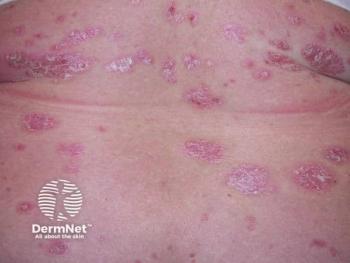
Douglas DiRuggiero, DMSc, MHS, PA-C, emphasized that relying solely on body surface area underestimates psoriasis burden, particularly for patients with disease in high-impact or special areas.
Dermatology Times recently concluded its second annual
“Living with psoriasis is its own box warning,” Douglas DiRuggiero, DMSc, MHS, PA-C, a board-certified physician assistant at the Skin Cancer & Cosmetic Dermatology Center in Rome, Georgia, told attendees. Body surface area (BSA) alone fails to capture disease burden, which is high in these patients, especially those with psoriasis in high-impact areas, he added. As a result, DiRuggiero said it is important to shift the way you think: “You don’t look at things. You look for things.”
“What we basically have concluded is that the percentage of BSA does not equate to quality of life,” DiRuggiero said. As a result, it is important to be aggressive—and supportive—with treatment initiation. An attendee agreed. “I started a patient on topicals, and she came back totally clear and sobbing that she was so grateful that I had provided her treatment—and how many other clinicians she saw didn’t know what it was,” the attendee said. “I was kind of caught off guard because usually when people are treated successfully, they don’t come back, and life moves on. It really showed me how impactful it was for her and how much it had been bothering her.”
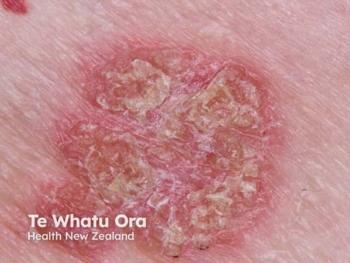
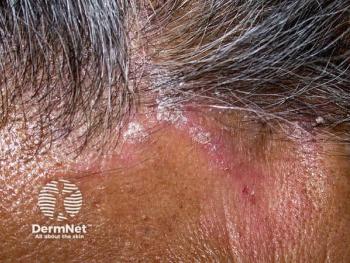
According to one study, 84% of patients with psoriasis reported the disease involved special areas of the body (eg, scalp, hands, face, feet, genitalia).1 Of those patients with special area involvement, 30% reported a lower likelihood of normal social participation, and collectively they had a 126% higher risk of depression,1 DiRuggiero said.
To address this issue, the International Psoriasis Council (IPC) recategorized psoriasis severity,2 Ruggerio told attendees. This laid the foundation for recommending systemic therapy sooner for those who may need it the most. Specifically, the IPC considers patients to be candidates for systemic therapy if they have psoriasis involvement on at least 10% BSA, if disease occurs in special areas, or if topical therapy failed.2
Data demonstrated that systemics make a substantial difference in outcomes. For instance, in the phase 3 SPECTREM study (NCT06039189), which examined guselkumab (Tremfya; Janssen Biotech) efficacy, more than 70% of patients with high-impact site involvement achieved complete skin clearance by week 48.3 “I was in practice in the early 2000s, and I would have never dreamed that we’d have these kind of numbers,” DiRuggiero commented.
Study data like this not only informs the clinician but can also empower the patient, an attendee noted: “These studies are good too because if you’ve got a patient who tried and failed one treatment, you can tell them that there is something that can support them.”
Approximately 40% of patients will eventually develop psoriatic arthritis, DiRuggiero told attendees, with an average of 12 years between psoriasis symptom onset and onset of psoriatic arthritis. What’s worse is that about 33% of patients do not seek care from a rheumatologist, and irreversible joint damage can begin within the first 2 years. So dermatology clinicians are uniquely positioned to really support their patients.
There is good news, DiRuggiero said. In a retrospective cohort study, treatment with IL-12/23 inhibitorsand with IL-23 inhibitors was associated with a 42% and 59% reduced risk of progression to inflammatory arthritis, respectively, vs treatment with tumor necrosis factor inhibitors.4
Attendees agreed that asking questions and talking with patients are critical. “I tell patients that the inflammation that comes with psoriasis, the skin is what they see and they’re most aware of, but it’s actually going on inside—the joints, even the blood vessels are affected,” said one attendee. “There’s potentially a lot going on inside that’s related. You might not feel it yet, but the psoriasis is more than what you can see.” The attendee noted that these types of conversations help lead into the discussion on potential treatment strategies.
Patient treatment preferences should always play a role in decisions, DiRuggiero said. In a recent survey of adult patients (N = 400), about half indicated they preferred oral medications, approximately one-third preferred topicals, and only 15% preferred injectables.
Meanwhile, for patients who discontinued oral medications, more than half indicated these medications did not sufficiently improve symptoms, almost half had issues with adverse effects, and nearly 25% developed tolerance.5,6
Icotrokinra (Johnson & Johnson), an investigational oral peptide that selectively targets the IL-23 receptor, has shown promise, DiRuggiero told attendees. The phase 3 ICONIC-ADVANCE 1 (NCT06143878) and 2 (NCT06220604) studies found that rates of completely clear skin were at least 2 times higher for icotrokinra vs deucravacitinib (Sotyktu; Bristol Myers Squibb), he reported.4,5 Similarly, he explained that the agent performed well in high-impact sites. The studies also indicated a promising safety profile.5,6
Attendees agreed it is an exciting time in dermatology, with a plethora of options for clinicians and patients. “We’ve come a long way from 2013 to 2020. Every year from 2013, we had a new biologic approved,” DiRuggiero said. “It’s nice because we have some great options.”
References
1. Blauvelt A, Gondo GC, Bell S, et al. Psoriasis involving special areas is associated with worse quality of life, depression, and limitations in the ability to participate in social roles and activities. J Psoriasis Psoriatic Arthritis. 2023;8(3):100-106. doi:10.1177/24755303231160683
2. Strober B, Ryan C, van de Kerkhof P, et al; International Psoriasis Council Board Members and Councilors. Recategorization of psoriasis severity: Delphi consensus from the International Psoriasis Council. J Am Acad Dermatol. 2020;82(1):117-122. doi:10.1016/j.jaad.2019.08.026
3. Stein Gold L, Gottlieb AB, Armstrong AW, et al. SPECTREM phase IIIb clinical trial results through week 16: guselkumab efficacy and safety for the treatment of low body surface area, moderate psoriasis with high-impact site involvement. Br J Dermatol. 2026;194(1):25-36. doi:10.1093/bjd/ljaf327
4. Singla S, Putman M, Liew J, Gordon K. Association between biological immunotherapy for psoriasis and time to incident inflammatory arthritis: a retrospective cohort study. Lancet Rheumatol. 2023;5(4):e200-e207. doi:10.1016/S2665-9913(23)00034-6
5. Stein Gold L, Soung J, Trenkler N, et al. Impact and insights of psoriasis on quality-of-life and shared-decision making among US adolescents and adults. Poster presented at: Fall Clinical Dermatology Conference 2025; October 23-26, 2025; Las Vegas, NV.
6. Stein Gold L, Soung J, Trenkler N, et al. Unmet needs and disease burden: perspectives from adults with psoriasis and clinicians treating psoriasis in the United States. Poster presented at: Fall Clinical Dermatology Conference 2025; October 23-26, 2025; Las Vegas, NV.
7 months ago
Topical JAK Inhibition for Chronic Hand Eczema7 months ago
Treatment Considerations for Type 2 Inflammation