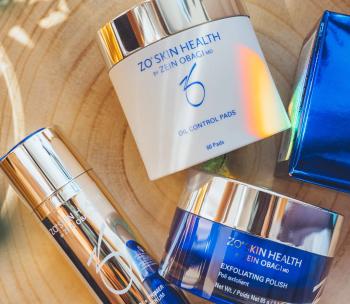
Can “Botox in a bottle” really rival injectable neuromodulators? We examine the evidence behind topical peptide serums and Argireline.
Learn more about the in-depth topics covered in the March 2026 print issue of Dermatology Times.
The March issue of Dermatology Times includes a collection of thought-provoking articles and topics as we spotlight female leaders in Mohs micrographic surgery, address tween skin care concerns, and explore skin changes associated with perimenopause.
Don’t miss a moment of Dermatology Times by signing up for our
“Fearless” and “courageous” are the first 2 words that come to mind when I think of the women surgeons who helped train me in Mohs. They unabashedly took difficult layers and performed complex reconstruction in ways that toed the line between medicine and art. It was their mentorship that inspired me to surgically take complex tumors head-on for the greater good of the patient. I became a woman leader because I was fortunate enough to learn from other great women. The percentage of women represented in Mohs surgery leadership has gradually increased over the past few years. However, significant gender disparities persist in career advancement, fellowship director positions, metrics of clinical productivity, and invitations to speak at national conferences. Although women do face measurable gaps in reimbursement and recognition, it is inspiring to witness more women entering Mohs fellowship as trainees and pursuing leadership roles within organizations.
As a chronic, immune-mediated inflammatory skin disease with systemic manifestations and significant psychosocial impact, it is vital for patients with psoriasis to achieve maximal skin clearance, as higher clearance is linked to improved quality of life. Biologic therapies targeting cytokines such as tumor necrosis factor, IL-12, IL-23, and IL-17 have revolutionized psoriasis care, enabling many patients to achieve substantial disease control. IL-17 inhibitors, including bimekizumab (Bimzelx; UCB), secukinumab (Cosentyx; Novartis), ixekizumab (Taltz; Eli Lilly and Company), and brodalumab (Siliq; Bausch Health), have emerged as highly effective agents. However, real-world practice highlights that treatment failure, loss of efficacy, and intolerance remain common reasons for switching biologics, even with advanced agents. Traditional theories suggest interclass switching for primary nonresponders and potential intraclass switching for secondary nonresponders, yet clinical trial designs often exclude patients with prior exposure to the same biologic class, thereby limiting evidence to guide sequencing decisions in this context.
Dermatology practices are increasingly seeing midlife women with abrupt changes in skin, hair, and vascular behavior that do not fit classic dermatologic patterns. These concerns are often minimized as “normal aging,” yet they frequently reflect the biologic transition of perimenopause. Because dermatology clinics are often the first place patients seek care for appearance-related changes, dermatology clinicians are uniquely positioned to recognize this transition and intervene appropriately. Perimenopause is characterized by fluctuating ovarian function and a gradual decline in estrogen. Estrogen receptors are widely expressed in the skin, where estrogen plays a central role in collagen synthesis, epidermal thickness, hydration, wound healing, and immune regulation. After menopause, type I and III collagen decline rapidly, with studies estimating up to a 30% reduction within the first 5 years, followed by continued loss thereafter. These structural changes contribute to thinning skin, loss of elasticity, and impaired barrier function.
As medicine continues to evolve, podcasts have become a popular and effective medium for delivering medical education and patient-facing information. Their on-demand, accessible format allows learners at all levels, including health care providers and the general public, to engage with expert insights at their convenience. Medical podcasts now span nearly every specialty, with one of the pioneers being the internal medicine–focused show, The Curbsiders. This commentary highlights the current dermatology podcast landscape and examines how these platforms are advancing patient education, fostering physician connectivity, and promoting interdisciplinary learning. Notably, podcast engagement continues to grow, with just over half of US adults (54%) reporting that they have listened to a podcast in the past 12 months, up from 49% in 2022.2 With more than 60% of the podcasts reviewed launching their first episode within the past 5 years, this represents a timely topic.
7 months ago
IL-13 Blockade for Benign Familial Pemphigus7 months ago
Understanding Aging Hair