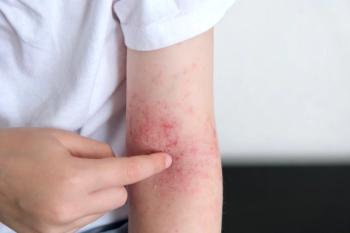
In a survey of 301 employed adults, overall work impairment attributable to CHE was 31.8%, and quality of life worsened in step with self-reported disease severity.
Overall, the future of dermatology lies in integrating innovation with individualized, evidence-based, and patient-centered care.
The 2026 South Beach Symposium (SBS) and Masters of Pediatric Dermatology (MOPD) highlighted a defining reality of modern dermatology: The specialty is advancing rapidly across immunology, genetics, digital medicine, and aesthetics, yet its core strength remains thoughtful clinical judgment. Across inflammatory disease, pediatric care, hormonal health, artificial intelligence (AI), and social media, speakers repeatedly emphasized that innovation must reinforce—not replace—foundational dermatologic reasoning.
Christopher G. Bunick, MD, PhD, associate professor of dermatology at Yale School of Medicine and editor-in-chief of Dermatology Times, framed this evolution as a shift toward mechanism-driven precision. Dermatology, he noted, is increasingly moving beyond broad inflammation suppression toward targeted pathway intervention grounded in molecular understanding. The challenge, he suggested, is ensuring that enthusiasm for innovation remains tethered to evidence, long-term safety data, and individualized patient care.
Hidradenitis suppurativa (HS) remains emblematic of unmet need. Barry Resnik, MD, described HS as “an underserved population,” with patients often experiencing “7 to 10 years between symptom onset and correct diagnosis.” During that time, many cycle through ineffective antibiotics and fragmented care.
By the time patients reach specialty clinics, they are often “frustrated, mistrustful, and fatigued by prior medical encounters.” Resnik advocated earlier systemic intervention before extensive tunnel formation and scarring occur, noting that delayed biologic initiation “may represent a missed opportunity to alter the disease course.”
Patient fear of biologics, which is frequently amplified by social media, remains a barrier. Resnik emphasizes framing treatment as targeted immunomodulation rather than blanket immunosuppression and reassessing response at defined intervals. “I typically reassess efficacy at approximately 4 months,” he said, “and promptly move on if meaningful improvement is not achieved.” Functional restoration, not lesion counts alone, defines success: Patients should feel “human every day of the month, not intermittently between flares.” As dermatology identifies more precise inflammatory targets, therapeutic decisions can increasingly align with disease biology rather than trial-and-error escalation.
In atopic dermatitis (AD), Mona Shahriari, MD, FAAD, challenged the field to think beyond flare suppression. “Until now, we’ve really focused on suppressing the flares and the inflammation,” she said. “But wouldn’t it be great if we could retrain or rebalance our immune system?”
Emerging therapies targeting OX40 act upstream of cytokine production. “When you’re thinking of OX40,” Shahriari said, “you’re going above the level of the cytokines and targeting that antigen-specific T cell directly, so you’re getting to the root of the problem.”
Phase 2 studies with rocatinlimab and amlitelimab suggest durable responses even after drug withdrawal. “Whether you stayed on your dose or the drug was gone, at week 52, we actually had patients maintain similar efficacy,” Shahriari said. Still, she urged caution: “Anytime I have a new mechanism, I’m going to be a little bit more concerned, and I want to see longer-term data.”
Bunick echoed this balanced perspective, emphasizing that upstream targeting represents scientific progress, but rigorous safety evaluation and phenotype-driven patient selection remain critical.
Hormonal transitions are increasingly intersecting with dermatology. Glynis Ablon, MD, FAAD, emphasized that perimenopausal symptoms may begin in the mid-30s and are often misattributed to aging. Persistent xerosis, hair thinning, and barrier changes may signal systemic shifts.
Beyond estrogen and progesterone, Ablon highlighted the importance of adrenal hormones, DHEA, and cortisol. She also addressed persistent fears surrounding menopausal hormone therapy rooted in the Women’s Health Initiative. “They studied the wrong population,” she said, underscoring the importance of age and timing in risk assessment.
Her perspective reframed menopause as a modifiable rather than an inevitable decline: “I’m pro aging, but I want to do it on my terms.”
Digital medicine was another focal point. “Social media is no longer optional,” Karan Lal, DO, said. “Whether you participate or not, your digital presence exists.” Educational posts outperform promotional content because “patients don’t want ads, they want answers.” Yet visibility carries risk: “You don’t need to go viral to get reported.”
Mohamad Goldust, MD, addressed AI in diagnostics. “AI doesn’t get tired,” he said, “and it doesn’t miss patterns the way humans sometimes do.” However, “high sensitivity doesn’t always mean high specificity,” and “the physician is still responsible.”
Bunick emphasized that digital and AI tools should augment, not supplant, clinical reasoning, reinforcing dermatology’s responsibility to integrate innovation ethically.
At MOPD, Lisa Swanson, MD, and Nanette Silverberg, MD, addressed influencer-driven skin care trends in children. “If they want one—a general, gentle face wash, a good moisturizer with SPF—that’s plenty,” Swanson said.
Fragrance remains a leading cause of contact dermatitis among adolescents. During her session, Silverberg highlighted overlap among acne, AD, and seborrheic dermatitis, with fragrance exposure often exacerbating inflammation.
Swanson expressed concern about antiaging marketing directed at children. “They’re not designed for a fresh, naive 7-year-old face,” she said. Some skin-lightening products may contain “topical steroids…hydroquinone…and some of them even contain mercury.”
Across SBS and MOPD 2026, the through line was clear: Dermatology is entering a precision era grounded in molecular insight, digital expansion, and broadened scope. Yet speakers consistently returned to the same principle—clinical discernment must guide adoption of every new tool. As Bunick emphasized, mechanism matters, but so do judgment, safety, and the human relationship at the center of care.
7 months ago
Dermatology Times March 2026 Print Recap7 months ago
IL-13 Blockade for Benign Familial Pemphigus7 months ago
Understanding Aging Hair