

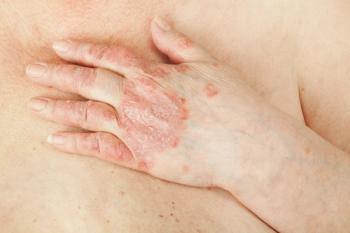
Bristol Myers Squibb reveals promising data on deucravacitinib's efficacy for psoriatic arthritis and systemic lupus erythematosus, highlighting its potential as a new treatment option.
Bristol Myers Squibb reveals promising data on deucravacitinib's efficacy for psoriatic arthritis and systemic lupus erythematosus, highlighting its potential as a new treatment option.

Dermatologists can navigate retirement planning by addressing inflation and tax strategies, ensuring sustainable wealth distribution for a secure financial future.

Catch up on coverage from the last day of the 2025 Fall Clinical Dermatology Conference held in Las Vegas, Nevada.
Lindsay Ackerman, MD, outlines how ruxolitinib topical has transformed the clinical approach to vitiligo.

At Fall Clinical 2025, Mona Shahriari, MD, presented highlights on the role of IL-13 inhibitors, such as dupilumab, tralokinumab, and lebrikizumab, in managing atopic dermatitis across severities.
Benjamin Lockshin, MD, noted long half-life biologics may allow patients to maintain remission with minimal injections.
At Fall Clinical 2025, Ron Vender, MD, discussed the evolving psoriasis treatment landscape and the persistent challenge of managing palmoplantar pustulosis.

Gene expression profiling may allow clinicians, according to Farberg, to predict patient responses to targeted treatments.

Peter Lio, MD, believes that collaboration between science and industry is vital for translating research into meaningful patient benefits.
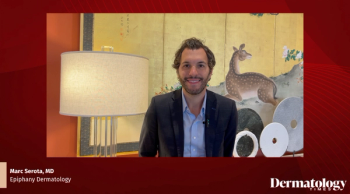
At Fall Clinical 2025, Marc Serota, MD, discussed how GLP-1 therapies, new CSU treatments, and hybrid care models are reshaping dermatologic practice heading into 2026.

Catch up on coverage from the third day of the 2025 Fall Clinical Dermatology Conference held in Las Vegas, Nevada.

Clinicians are now aiming for treatment targets such as NRS 0–1, IGA 0–1, and EASI 90 to define successful AD management.

At Fall Clinical 2025, Shawn Kwatra, MD, presented insights on managing various cases of chronic itch, as well as understanding the OX40 ligand pathway as the “prequel to inflammation.”

Discover essential dermatology insights from experts at the Fall Clinical Conference 2025, featuring innovative treatment tips and patient care strategies.

Emerging skin treatments present unique clinical challenges that must be anticipated by clinicians.

New data presented at Fall Clinical 2025 reveal that patients in socioeconomically disadvantaged areas are significantly less likely to initiate biologic or small molecule treatments.

Recent FDA approvals for topical roflumilast and ruxolitinib down to age 2 mark major milestones in managing pediatric AD, according to Peter Lio, MD.

Catch up on coverage from the second day of the 2025 Fall Clinical Dermatology Conference held in Las Vegas, Nevada.
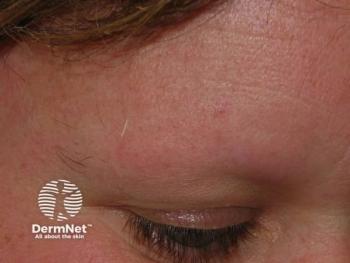
At 52 weeks, the data presented at Fall Clinical showed that 64.8% and 63.3% of adolescents on baricitinib 4 mg achieved significant eyebrow and eyelash regrowth, respectively.

At Fall Clinical 2025, Harrison Nguyen, MD, MBA, MPH, outlined how gene expression profile testing complements traditional staging systems by helping clinicians better identify melanoma and cSCC patients at the highest risk for recurrence.

Del Rosso recounts the meeting’s evolution and its consistent mission to bridge science and practice.

New data from Johnson & Johnson's ICONIC-TOTAL study reveals icotrokinra's promising long-term efficacy and safety for treating challenging plaque psoriasis.

The AHEAD guidelines promote a new treatment standard for atopic dermatitis, emphasizing near-complete skin clearance and itch relief.

Data from Fall Clinical 2025 detailed the results from the phase 2 STRIDE and ongoing open-label extension studies demonstrating the efficacy and safety of envudeucitinib, a selective TYK2 inhibitor.

AVAVA receives FDA clearance for wrinkle treatment, showcasing significant results and high patient satisfaction with its innovative Focal Point Technology.

Catch up on coverage from the first day of the 2025 Fall Clinical Dermatology Conference held in Las Vegas, Nevada.

A new IPC-endorsed framework simplifies psoriasis severity into “topical” versus “systemic” categories to guide treatment more effectively, according to James Song, MD.

James Del Rosso, DO; April Armstrong, MD, MPH; Mark Nestor, MD, PhD; Mark Lebwohl, MD; Linda Stein Gold, MD; and Darrell Rigel, MD, MS, presented some of the biggest updates in dermatology to close out the year.
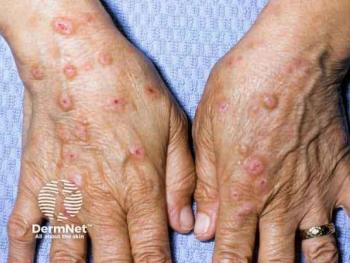
PN is increasingly recognized as a common and severe inflammatory skin disease disproportionately affecting patients with darker skin tones.
Click through this slideshow to see what faces familiar to Dermatology Times will be on the speaker stand at Fall Clinical this week.