


News|Articles|November 27, 2025
ASDS 2025: Top Treatments and Trends
Fact checked by: Maddi Hebebrand, MC, Associate Editor
Listen
0:00 / 0:00
Key Takeaways
- Aesthetic medicine is moving towards safer, regenerative, and personalized treatments, with a focus on improved skin quality over quick fixes.
- Injectable advancements target better skin quality and softer contouring, with new data on treatments for the chest and neckline.
Discover the latest trends in aesthetic medicine from ASDS 2025, focusing on safer treatments, improved skin quality, and innovative injectables.
Advertisement
It's once again that time of year when the country’s top cosmetic dermatologists meet all in one place, comparing notes on what’s working, what’s fading out, and what’s about to define the next year of aesthetic medicine. The
So what does that mean for us? Expect smarter fillers, energy treatments that fight gravity, and rising conversations about lasers and procedures designed with more skin tones in mind. Above all, one of the biggest shifts we’re seeing isn’t a trend at all, but a renewed focus on improved skin quality instead of quick fixes. Dermatology Times' sister publication, NewBeauty, was there—and here’s where aesthetics is headed next.
Injectable Updates From the Show
Two of the biggest names in injectables, Galderma and Allergan Aesthetics, came to ASDS with updates that point to where treatments are headed next: better skin quality, softer contouring and more options for areas beyond the face.
On the skin-quality front, both brands hinted at what’s coming for the chest and neckline. Galderma shared investigational data on Restylane Skinboosters for the décolletage, signaling that smoother, more hydrated chest skin is becoming a real focus. Allergan is moving in the same direction, revealing new clinical data supporting its request to expand SKINVIVE to horizontal neck lines, a notoriously hard to treat area.
On the toxin front, both companies also signaled a new chapter. Galderma presented new phase III data on investigational Relfydess, a next-generation neurotoxin, while Allergan shared new clinical results on TrenibotE, their own fast-acting, short-term toxin.
Allergan also hosted a panel tied to its recent report on hyaluronic acid injectable fillers, “The Aesthetic Evolution: Redefining HA Fillers Through Education.” Led by Melanie Rud with experts Terrence Keaney, MD, FAAD; Sabrina Fabi, MD; Patricia Ogilvie, MD; and Kavita Mariwalla, MD; the conversation zeroed in on what consumers want most: safety, transparency and believable results.
Recent FDA Headlines That Resonated at ASDS
Two major FDA updates shaped conversations at ASDS and signaled that aesthetic dermatology is entering a more transparent, safety-driven era. The
The second update made waves for a very different reason. The
Exosomes Are the New Anti-Aging Signalers
If there was one regenerative ingredient dermatologists couldn’t stop talking about at ASDS, it was
Peels Are Making a Comeback
Even with new lasers everywhere, dermatologists say chemical peels are having a moment again. Ponte Vedra Beach, FL, dermatologist Mark Cappel, MD, said patients love how straightforward the results are. “Chemical peels have been around a long time. They do things other treatments can’t do. People like seeing that dead skin come off and the baby skin underneath,” he said.
He advised sticking to trained providers. “All skin tones can do superficial chemical peels. If used correctly, pretty much any skin tone can get a superficial peel. The deeper peels are where you have to know what you’re doing.”
Treating Skin of Color Takes Precision
Hyperpigmentation remains one of the biggest concerns for patients with
Fresno, CA, dermatologist Regine Mathieu, MD, added that the wrong approach can make discoloration worse. “The right laser in the wrong hands is the wrong laser. You have to protect melanocytes before you do anything,” she said. “Complications happen when people don’t understand the device they’re using—the depth, the heat, the energy. Training matters.”
Addressing Bias in Dermatology Care
One of the most important sessions of the entire meeting was a multi-expert presentation on bias in aesthetic medicine, where Downie addressed how racial and gender bias continue to influence everything from documentation to counseling to outcomes. She explained that inequity often shows up in subtle language, noting, “A white patient ‘reports’ symptoms, but a Black patient ‘claims’ them. Those are 2 different things, and bias shows up in ways patients never realize.” She also spoke about misogyny and misogynoir and how these patterns shape the experiences of Black women in medical settings.
Downie emphasized that change begins with uncomfortable but necessary dialogue. “The only way forward is to see each other as humans, have tough discussions and take responsibility so we can do better.” The session also incorporated perspectives on anti-Asian bias, antisemitism and LGBTQ+ patient experiences, making it one of the most urgent and wide-reaching conversations at ASDS on safety, equity and the future of inclusive care.
Skin-Quality Devices Are Taking Over
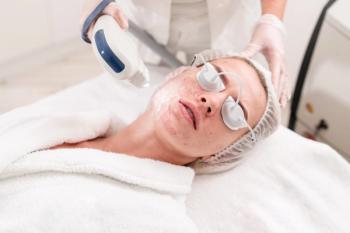
Skin quality dominated conversations at ASDS, especially devices designed to firm, smooth and thicken the skin without altering facial shape. New York dermatologist
Israel-based physicist Shimon Eckhouse, PhD, cofounder of Sofwave and inventor of IPL, explained the science behind that shift. “What we have done is create a controlled thermal injury inside the dermis without needles, bleeding or downtime,” he said. The device targets the dermis at about 1.5 millimeters. “The dermis is the collagen factory. If you go deeper, you risk melting fat or hitting nerves and blood vessels, and you do not even have the fibroblasts you need to get a result.”
Weight-Loss Skin Changes Are a Full-Body Issue
Dermatologists said GLP-1–related weight loss is changing not just the face but the body as well. New York dermatologist Anthony Rossi, MD, said the fat-skin connection runs deeper than most people realize. “We think the fat in the face and body is very sensitive to weight change. You are not only losing the cushion but the cross-talk between fat and skin. There is a lot of biochemical interplay,” he said. “People are coming in with texture changes on the arms, the abdomen and the inner thighs. It is not just facial hollowing.”
Seattle dermatologist Heather D. Rogers, MD, said that is why body-focused devices are having a moment. “Everybody is losing weight, which is good, but the skin does not always come back,” she said. “That is why we got Sofwave and why the new body clearance for Ellacor is so important. It is meeting the number one concern people have after
Longevity Is Driving New Treatment Choices
The longevity mindset shaped dozens of conversations at ASDS. New York dermatologist
She said interest in peptides and
If there was one takeaway from ASDS 2025, it’s this: the future of aesthetics is about working with your biology, not fighting it. Dermatologists are prioritizing treatments that strengthen, protect and keep skin performing well over time. With safety conversations front and center and longevity gaining momentum, the next wave of cosmetic treatments is shaping up to be smarter, gentler and far more strategic.
[This article was originally posted by our sister publication,
Advertisement
Related Content
Advertisement



Advertisement
Advertisement
Trending on Dermatology Times
1
Biologic Therapy Linked to Lower 10-Year MACE Risk Across Racial Groups in Psoriasis
2
Former CDC Director Robert Redfield Joins Turn Therapeutics as Chief Scientific Officer
3
Journal Digest: September 9, 2026
4
Body Weight, Not BMI, Associated With Brodalumab Response Trajectory in Plaque Psoriasis
5