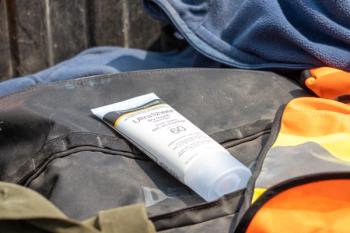
Two new Neutrogena facial sunscreens incorporate bemotrizinol, the first new sunscreen active ingredient added to the US OTC monograph in decades.
This review of the latest dermatologic studies highlights new research from this week, including immune checkpoint inhibitors in acral melanoma, the link between skin microbiota and asthma, a novel peptide–hyaluronic acid lip serum, and more.
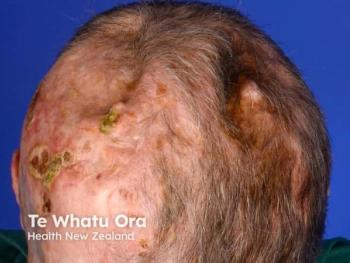
This trial evaluated whether adjuvant immune checkpoint inhibitors (ICI) improve outcomes for patients with acral melanoma (AM), a melanoma subtype characterized by low sun exposure and low mutational burdens. From the RIC-Mel database, 64 AM patients receiving adjuvant ICI were propensity-matched to 64 untreated patients with similar clinical characteristics. Adjuvant therapy included anti–PD-1 or anti–CTLA-4 agents. The analysis showed no significant improvement in relapse-free survival or distant metastasis-free survival with adjuvant ICI (RFS HR = 0.84; DMFS HR = 0.94). Severe immune-related adverse events occurred in 18.8% of treated patients, including gastrointestinal, endocrine, and cutaneous toxicities, sometimes causing permanent treatment discontinuation. Larger studies are needed to determine which patients, if any, may benefit and to explore alternative therapeutic strategies.1
This Mendelian randomization study explored whether specific skin microbiota influence asthma risk and whether circulating inflammatory proteins mediate this relationship. Using genetic instruments from large GWAS datasets, the authors analyzed 147 skin microbial taxa, 91 inflammatory proteins, and asthma outcomes from over 337,000 individuals. Several skin microbes showed potential causal links to asthma: Corynebacterium and S. hominis appeared protective, while Chryseobacterium, Rothia, Staphylococcus, Acinetobacter, Veillonella, and E. aerosaccus increased risk. Notably, Anaerococcus displayed opposite effects depending on the skin site. Eight inflammatory proteins—CXCL5, FGF-23, IL-10RA, LIF-R, PD-L1, and SCF—were identified as risk factors, whereas IL-18R1 and TNFRSF9 were protective. Mediation analyses suggested that CXCL5, IL-18R1, IL-10RA, and PD-L1 partially transmit microbial effects on asthma. Reverse MR showed no evidence that asthma alters skin microbiota.2
This study evaluated the efficacy and tolerability of Replenishing Lip Filler–Tiered Release Vesicles (RLF-TRV), a topical peptide–hyaluronic acid serum designed to enhance lip hydration and volume. Two clinical trials were conducted: one in filler-naïve participants and one in subjects with prior hyaluronic acid lip augmentation. Participants applied RLF-TRV or placebo twice daily for three weeks, followed by a two-week regression phase. RLF-TRV significantly improved lip shine, texture, and vermilion border definition, with 94% of filler-naïve subjects and 88% of previously augmented subjects rated as “Improved” on both investigator and subject GAIS assessments. High satisfaction was reported in both studies, and no adverse events occurred. Improvements diminished after discontinuation, suggesting benefits require ongoing use.3
This systematic review and meta-analysis evaluated disparities in cutaneous melanoma diagnosis and outcomes among American Indian and Alaska Native (AI/AN) patients. Twenty studies met inclusion criteria, and three meta-analyses assessed mortality risk, stage at diagnosis, and incidence. AI/AN patients had a 43% higher mortality risk than white patients (pooled aHR = 1.43) and a 75% higher likelihood of late-stage diagnosis (pooled OR = 1.75). They also presented with worse prognostic features, including greater Breslow thickness, higher ulceration rates, and more advanced disease. Incidence rates varied widely but indicated rising melanoma burden over time. Structural barriers—including limited dermatologic access, geographic isolation, underfunded healthcare systems, insurance disparities, and treatment delays—contributed to these outcomes. The authors recommend targeted interventions such as improved screening, expanded dermatologic services, and policy reforms to address systemic inequities affecting AI/AN melanoma care.4
This cross-sectional survey assessed how dermatology providers worldwide care for underserved populations and identified unmet needs across diverse regions. Among 724 conference attendees interested in underserved care, 537 providers from 83 countries reported current engagement, most being dermatologists (84%). Commonly served groups included low-income individuals, the elderly, and rural or remote communities. Outreach primarily involved provider education (73%), patient education (66%), and outreach clinics (40%). The most frequently cited needs were affordable care (75%), more dermatologists (50%), and educational resources for providers (43%). Low- and middle-income country (LMIC) respondents were more likely to use outreach clinics and teledermatology and reported greater needs for training and educational materials. High-frequency and high-volume engagers identified leadership training, provider education, and expanded workforce capacity as top priorities.5
References
1. Sanogo D, Levard R, Cassecuel J, et al. Benefit of immune checkpoint inhibitors as adjuvant treatment for acral melanomas. J Eur Acad Dermatol Venereol. 2025; 00: 1–9.
2. Chen J, Zhang Z, Jiang N, et al. From Skin to Lungs: The Causal Pathways Linking Skin Microbiota and Asthma, Dermatologic Therapy, 2025, 7880209, 12 pages, 2025.
3. Moradi A, Jacob C, Tao J, Love R, Osborne S, Fleck T. Efficacy and Tolerability of a Topical Peptide-Hyaluronic Acid Lip Treatment Using a Novel Delivery System in Subjects With and Without Prior Lip Augmentation. J Cosmet Dermatol. 2025;24(12):e70563. doi:10.1111/jocd.70563
4. T Nguyen, K Bajaj, B M Coles, et al. Disparities in Cutaneous Melanoma Diagnosis and Survival Among American Indian and Alaskan Native Patients: A Systematic Review and Meta-Analysis. Journal of Surgical Oncology 0 (2025): 1-19,
5. Strahan AG, Li C, Guérin M, et al. Characterizing global dermatologic engagement and needs: A cross-sectional study from 83 countries. J Eur Acad Dermatol Venereol. Published online November 21, 2025. doi:10.1111/jdv.70142