


This week, we feature top articles from our sister publications on regulatory updates, clinical trial insights, and more.
Maddi Hebebrand is an associate editor of Dermatology Times and joined the MJH Life Sciences team in May 2024. She attended Baldwin Wallace University, studying Media Production and Film, and received her Masters in Digital Media from Ohio University. When she's not writing, Maddi loves to read, attend concerts and spend time with her family.
This week, we feature top articles from our sister publications on regulatory updates, clinical trial insights, and more.

Jessica DeLuise, PA-C, MHS, CCMS, joins Derm Dispatch to discuss how nutrition and lifestyle intersect with inflammatory skin disease across clinical settings.
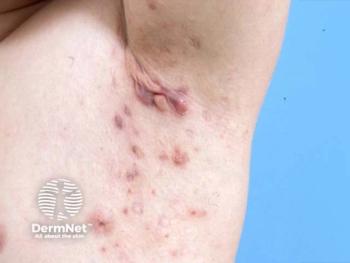
Novartis secured the approval through a pharmacokinetic extrapolation strategy rather than a full pediatric RCT, leveraging adult HS trial data and existing pediatric PK modeling from other approved indications.
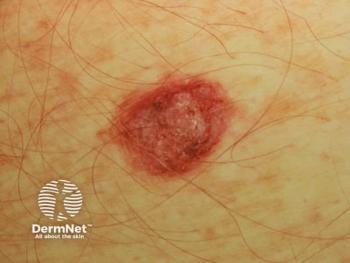
Recent reviews highlight that melanoma risk associated with occupational UV exposure varies by tumor subtype, anatomical site, and individual susceptibility.
Compared with topical regimens, Rossi notes PDT provides a shorter recovery window and fewer adherence challenges.

Researchers observed early reductions in acne lesions, with improvements beginning within 5 days of dermocosmetic treatment in patients with acne.
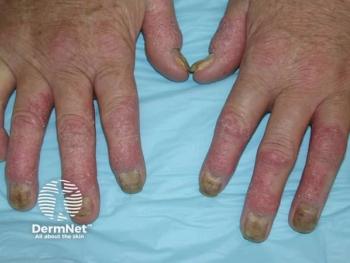
Results show that bimekizumab achieved significantly higher ACR50 response rates at week 16 than risankizumab in adults with active PsA.

A prospective study found that patch testing identified relevant allergens in 43% of patients with hand and foot eczema, with potassium dichromate being the most common sensitizer.
Red light–activated photodynamic therapy offers an effective field-based option for treating both visible and subclinical actinic keratoses.

A survey of dermatology residents found that interest in subspecialty fellowships often declines during training, with financial concerns particularly affecting pediatric dermatology.
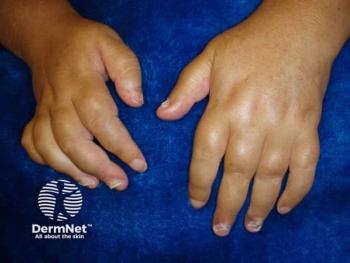
Patients treated with deucravacitinib achieved higher ACR20 response rates at week 16 than those receiving placebo in the POETYK PsA studies.
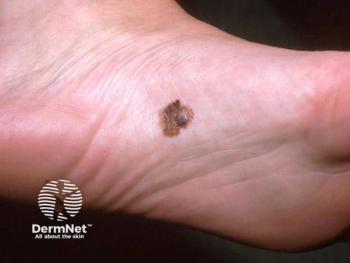
A newly defined Nodularity Index, measuring tumor depth relative to width, independently predicted melanoma-specific survival.
This week, we feature top articles from our sister publications on regulatory updates, clinical trial insights, and more.
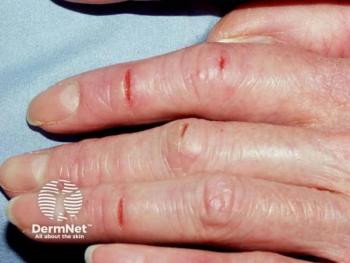
At week 16, 73.3% of patients receiving delgocitinib achieved a clinically meaningful improvement (≥ 4 points) in Dermatology Life Quality Index score vs 47.8% with vehicle.

This FAQ answers top questions of HS therapy: when to escalate to biologics, add surgery, measure success, and support mental health.
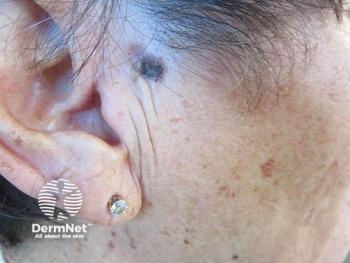
Clearance rates increased between days 29 and 57, with the highest activity observed in the 200-μg treatment group.

Baker explains why competency-based autonomy and structured collaboration are essential in high-acuity medical dermatology.
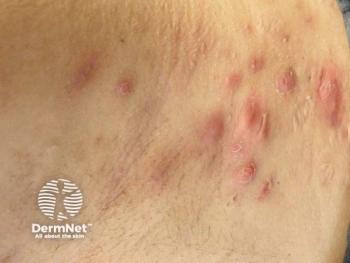
A qualitative study found that hidradenitis suppurativa (HS) significantly influences patients’ daily decisions, emotional health, relationships, and financial stability.

A panel discussion highlights the diagnostic variability, systemic risk, and evolving treatment landscape of GPP.

Rocatinlimab had met primary end points in large phase 3 trials and was previously expected to move toward regulatory submission in 2026.
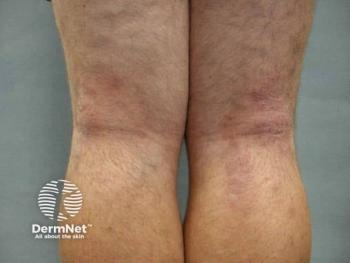
The double-blind, randomized, placebo-controlled ARQ-234-131 study will assess safety, tolerability, pharmacokinetics, and early signs of clinical activity.
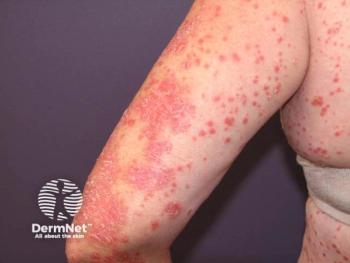
Skin adverse events linked to immunotherapy may correlate with improved tumor response and survival, underlining their clinical significance.

The final case described a young woman with clinically mild hidradenitis suppurativa (HS) but significant emotional and social distress, prompting some of the most passionate discussion across the 3 roundtables.

Over 70% of evaluable patients achieved near-clear or clear skin after nearly 3 years of treatment with nemolizumab.

In a Derm Dispatch discussion, Renata Block, DMSc, MMS, PA-C, and Lauren Madigan, MD, review practical strategies for diagnosing and managing cutaneous mastocytosis across age groups.
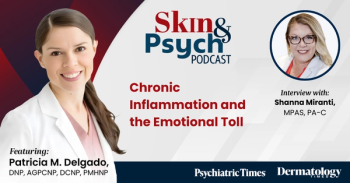
Patricia M. Delgado, DNP, AGPCNP, DCNP, PMHNP, and Shanna Miranti, MPAS, PA-C, discuss how “taking off the clinician mask” can strengthen trust and improve shared decision-making in the exam room.
This case involved a young patient with mild to moderate hidradenitis suppurativa (HS) of the axillae, characterized by intermittent, limited lesions without tunneling or scarring. Although seemingly routine, it prompted deeper reflection.

Explore the top headlines of the month, including insights on regulatory updates, expert pearls, and more.

Dermatology Times is recapping our exclusive expert interviews from the month of February.
The first case involved a middle-aged patient with severe, long-standing hidradenitis suppurativa (HS) marked by years of active disease with extensive sinus tracts, dense scarring, chronic drainage, frequent flares, constant pain, limited mobility, and a daily life centered around symptom management.