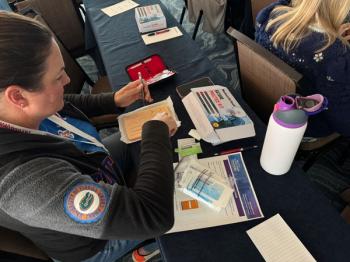
Faculty from the Cutaneous Oncology Workshop answer practical questions spanning skin cancer prevention, diagnosis, treatment, and follow-up.
Baker explains why competency-based autonomy and structured collaboration are essential in high-acuity medical dermatology.
Over the past decade, dermatology has experienced rapid growth in the advanced practice provider (APP) workforce alongside accelerating patient demand and therapeutic innovation. What was once a model focused primarily on access expansion has evolved into something far more intentional: structured, physician-led integration designed to scale quality, not just volume.
In this Q&A, Andrew Baker, PA-C, president-elect of the Society of Dermatology Physician Associates (SDPA) and recent Ohio Derm APP of the Month, shares his perspective on how dermatology practices are redefining APP integration—from career-stage deployment and competency-based autonomy to subspecialization and strategic workforce planning. Drawing on experience across private practice, academic medicine, clinical trials, and industry collaboration, he outlines how mature organizations are building collaborative models that protect standards while expanding access.
The conversation also looks ahead, exploring what the high-performing dermatology APP will require in terms of specialization, mentorship, and systems-level fluency as the specialty works to scale excellence responsibly.
Baker: Over the past 5 years, there has been more of a rapid shift from simple utilization to true integration and, in the strongest practices, to intentionally design[ing] this.
Historically, APPs were often viewed primarily as access extenders, managing lower-acuity visits, overflow schedules, and routine follow-ups. That model served an important purpose. But today, more mature organizations are building structured, physician-led care hybrid models that thoughtfully integrate APPs into the broader clinical strategy of the practice.
That includes:
As someone who has worked closely with physicians across private practice, academic settings, private equity, and the pharmaceutical industry, I have seen how transformative physician engagement is in APP development. The most successful integrations occur when dermatologists are deeply involved in onboarding, protocol creation, case review, and overall professional culture.
There has also been a shift from transactional hiring to strategic workforce planning. APPs are now being incorporated into service line expansion—biologics programs, HS [hidradenitis suppurativa] centers of excellence, surgical support, clinical trials, and cosmetics, with often physician oversight and training anchoring quality and clinical reputation.
The conversation has matured. It’s no longer “How do we increase access?” but “How do we scale excellence responsibly?”
Baker: The evolution isn’t about autonomy vs supervision. It’s about graduated responsibility within physician-directed collaboration.
In high-acuity medical dermatology [ie, complex inflammatory dermatology and cutaneous oncology], the diagnostic and therapeutic landscape is more sophisticated than ever. That complexity elevates the value of dermatologists as diagnostic leaders and treatment strategists but also necessitates the need for highly trained and educated APPs.
APP autonomy in these environments must be competency-based, not time-based. The strongest models include early career:
As disease management becomes more advanced, particularly with emerging systemic therapies and clinical trial options, collaboration actually deepens. APPs may assume increasing ownership of longitudinal disease management: monitoring, patient education, access navigation, [and] adherence optimization. Meanwhile, physicians continue to anchor diagnostic nuance, pivot strategy when needed, and guide complex therapeutic decisions throughout the practice.
That complementary structure protects quality, strengthens outcomes, and is professionally rewarding for both sides.
Baker: Yes, and I believe this is one of the defining inflection points for our profession.
We are increasingly seeing focused clinical tracks develop, such as:
This mirrors the evolution of medicine broadly—depth improves outcomes. However, subspecialization raises the bar for structured training. Informal shadowing is no longer sufficient, particularly as therapies become more targeted and risk profiles more nuanced.
Practices should be implementing:
As a clinical trial investigator and someone involved in national educational initiatives, I see firsthand how rapidly therapeutic innovation is moving. APP education must keep pace.
The APP of 2026 cannot be trained like the APP of 2016, and physician mentorship remains central to that evolution. Having said that, the [National Commission on Certification of Physician Assistants] Dermatology [Certificate of Added Qualifications] is available, but its true value for dermatology PAs [physician assistants] is unclear at this time. The
Baker: Access without structure creates risk. Access with intentional design creates sustainability.
Strategic deployment must recognize a fundamental truth: Not all dermatology APPs function at the same level, nor should they be expected to. Career stage, training, and cumulative clinical hours matter significantly.
A thoughtful model differentiates between early-career, midcareer, and highly experienced APPs.
Early-Career APPs (0-5 years)
This is a formative phase focused on skill acquisition, diagnostic pattern recognition, and structured mentorship. Clear triage pathways are essential.
Patients often best suited for early-career APPs include, particularly in the first 1 to 2 years, [those with]:
New suspicious lesions, undifferentiated rashes, complex autoimmune presentations, aggressive skin cancers, or systemic disease concerns often warrant dermatologist evaluation first, with collaborative follow-up as appropriate.
Expectations at this stage should prioritize competency development over productivity.
Midcareer APPs (6-10 years)
At this stage, diagnostic confidence and efficiency improve significantly. These clinicians often manage broader medical dermatology panels and more complex longitudinal disease.
They may:
Collaboration remains structured, but the cadence may shift from directive oversight to strategic discussion.
Experienced APPs (10+ years/~10,000+ clinical hours)
Highly experienced dermatology APPs function differently and should be deployed differently.
With substantial case volume and pattern recognition depth, these clinicians may:
Their role often extends beyond clinic throughput into quality improvement, workflow optimization, and leadership initiatives.
Expecting an early-career APP to function like a 10,000-hour clinician is inappropriate. Conversely, underutilizing a highly experienced APP is inefficient and professionally limiting.
Regardless of career stage, physician engagement remains foundational.
High-quality systems include:
In early career stages, collaboration is more frequent and directive. In midcareer stages, it becomes consultative. At advanced levels, it becomes strategic and bidirectional.
Practices expanding access must measure more than visit volume. Quality indicators should include:
When career-stage deployment aligns with structured oversight and meaningful metrics, access can expand without compromising standards. APP integration should be treated as a clinical architecture decision, not merely a staffing decision.
In my advisory and nonclinical work, I’ve become increasingly selective about where I invest time because integration quality varies widely. The organizations positioned for long-term success are those that:
Scaling dermatology responsibly requires nuance, and career stage awareness is central to that strategy.
Baker: By 2035, the high-performing dermatology APP will be:
Technology will enhance diagnostic support and workflow efficiency, but it will not replace clinical judgment, therapeutic nuance, or the physician-led model that anchors dermatology excellence.
APPs will likely assume greater responsibility in longitudinal disease management, patient education, adherence strategy, and population health initiatives—always within collaborative physician relationships.
To prepare now, clinicians should:
The APP who thrives in 2035 will not simply be clinically capable; they will understand systems, strategy, and collaboration at a national level.
And as our profession continues to evolve, it’s essential that we move forward unified, dermatologists and APPs aligned, protecting standards, advancing education, and designing care models that elevate dermatology as a whole.