

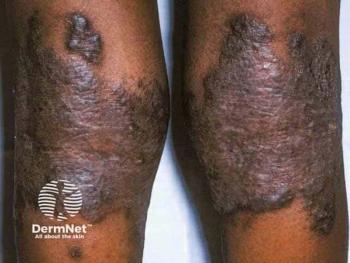
The combination therapy SHORE trial produced the highest response rates of the 3 studies, with EASI-75 approaching 48% in the Q4W arm.
The combination therapy SHORE trial produced the highest response rates of the 3 studies, with EASI-75 approaching 48% in the Q4W arm.
Liza O'Dowd, MD, discusses the drug's long road to FDA approval and what its oral delivery means for patients with plaque psoriasis.
At AAD 2026, Andrew Blauvelt, MD, presented robust PASI responses and favorable safety from ONWARD1 and ONWARD2 trials of envudeucitinib, a next-generation TYK2 inhibitor.

With so many new options in dermatology, personalized medicine may be replacing guideline-driven care.
At AAD 2026, Christopher Bunick, MD, PhD, and David Cotter, MD, PhD, discuss data suggesting tirzepatide may augment ixekizumab responses in psoriatic arthritis—potentially independent of weight loss.
Catch up on coverage from the fourth day of the 2026 American Academy of Dermatology Annual Meeting held in Denver, Colorado.
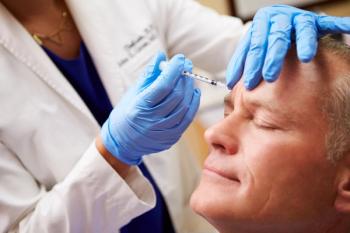
Posters from Allergan Aesthetics highlight the efficacy of investigational trenibotulinumtoxinE, along with new aesthetic trends in GLP-1 users.
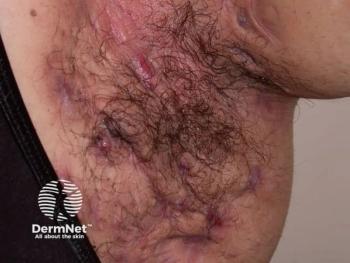
The small protein therapeutic gave hidradenitis suppurativa patients greater reductions in inflammatory lesion counts after 32 weeks.

Jeff Yu, MD, discusses important issues in screening and addressing pediatric contact dermatitis at the AAD Annual Meeting.
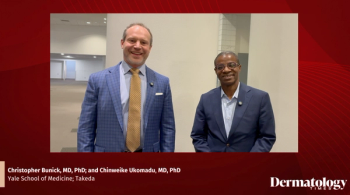
Christopher Bunick, MD, PhD, and Chinweike Ukomadu, MD, PhD, discuss late-breaking phase 3 findings at AAD highlighting high rates of clearance and favorable safety with once-daily oral zasocitinib.
At AAD 2026, Maria-Angeliki Gkini, MD, PhD, shared guidance on diagnosing and managing topical steroid withdrawal syndrome.
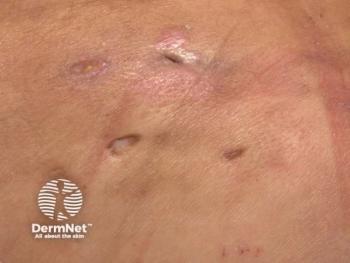
Three-year BE HEARD EXT data confirm that bimekizumab's clinical responses deepen over time, with HiSCR90 rates rising from 42% at year 1 to 64% at year 3.
At AAD 2026, Todd Schlesinger, MD, highlighted how staging frameworks and clinicopathologic features can inform treatment decisions in nonmelanoma skin cancer.
Catch up on coverage from the third day of the 2026 American Academy of Dermatology Annual Meeting held in Denver, Colorado.
At AAD 2026, Christopher Bunick, MD, PhD, and Reid Waldman, MD, discuss investigational VDPHL01, extended-release oral minoxidil, for the treatment of women and men with pattern hair loss.
Liza O'Dowd, MD, shared insights on the latest data on icotrokinra at the AAD Annual Meeting.
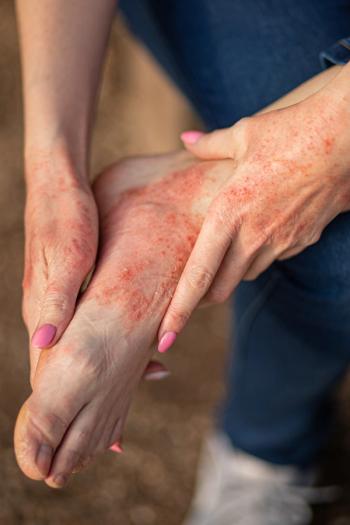
LEO Pharma presented 3 AAD posters on the efficacy of tralokinumab in various AD subgroups across the 12-month TRACE program.
New sunscreen filters, AI tools, and immunotherapies are reshaping skin cancer prevention and treatment, improving precision and long-term survival.
During the late-breaking research session at the 2026 AAD Annual Meeting 2026, Mary Spellman, MD, shared successful news about intratumoral PH762 for cutaneous carcinomas.
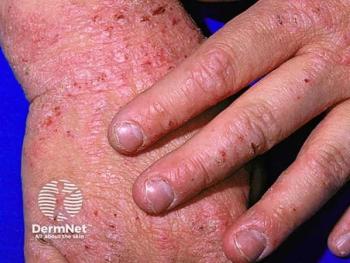
Eight in ten ADlong patients achieved clinical response without steroid rescue, strengthening the case for lebrikizumab as a standalone, long-term management option.
At AAD 2026, Helen He, MD, highlights how minimally invasive molecular profiling distinguishes photoexposed and photoprotected aging trajectories.
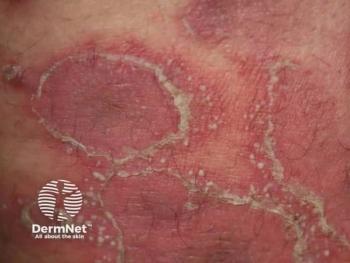
LEO Pharma shared 2 posters with data from the ongoing EFFISAYIL ON program, supporting long-term use of spesolimab for generalized pustular psoriasis.
Daniel C. Butler, MD, discusses adherence challenges, medication risks, and practical strategies to optimize dermatologic care in older adults.
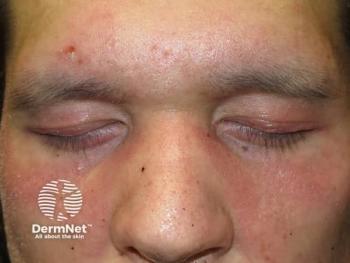
The FDA has granted Priority Review to brepocitinib's NDA for dermatomyositis, with a Q3 2026 PDUFA date that could make it the first drug specifically approved for this indication.
Catch up on coverage from the second day of the 2026 American Academy of Dermatology Annual Meeting held in Denver, Colorado.
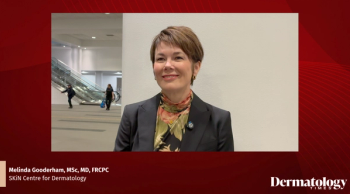
At AAD 2026, Melinda Gooderham, MSc, MD, FRCPC, reviewed late-breaking zasocitinib data for psoriasis, noting that 70% of patients reached sPGA 0/1.
Missed the late-breaking sessions? Review our quick guide of all the need-to-know data from AAD 2026.
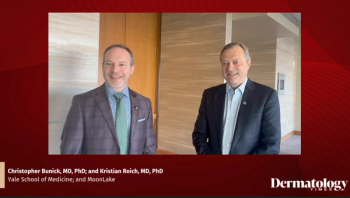
Christopher Bunick, MD, PhD, and Kristian Reich, MD, PhD, discuss the long-term efficacy of sonelokimab, with more than 60% of patients achieving HiSCR75 and approximately 30% reaching HiSCR100.
Phase 3 data presented at AAD 2026 show once-daily oral therapy clears skin as early as week 4, offering a fast-acting option for patients.

This portion of the AMETHYST trial is the second successful phase 2 study of litifilimab, an investigational monoclonal antibody for CLE.