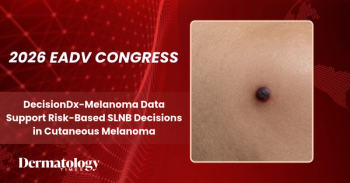
Prospective data suggest DecisionDx-Melanoma may help refine SLNB decisions and identify recurrence risk beyond conventional staging.
New sunscreen filters, AI tools, and immunotherapies are reshaping skin cancer prevention and treatment, improving precision and long-term survival.
“I'm biased, but I think this is the most dynamic area in our field, and it's really one that we make a difference in patient lives,” Rigel said. “There were over 10,000 papers that were published last year alone in the literature on skin cancer, and there's a reason for that.”
A major development in prevention is the passage of the Safe Sunscreen Standards Act, which is expected to accelerate the approval of new ultraviolet filters in the United States. Rigel noted that this represents a critical shift, as no new sunscreen agents have been approved since 1999. A leading candidate, bemotrizinol (BEMT), is anticipated to gain approval soon, offering a broad-spectrum, cosmetically acceptable option that may enhance patient adherence and photoprotection.
Advances in risk stratification and personalized care are also transforming nonmelanoma skin cancer management. In squamous cell carcinoma, gene expression profile (GEP) testing is emerging as a valuable tool to assess metastatic risk and guide the selective use of adjuvant radiation therapy, reducing unnecessary treatment and associated morbidity. For basal cell carcinoma, the continued use of hedgehog pathway inhibitors such as vismodegib and sonidegib has improved outcomes in advanced disease. Meanwhile, immunotherapies, particularly PD-1 and PD-L1 inhibitors, are reshaping treatment paradigms for squamous cell carcinoma and Merkel cell carcinoma, with newer agents demonstrating promising efficacy. Rigel also highlighted the clinical utility of polyomavirus antibody testing in Merkel cell carcinoma, which can aid in monitoring for disease progression.
Finally, Rigel noted that advances in systemic therapies have transformed outcomes in advanced melanoma, with approximately half of patients achieving long-term survival of 8 to 10 years, particularly with combination regimens. Collectively, these developments underscore a rapidly evolving landscape in skin cancer care, marked by increasing precision, improved survival, and continued innovation.
“Melanoma is no longer an automatic death sentence. If you have metastatic disease with the new treatments, there's some exciting things out there,” he concluded.
Reference
1. Rigel, D. Therapeutic Hotline: What’s New This Year in Skin Cancer. Presented at the 2026 AAD Annual Meeting; March 26-31; Denver, Colorado.