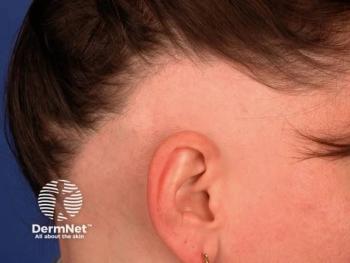
The FDA approval, based on 36-week data from the phase 3 BRAVE-AA-PEDS trial, extends baricitinib access to patients as young as 12 years old with severe alopecia areata.
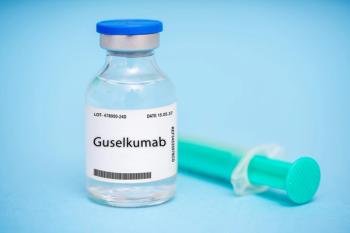
Philip Mease, MD, discusses the FDA's label expansion for guselkumab's inhibition of structural joint damage in psoriatic arthritis.
Philip Mease, MD, director of rheumatology research at Providence Swedish Medical Center in Seattle, recently discussed the FDA's recent
Mease said patients with psoriatic arthritis tolerate pain and fatigue to a point, but structural damage carries a different weight for them.
"I don't want my joints destroyed," Mease said, describing how patients phrase the concern, often tying it to wanting to remain active with family and at work.
He said this concern has made inhibition of structural damage progression a consistent focus across drug development programs in psoriatic arthritis.
Mease described the standard method for assessing joint damage in psoriatic arthritis trials. Investigators obtain X-rays of the hands and feet and evaluate two features.
"We're looking for evidence of either joint space narrowing or what are called erosions," Mease said.
These findings are graded using the Sharp/van der Heijde score, which Mease said has been applied at least once during development for most drugs in the psoriatic arthritis treatment armamentarium, typically in phase 3 trials.
Mease traced this assessment back to guselkumab's pivotal phase 3 trials. In Discover 2, a bio-naive population, two guselkumab dosing regimens were tested against placebo: monthly dosing and dosing every other month.
The monthly arm achieved statistical separation from placebo on structural damage progression, Mease said. The every-other-month arm narrowly missed statistical separation, which at the time prevented the FDA from including a structural inhibition claim on the drug's label.
Mease noted other IL-23 inhibitors also failed to separate from placebo on this measure in their own trials. The new label expansion is supported by additional data from the APEX study, a placebo-controlled trial in bio-naive patients with active psoriatic arthritis, which met its primary end point and demonstrated inhibition of structural damage progression as measured by the psoriatic arthritis-modified van der Heijde-Sharp score. With this update, guselkumab's label now reflects structural damage inhibition evidence that the earlier Discover 2 (
Reference