


News|Articles|March 28, 2026
Late-Breaking Data: Zasocitinib Achieves Rapid Skin Clearance in Plaque Psoriasis
Key Takeaways
- Two global, randomized, double-blind phase 3 trials used co-primary week-16 endpoints (sPGA 0/1, PASI 75) and included placebo and apremilast comparators.
- Zasocitinib produced superior week-16 efficacy versus placebo/apremilast, including sPGA 0/1 ~69–71% and PASI 90 ~52–61%, with statistically robust separation (p<0.001).
Phase 3 data presented at AAD 2026 show once-daily oral therapy clears skin as early as week 4, offering a fast-acting option for patients.
Advertisement
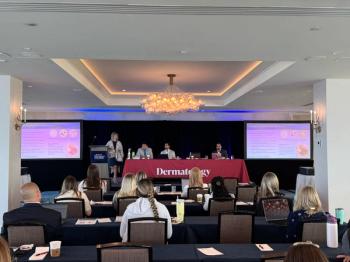
Takeda has released new data from its pivotal phase 3 LATITUDE PsO studies evaluating zasocitinib (TAK-279), a next-generation, highly selective oral tyrosine kinase 2 (TYK2) inhibitor, in adults with moderate to severe plaque psoriasis. The findings, presented as a late-breaking abstract at the
Current treatment paradigms for plaque psoriasis, the most prevalent form of psoriasis, often rely on injectable biologics targeting the IL-23/IL-17 pathway to achieve clear or nearly clear skin.2 Oral therapies with comparable efficacy remain a clinical need, particularly for patients seeking alternatives to injectables.
“Our goal in psoriasis treatment is clear or almost clear skin, and previously this has been achieved primarily with injectable therapies,” said Melinda Gooderham, MSc, MD, FRCPC, dermatologist, SKiN Centre for Dermatology, Peterborough, Ontario, Canada, principal investigator for the Latitude PsO studies and presenting author, in a news release. “These efficacy and safety results show it’s possible for a once-daily pill to deliver rapid, lasting skin clearance, highlighting the potential of zasocitinib to become a leading oral treatment option for plaque psoriasis.”
Study Design and Patient Population
The
Efficacy Outcomes
Results from both studies showed substantial efficacy for zasocitinib compared with placebo and apremilast. By week 16, 71.4% and 69.2% of patients receiving zasocitinib achieved an sPGA score of 0/1, versus 10.7% and 12.6% for placebo, and 32.1% and 29.7% for apremilast (p<0.001). PASI 90 responses were similarly notable, with 61.3% and 51.9% of patients on zasocitinib achieving this benchmark versus 5.0% and 4.0% on placebo, and 16.8% and 15.9% on apremilast (p<0.001).
Complete skin clearance, increasingly utilized as a clinically meaningful goal, was also achieved by a notable proportion of patients: sPGA 0 responses were observed in 39.9% and 33.7% of patients on zasocitinib compared with 0.7% and 1.4% on placebo and 8.0% and 6.5% on apremilast, while PASI 100 responses reached 33.4% and 25.2% versus 0.7% and 1.1% for placebo and 2.9% and 4.3% for apremilast. These responses continued to increase through week 24, suggesting durable efficacy.
Rapid onset of action was observed in LATITUDE PsO 3002, with 16.8% of patients achieving PASI 75 by week 4 compared with 4.3% for placebo (p<0.001). Among patients who achieved PASI 75, PASI 90, or sPGA 0/1 at week 40 and continued treatment, over 90% maintained responses through week 60.
“Our phase 3 results demonstrate that highly selective TYK2 inhibition can offer many people with moderate to severe plaque psoriasis the potential for clear or nearly clear skin,” said Chinwe Ukomadu, MD, PhD, senior vice president and head, Gastrointestinal & Inflammation Therapeutic Area Unit at Takeda, in the release. “The positive data also underscore zasocitinib’s potential to deliver rapid and durable results with a favorable safety profile consistent with phase 2b studies. We are working as quickly as possible with regulators to advance a potential new therapeutic option for patients seeking a safe, effective and convenient oral treatment.”
Safety and Tolerability
Zasocitinib was generally well-tolerated. Treatment-emergent adverse events (TEAEs) through week 16 occurred in 62.1% of patients on zasocitinib, compared with 46.9% for placebo and 50.5% for apremilast. The most common events (≥5%) were upper respiratory tract infection (10.1%), nasopharyngitis (6.2%), and acne (6.5%). Serious TEAEs were reported in 3.0% of patients on zasocitinib, less than 1% on placebo, and 1.5% on apremilast. Importantly, no new safety signals were identified, and the safety profile remained consistent with prior phase 2b data.
Mechanistic Insights
Zasocitinib is a highly selective oral TYK2 inhibitor, achieving more than 1-million-fold selectivity over other JAK family members. By targeting TYK2, the drug modulates IL-23 and related inflammatory pathways central to psoriasis pathogenesis, while minimizing off-target JAK inhibition. This selectivity may underpin both the robust efficacy and favorable safety profile observed in LATITUDE.
Clinical Implications
These phase 3 data highlight the potential for oral TYK2 inhibition to deliver rapid, durable, and meaningful skin clearance in moderate to severe plaque psoriasis. For clinicians, zasocitinib represents a promising option for patients seeking effective, non-injectable therapies. Regulatory submissions to the FDA and other authorities are anticipated in fiscal 2026, offering the possibility of expanding oral treatment choices for patients living with this chronic and often debilitating condition.
References
- Takeda’s zasocitinib delivered rapid and durable skin clearance in a convenient once-daily pill, affirming promise to reshape psoriasis care. Late-breaking abstract presented at: AAD 2026; March 27-31, 2026; Denver, CO.
- Hawkes JE, Yan BY, Chan TC, Krueger JG. Discovery of the IL-23/IL-17 signaling pathway and the treatment of psoriasis. J Immunol. 2018;201(6):1605-1613. doi:10.4049/jimmunol.1800013
Advertisement
Related Content
Advertisement



Latest CME


Advertisement
Advertisement
Trending on Dermatology Times
1
How Emerging Androgenetic Alopecia Therapies Target DHT at the Scalp Level
2
Social Media Mythbusters: Beef Tallow
3
Dermatology Times Inaugural NP/PA Connect Cutaneous Oncology Workshop Kicks Off in Tampa
4
25 Years Later: Remembering September 11 Through the Lens of Dermatologic and Burn Care
5