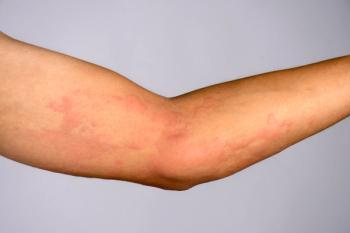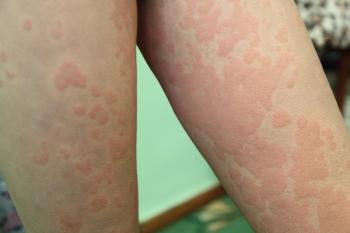
Dietary modification may improve disease activity and quality of life in some patients with chronic idiopathic urticaria.
Discover the latest advancements in CSU therapy, including Gil Yosipovitch's insights on barzolvolimab's promising results and its potential impact on patient care.
Chronic spontaneous urticaria (CSU) is a recurrent inflammatory skin disorder defined by unpredictable episodes of wheals and angioedema, significantly impacting patients’ quality of life. Up to 63% of individuals experience moderate to severe pruritus, and 30% report episodes of angioedema. Gil Yosipovitch, MD, professor of dermatology and the director of the Miami Itch Center at the Dr Phillip Frost Department of Dermatology and Cutaneous Surgery at the Miller School of Medicine in Miami, Florida, delivered a comprehensive update on the evolving treatment landscape for CSU, including the promising results from the phase 2 trial of barzolvolimab, in a Dermatology Times Readout 360 custom video series.
Historically managed primarily by allergists, CSU is increasingly recognized as a dermatologic condition due to its visible, skin-centered presentation. Beyond the manifestations, patients with CSU often experience impaired sleep, heightened anxiety, and significant psychosocial burden. According to Yosipovitch, studies suggest these patients may experience more anxiety than those with psoriasis, which is a testament to the disease’s unpredictability and chronicity.
The 2022 international guidelines recommend a stepwise approach that includes nonsedating H1 antihistamines; omalizumab, an anti-IgE monoclonal antibody; and cyclosporine, an immunosuppressant. However, many patients experience only partial relief, highlighting a critical need for more effective therapies.
Several agents with novel mechanisms have entered the therapeutic landscape:
This randomized, double-blind, placebo-controlled trial of barzolvolimab (NCT05368285) enrolled patients with moderate to severe CSU unresponsive to H1 antihistamines, including 16% to 22% who had previously received omalizumab.
“There is a heterogeneity of CSU, clearly of a population that I see,” Yosipovitch noted. “I see a lot of referrals of complex, chronic urticaria that failed antihistamine high doses. So, this actually very well reflects the population in need that shows up in my clinics.”
Participants received one of the following 3 barzolvolimab regimens:
The trial spanned 76 weeks, including 52 weeks of treatment and 24 weeks of follow-up, allowing robust evaluation of efficacy and durability of response. The primary end point was the mean change in Urticaria Activity Score over 7 days (UAS7) at week 12.
Significant reductions in UAS7 scores were seen in the 150-mg and 300-mg groups compared with placebo. Notably, 38% (150 mg) and 51% (300 mg) of patients achieved a complete response (UAS7 = 0) by week 12. More than 35% of patients maintained a complete response 28 weeks after the final dose, underscoring the potential disease-modifying effect of barzolvolimab.
Barzolvolimab’s impact extended beyond symptom control. At week 76, 40% to 48% of patients had a Dermatology Life Quality Index score below 1, indicating no impact on quality of life. Improvements in sleep, anxiety, and stress were also observed, reducing the overall burden of CSU. Barzolvolimab showed comparable efficacy in both omalizumab-naive and previously treated populations, addressing a major gap in CSU treatment for biologic-refractory patients.
“That sustained control of the disease lasted up to 76 weeks, 28 weeks after a final dose. This is a very important aspect of the drug. To me, it points out that there is a possibility that this is not just a symptomatic treatment, but a disease-modifying drug, and possibly the patients would not need this for life,” Yosipovitch said.
Barzolvolimab demonstrated a favorable safety profile, with most adverse events being mild and reversible. Some of these include hair color changes (14% at 16 weeks, 26% at 52 weeks), neutropenia (9% at 16 weeks, 17% at 52 weeks), and skin hyperpigmentation (1%-13%). These changes were mild and of minimal clinical concern. Importantly, no significant infections or serious safety signals were reported.
Barzolvolimab represents a potential paradigm shift in CSU management. Its unique mast cell–depleting mechanism, rapid onset, favorable safety profile, and durable efficacy even after treatment cessation set it apart from existing therapies. Its ability to induce complete remission and potentially modify disease course is particularly compelling.
Yosipovitch emphasized barzolvolimab’s potential role in treating patients who fail conventional therapies, including those previously unresponsive to omalizumab. The sustained efficacy post treatment could reduce the need for chronic medication use, a critical consideration for a disease that may last for years. Pending phase 3 confirmation, barzolvolimab could soon become an essential tool in the dermatologist’s armamentarium for managing CSU.
11 months ago
Cosmetic Trends of Dermatologic Interest in 202511 months ago
Identifying Breast Issues Beyond the Skin