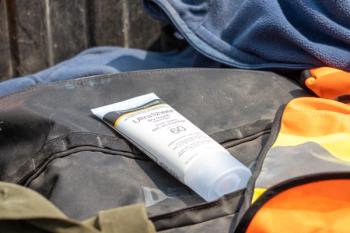
Two new Neutrogena facial sunscreens incorporate bemotrizinol, the first new sunscreen active ingredient added to the US OTC monograph in decades.
Explore the intricate link between dermatology and psychiatric disorders, revealing how mental health impacts skin conditions and treatment approaches.
Any prideful dermatologist would never fail to remind others that the skin is the largest organ. What many people might not be keenly aware of is that this organ is not only connected to the brain via complex neurovascular pathways, but also to the mind. That’s right, ladies and gentlemen, sometimes the mind affects the skin.
Thus, I have appointed myself to discuss dermatological manifestations of psychiatric disease. Why, you might ask? One reason is that I was actively recruited by psychiatric residency programs in medical school. I am a retired amateur stand-up comedian and a male with a ponytail, so naturally, I feel a certain kinship with psychiatrists. The other reason is that these conditions are increasingly common in dermatology clinics, but there is little awareness of them in the community.
The next logical question you may ask is, what is a dermatologist to do for a psychiatric disease presenting as a skin problem? This question raises both practical and ethical conundrums. On the one hand, it is reasonable to practice strictly within the dermatology scope for both medicolegal and practical purposes. This would lead to psychiatry referrals for cases with a primary pathology of a psychiatric disease. On the other hand, many, if not most, of these patients either don’t have timely access to a psychiatrist or simply don’t wish to see one. And thirdly, it’s possible that the patient may already have a psychiatrist and their psychiatrist referred them to a dermatologist for the issue.
Accordingly, the following represents a selective—though not exhaustive—list of dermatologic conditions well-recognized by clinicians as secondary to primary psychiatric disorders, ranging from depression and anxiety to psychosis and related states. Here, our cases will cover neurotic excoriation disorder, trichotillomania, and delusional parasitosis.
When I entered the exam room, the visibly anxious but pleasant 63-year-old man was feverishly picking and scratching his skin while grinning as if I were his itch savior. He remarked that he had just been laid off from work and was having significant marital troubles. Now, some more academically minded dermatologists may shun me for lumping anxiety/depression-induced neurotic excoriations with the eczematous condition prurigo nodularis. Interestingly, we often have 5 to 10 suspiciously nearly identical dermatoses in dermatology that seem to differ only in minor semantics. Insurance approval of a therapeutic that may effectively treat most itchy conditions hinges on documenting the condition under the specific FDA-approved diagnosis, in this case, prurigo nodularis. Am I treating this patient’s underlying anxiety/depression? Yes and No. If their itch is significantly reduced, anxiety/depression is typically reduced as well. There is a chicken-vs-egg riddle here somewhere.
The 17-year-old girl had struggled with hair-pulling for years, and the resulting alopecia was so extensive that she wore a wig at all times. After further gentle questioning—and after her mother initially denied her daughter’s behavior—the patient admitted to habitual hair-pulling as a coping mechanism for her uncontrolled obsessive-compulsive disorder and depression, while maintaining near-perfect grades in high school. After I examined her scalp with dermoscopy and ruled out alternative diagnoses, I identified the condition as trichotillomania. In a perfect world, a dermatologist would spend extended periods with the patient, discussing the condition and explaining how it is a manifestation of a psychiatric disease. However, with a full clinic, this is unfortunately not always feasible. Habit-reversal training was recommended via either online sources or a psychiatrist referral.
The third and final condition of note is one that, since early in my attending career, I have yet to see any consistent treatment success. Buzzkill? Perhaps. Unmet need? 100%. This condition is delusional parasitosis, in which patients firmly believe they are infested with parasites, despite medical evidence to the contrary. This can lead to skin picking, often negative patient encounters, and a sense of failure by many a dermatologist.
A 50-year-old nurse, with a history of posttraumatic stress disorder from childhood traumas, had seen numerous dermatologists and an infectious disease specialist with no improvement. Several antibiotics and antiparasitic agents were previously given, also without any improvement. Every conceivable infectious blood test, culture, and even biopsy was performed, which were all negative for any pathology. Despite this, the patient came to our visit with “proof,” the infamous resealable bag of “organisms,” which were pieces of clothing lint and crusted scabs. Some experts have creative ways to rationalize antipsychotic medication therapy to patients in these cases by citing studies reporting the effectiveness of antipsychotic therapeutics in killing certain parasites in vivo. Other experts spread this type of visit out over several sessions to build a better rapport and trust with the patient before pursuing psychotropic therapy. I have always found this type of case to be the most challenging. I provided active listening, and I proposed that it might be possible that this condition was not an infection, but secondary to a psychiatric condition. Unfortunately, this was not a patient victory I can claim.
In conclusion, psychiatric disorders can be intimately associated with, and often be, a primary cause of a dermatologic disease. If successful treatment can be achieved in my exam room, then it will be pursued. If it can’t, doing what is best for the patient is always the next step.
Hershel Dobkin, MD, is a board-certified dermatologist in Bexley, Ohio, specializing in both medical and surgical dermatology.
11 months ago
Cosmetic Trends of Dermatologic Interest in 202511 months ago
Identifying Breast Issues Beyond the Skin