


Opinion|Videos|November 11, 2026
EPP Patient Case: Laboratory Findings and Commitment to Clinical Research
Author(s)Herbert Bonkovsky, MD
Laboratory and imaging findings show severe disease with preserved liver health, and the patient explains why he stayed in clinical trials. His closing message reflects the value of research participation for future patients.
Advertisement
Episodes in this series
"EPP Patient Case: Laboratory Findings and Commitment to Clinical Research" closes the series with a review of Mr. Willis's data and his reasons for staying in research.
Dr. Bonkovsky reviews Mr. Willis's laboratory and imaging findings. His erythrocyte protoporphyrin has averaged between 3,100 and over 6,000 micrograms per deciliter, far above the roughly 500 typically needed for symptoms, which marks severe disease. Photosensitivity also depends on how well the liver clears protoporphyrin, so he stresses hepatitis A and B vaccination, minimal alcohol, and avoidance of cholestatic drugs. Plasma protoporphyrin has also run high, in keeping with severe disease, and most patients never reach the 14 to 21 range. Mr. Willis has a chronically low white count, mildly low platelets, mild splenomegaly, low ferritin, and low transferrin saturation.
His liver has fared well. FibroScan stiffness has remained normal, and a biopsy taken during his acute episode looked relatively normal, so he has no cirrhosis. Liver fat rose on FibroScan but improved with weight loss, and he continues on bitopertin through expanded access.
Dr. Bonkovsky asks why Mr. Willis never took afamelanotide after approval. Mr. Willis cites accessibility, since approved clinics are far away, and says he wanted to stay in the testing process to help children who come after him.
Dr. Bonkovsky then turns to Mr. Willis's family. Disease generally requires two abnormal alleles, his wife is unaffected, and none of his children or grandchildren has symptoms. His three biological children were tested, and one daughter carries only the minor ferrochelatase variant. Mr. Willis recalls a great-uncle, a farmer whose hands swelled and split in the sun and who was never diagnosed.
Dr. Bonkovsky thanks him for his willingness to join trials, which advance the field and bring new treatments to the clinic. Mr. Willis thanks Dr. Bonkovsky for his research over the years and says he does not know where patients would be without him and others who started so long ago.
Thank you for watching this Dermatology Times Case-Based Peer Perspectives series on erythropoietic protoporphyria. Please subscribe to our eNewsletter for information on upcoming video series.
Advertisement
Related to this article
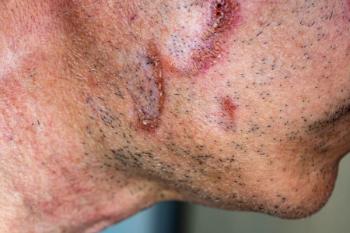
Phase 2 BEACON findings published in JAMA Dermatology demonstrate rapid improvements in disease activity and skin-related quality of life with oral brepocitinib.
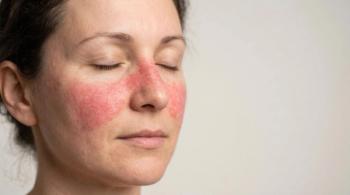
Phase 2 AMETHYST findings show continued improvements in skin redness and clinician- and patient-reported outcomes with litifilimab.

Phase 2/3 data show sustained hair growth and favorable safety outcomes with oral VDPHL01 in men with androgenetic alopecia.
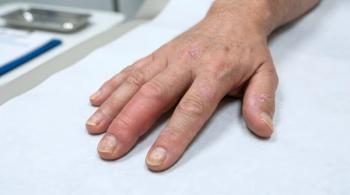
BE BOLD Week 24 data show sustained numerical advantages in joint responses with bimekizumab versus risankizumab in active psoriatic arthritis.

A single subcutaneous dose led to a 4-point or greater itch reduction in 82% of patients with chronic pruritus at week 12 vs 22% with placebo, Attovia reported.

At a Dermatology Times Case-Based Roundtable event, Carolyn Goh, MD, led clinicians through a discussion of severity scoring, patient-reported outcomes, CYP2C9 testing, and long-term monitoring across 3 alopecia areata cases.

The AADA warns that dermatologists could face a 6% Medicare payment reduction in 2027 despite CMS revisions to modifier 25 policies.
Pediatric dermatologists outline how to evaluate suspected topical steroid withdrawal, exclude mimics, and preserve family trust in eczema care.
Advertisement
Advertisement
Trending on Dermatology Times
1
Veradermics Reports Sustained Hair Growth With VDPHL01 at 1 Year
2
PASI 100 Rates and Site-Specific Responses With Oral Psoriasis Therapies
3
Bimekizumab Sustains Joint Responses Through Week 24 in PsA
4
Brepocitinib Clears Skin in 69% of Cutaneous Sarcoidosis Patients
5