

Opinion|Videos|October 28, 2026
EPP Patient Journey: Childhood Diagnosis, Iron Infusion Reaction, and Liver Crisis
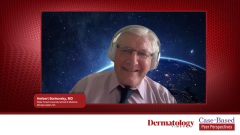
Author(s)Herbert Bonkovsky, MD
A patient diagnosed at age 8 recounts decades of protecting himself from light and a liver crisis after an intravenous iron infusion. His account illustrates why iron replacement demands caution in classical EPP.
Advertisement
Episodes in this series
In "EPP Patient Journey: Childhood Diagnosis, Iron Infusion Reaction, and Liver Crisis," Dr. Bonkovsky introduces Mr. Willis, a patient who has lived with EPP for five decades.
Dr. Bonkovsky introduces Mr. Willis, a 57-year-old man with lifelong severe photosensitivity whose EPP was diagnosed years ago from rapid-onset phototoxicity and markedly elevated erythrocyte and plasma protoporphyrin, with no family history. Genetic testing later confirmed classical EPP, with a large ferrochelatase deletion on one allele and the common intron 3 variant on the other. Dr. Bonkovsky explains that X-linked protoporphyria looks similar but results from a gain-of-function mutation in ALAS2, the first enzyme in the heme pathway. Mr. Willis developed symptoms within minutes at the beach, and the disease sharply narrowed his social and family life.
Mr. Willis recalls being diagnosed at age 8 in the mid-1970s after many attempts to find an answer, and Dr. Bonkovsky was the first specialist he saw, when he was in his 40s. Even light bulbs can provoke reactions once the sun has primed his skin. His mother improvised with brown garden gloves and straw hats, and when reactions were bad he stayed in the dark for days. As an adult, a blue mask, drape hat, and sunglasses let him coach soccer, though he says he looked like the invisible man.
In late 2002, at age 34, a doctor diagnosed anemia and gave him a three-hour iron infusion, and he had his worst reaction since childhood. Within a month he had gallstones, and at gallbladder surgery the surgeon found an orange, sticky substance coating his liver. He went into liver failure and onto the transplant list, but his wife contacted Dr. Bloomer, who advised his liver specialist, and within three to four months he recovered and came off the list. He then joined an afamelanotide trial and felt able to expose his hands, feet, and face.
In "EPP Patient Journey: Trial Experience, IV Iron Risk, and Emotional Burden," Mr. Willis describes his first clinical trial and the lessons about iron and fear that followed.
Advertisement
Related to this article
Updated SKYRIZI labeling allows clinicians to use clinical judgment when determining the need for TB evaluation before treatment.

Experts outline how to recognize undertreated psoriasis, assess incomplete response, and make individualized decisions when escalating therapy.

ATI-052 improved disease severity and itch in a phase 1b trial of patients with severe atopic dermatitis, with no grade 3 or 4 adverse events.
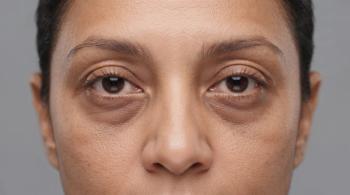
LRM will evaluate injectable rhPDGF-BB as a regenerative approach to infraorbital hollowing in a randomized phase 2b trial.
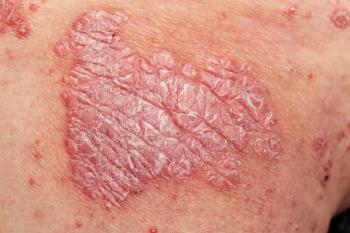
ORKA-001 achieved PASI 100 in 61% of high-dose patients at week 16 in the phase 2b EVERLAST-B trial of moderate-to-severe psoriasis.

Put your dermatology expertise to the test with Dermatology Times’ interactive quiz series.
Stratman discusses individualized eczema care, expanding treatment options, and the potential of precision medicine to guide therapy.

Face taping promises smoother skin and fewer wrinkles without injectables, but evidence suggests any visible benefits are largely temporary.
Advertisement
Advertisement