


Opinion|Videos|October 21, 2026
EPP Case 2: Breakthrough Phototoxicity in a Young Construction Worker
Author(s)Herbert Bonkovsky, MD
A young construction worker managed with photoprotection alone continues to have breakthrough phototoxicity and mildly elevated aminotransferases. The discussion covers liver monitoring, biopsy thresholds, and when drug therapy becomes necessary.
Advertisement
Episodes in this series
"EPP Case 2: Breakthrough Phototoxicity in a Young Construction Worker" takes up a second case, this one involving a young man whose livelihood depends on controlling his symptoms.
Dr. Bonkovsky presents a 24-year-old construction worker who has been reassigned from framing crews to indoor tasks for the second time this year. His supervisor has warned that further accommodations may not be possible. He was diagnosed with EPP at age 12 after a long history of immediate painful photosensitivity and has relied on photoprotection alone. He now has breakthrough episodes several times a month. Burning, stinging, and deep pain begin within 10 to 20 minutes of direct sun in spring and summer and can last for hours. He uses tinted mineral sunscreen and protective clothing but removes gloves and sleeves in summer heat, and his schedule does not allow him to avoid midday sun.
Dr. Bonkovsky notes that keeping a white zinc oxide paste on the hands during manual work is difficult. The patient has also tinted his vehicle windows and tried oral beta carotene as a child without benefit. Laboratory tests show mildly elevated aminotransferases with normal bilirubin and hemoglobin, and his vitamin D is still low despite supplementation, so he would benefit from a higher dose. A hepatic ultrasound shows no significant disease, although its sensitivity and specificity are limited and the gallbladder should be checked for stones.
On liver monitoring, Dr. Bonkovsky again emphasizes hepatitis A and B immunization. Men should have no more than two drinks a day, preferably about one, women no more than one, and physicians should choose the lower-risk drug when a cholestatic option exists. He would obtain a baseline FibroScan. If stiffness rises or aminotransferases stay elevated over three to six months, he would perform a needle biopsy and look for protoporphyrin precipitates, including pathognomonic Maltese crosses. For this patient he would move to bitopertin expanded access or afamelanotide implants, and ideally to indoor work.
Our next episode, "Melanocortin Therapy in EPP: Access, Adherence, and Multidisciplinary Care," examines therapy after the second case, including access barriers, adherence, and how specialists should share care.
Advertisement
Related to this article
Tina Bhutani-Jacques, MD, explored how disease location, prior treatment response, and patient preference shape topical treatment decisions across 3 plaque psoriasis cases.
Benjamin Ungar, MD, moderated a recent Dermatology Times Case-Based Roundtable event on how to define severity, choose among JAK inhibitors, and monitor patients with alopecia areata.

Clinicians at a Dermatology Times Case-Based Roundtable, moderated by Chesahna Kindred, MD, debated when to escalate to oral JAK inhibitors for alopecia areata and how to counsel patients on timing, monitoring, and safety.
The joint AAD-HSF guideline issues 37 recommendations, including strong support for adalimumab, bimekizumab, infliximab, and secukinumab.

Two-year oral IL-23 data, GLP-1 biomarker findings, and a nonsurgical option for superficial basal cell carcinoma headline the sessions covered in Las Vegas.
Dermatology’s growing focus on skin longevity demands clear definitions, validated outcomes, and rigorous evidence beyond anti-aging claims.

A retrospective claims analysis of 2897 matched pairs found hazard ratios of 0.48 to 0.67 for new atopic disease with dupilumab vs systemic corticosteroids in children.
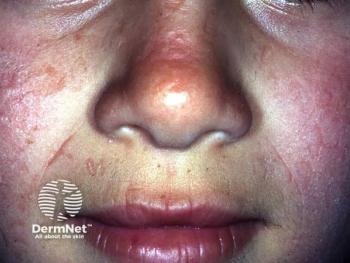
Disc Medicine reports the phase 3 APOLLO trial met all primary and secondary end points, with whole-blood PPIX reduced 41.4% vs placebo and an NDA resubmission planned by end of 2026.
Advertisement
Advertisement
Trending on Dermatology Times
1
AAD, HS Foundation Issue First Joint Hidradenitis Suppurativa Guidelines
2
Dupilumab Associated With Lower Atopic March Risk in Pediatric Atopic Dermatitis
3
Fall Clinical 2026: The Data and Expert Advice Shaping Dermatology Practice
4
Individualizing Systemic Therapy for Alopecia Areata Across Patient Cases
5