

Opinion|Videos|October 14, 2026
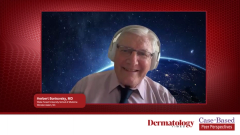
EPP Case 1: A Teenager with Recurrent Light-Induced Pain and Swelling
Author(s)Herbert Bonkovsky, MD
A 15-year-old with eight years of light-triggered pain and swelling had been treated for sunscreen allergy, eczema, and sunburn. The case shows how EPP presents and how it differs from other cutaneous porphyrias.
Advertisement
Episodes in this series
"EPP Case 1: A Teenager with Recurrent Light-Induced Pain and Swelling" opens the first of two patient cases, presented by Dr. Bonkovsky.
Dr. Bonkovsky presents a 15-year-old girl who comes to dermatology with her mother after eight years of recurrent light-induced pain and swelling of the hands and face. Symptoms began around age 7 as mild burning after brief outdoor play in Seattle and worsened after the family moved to Phoenix. At age 12 her pediatrician diagnosed a sunscreen allergy and eczema and prescribed SPF 100 sunscreen, antihistamines, and topical corticosteroids. None of them helped, and after a soccer tournament last month she was treated for sunburn at urgent care. Episodes begin with burning and tingling within 10 to 15 minutes of sun or intense visible light, and redness and swelling resolve over 24 to 48 hours, generally without blistering. Her examination is normal.
Dr. Bonkovsky calls this a very typical presentation and contrasts it with porphyria cutanea tarda, congenital erythropoietic porphyria, and hepatoerythropoietic porphyria. Those conditions cause prominent bullae, slowly healing and often infected lesions, and sclerodermatous change, and patients often do not link the rash to sunlight because it is not immediate. In EPP or XLP he expects, at most, lichenification over the knuckles and mild fissuring around the mouth.
The patient misses two to three school days a month, has left her travel soccer team, and feels isolated, and her younger brother has similar unevaluated sun sensitivity. Dr. Bonkovsky's priority is a firm diagnosis with genetic testing to distinguish classical EPP from XLP. He would then test the brother and other first-degree relatives using whole blood protoporphyrin at Mayo and targeted mutation analysis. He would also assess liver status and vitamin D levels.
Up next, in "Recognizing EPP: Diagnostic Red Flags, Psychosocial Burden, and Confirmatory Workup," Dr. Bonkovsky examines the missed clues, the psychosocial toll on the patient, and her confirmatory workup.
Advertisement
Related to this article

New dermatology research explores hidden steroids in OTC products, infant eczema, melanoma prevention, cutaneous lymphoma, and pediatric AD.

SYX-5219 improved disease severity and itch in a Phase 1b trial of adults with moderate to severe atopic dermatitis.

In a survey of 301 employed adults, overall work impairment attributable to CHE was 31.8%, and quality of life worsened in step with self-reported disease severity.

An analysis of 633 skincare brands found gaps in evidence, safety information, and claim support, raising questions about what patients can verify online.

Can “Botox in a bottle” really rival injectable neuromodulators? We examine the evidence behind topical peptide serums and Argireline.

Dermatology clinicians at a Case-Based Roundtable in Austin, Texas, discussed real-world strategies for sequencing topical therapy, phototherapy, and ruxolitinib cream across pediatric and adult vitiligo cases.

Christophe Piketty discusses 3-year ARCADIA data demonstrating sustained efficacy and long-term safety of nemolizumab in atopic dermatitis.

Two claims analyses of hidradenitis suppurativa showed similar symptom prevalence in males and females and lower dermatologist access among rural patients than urban patients.
Advertisement
Advertisement
Trending on Dermatology Times
1
First-in-Class Oral PKM2 Modulator Shows Early Efficacy in Atopic Dermatitis
2
Alopecia Areata Is a Medical Disease: Treatment Options and Defining Severity
3
Hidradenitis Suppurativa Claims Data: Sex Parity and Rural Care Gaps
4
JAK Inhibitor Safety in Atopic Dermatitis: Long-Term Epidemiology Data
5