Houston dermatology clinicians compared severity scoring, JAK inhibitor safety data, and psychosocial counseling strategies across 3 alopecia areata patient cases.
Experts discuss the Delphi consensus statement, which emphasizes early treatment and prioritizes JAK inhibitors as first-line therapy for adults with severe AA.
For the first time, dermatology clinicians treating adults with severe alopecia areata (AA) have an expert consensus that defines what counts as severe
disease, what to prescribe first, and how long to wait before changing course. Published in September, the Delphi consensus statement designates oral Janus kinase (JAK) inhibitors as first-line, long-term therapy for all adults with severe disease.1
The 31 US-based experts on the panel, convened by the
"These are not meant to replace clinician interest, clinician intuition, or clinician decision-making, but really to suggest that we have a much more clear road map for patients with severe alopecia areata than we had before," senior author Arash Mostaghimi, MD, MPA, MPH, vice chair of clinical trials and innovation at Brigham and Women's Hospital, said in an interview with Dermatology Times.
The panel adopted the
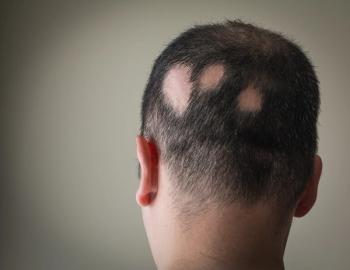
The SALT-50 cutoff used in pivotal trials "really doesn't match what we see in the clinical setting," Mostaghimi said. "For example, today I saw a patient with 40% scalp hair loss. I don't think that if she went to 50% that she'd feel bad, and at 40%, she was totally fine." Under the AASc, a patient with 25% scalp loss and significant brow and lash involvement qualifies as severe.
Victoria Garcia-Albea, NP, director of the hair loss clinic at Lahey Hospital & Medical Center in Burlington, Massachusetts, said the scale also solves a usability problem. "In clinical practice, it may be difficult to accurately calculate SALT scores, and the SALT score may not indicate true AA disease burden," she told Dermatology Times. "According to the AASc, I believe many more patients [with AA] will qualify for treatment with oral JAK inhibitors."
"Oral Janus kinase inhibitors represented the primary, long-term therapy for all patients, with dupilumab as an alternative option for patients with comorbid atopy," according to the consensus guidelines.1 FDA-approved agents (eg,
Timing matters, Mostaghimi stressed. "Alopecia areata is different from other conditions in that you have a window throughout which you can treat these patients. If you don't treat them within that window, you're likely to have slower regrowth and less complete regrowth," he said. That window begins to close around 3 to 4 years, he added. "This isn't like psoriasis, where you can take a year or 2 to the side and try some topicals and figure it out."
For clinicians new to JAK inhibitors, his advice is to pick one and learn it. "If you're not comfortable with one, do it with a buddy," he said. "If you're not comfortable prescribing the JAK inhibitor, it really is your responsibility to get your patient somewhere where they can access that medication."
The consensus suggests considering site-specific adjuncts: oral and topical minoxidil; intralesional, oral, and high-potency topical corticosteroids; and topical JAK inhibitors and prostaglandin analogs.1 Topical sensitizers, methotrexate, azathioprine, and cyclosporine did not make the list. "While there [are] data for these medications, given the development of JAK inhibitors and their success, it's hard to justify the benefit of the medications in the context of the risks or the difficulty in taking these medications," Mostaghimi told Dermatology Times, although he noted they may still suit a small group of patients in exceptional situations.
Patients know that trial and error too well. Brandi Jones was diagnosed with AA at 18 months old in 1972. Over nearly 5 decades, she tried steroid injections, prednisone, methotrexate, platelet-rich plasma, and squaric acid, which burned her badly enough that she missed work, she told Dermatology Times. Jones started a JAK inhibitor in a clinical trial in January 2021, saw visible regrowth by month 2, and remains on treatment 5.5 years later.
“I had nearly given up hope. I was 50 years old and convinced in my lifetime I would never find anything that worked, until I happened upon a clinical trial in January 2021," Jones said. "I was a broken shell of myself. It was everything in my power to hide it. I wouldn't even take my topper off at home in front of my boyfriend."
Measure Progress in Months
Because medications take longer to work, clinicians need to set appropriate expectations with patients. "We've become accustomed to medications in atopic dermatitis or psoriasis, where outcomes are measured in sometimes hours or days or even weeks. We do not have medications that work that quickly in alopecia areata," Mostaghimi told Dermatology Times.
He tells patients starting treatment in September: "It won't be until St Patrick's Day in March or Easter in April that we're really going to understand whether or not this treatment works for you or not."
The consensus calls for
"Patient support resources should be offered alongside medical treatment," the authors wrote, recommending that clinicians explore mental health and refer when indicated.1
No formal instrument is needed, Mostaghimi told Dermatology Times. "It's simply a ‘How are you doing? How is this impacting you?’" Regrowth itself "can be quite emotional, and there's a lot of lingering psychosocial impact that can last for an extended period of time," he added. Wigs, camouflage, and forgoing treatment remain valid choices for patients who prefer them.
For Jones, that question came late. The first time a clinician asked how AA affected her relationships and work was on a questionnaire at the trial enrollment, nearly 5 decades after her diagnosis. "I was a broken shell of myself. It was everything in my power to hide it," she told Dermatology Times.
As a result of the successful treatment, Jones said that she found strength she didn't know she had. She now runs an online support group of approximately 23,000 members and has a message for clinicians who say their patients with AA aren't bothered by it: "Well, if it doesn't bother them, then why did they wait 6 months to get into your office?”
The consensus does not address children, patients who are pregnant, people with mild to moderate AA, or those with underlying comorbidities.1 The field also needs more options. "It's like going into an ice cream store that has excellent ice cream, but there's 4 flavors and they're all vanilla," Mostaghimi said, pointing to biologics, nonimmunosuppressive agents, therapies with durable off-drug responses, and better topicals in development.
Garcia-Albea already puts the document to work. "As new treatments become available, the guidelines will need to be updated, but for now, this is a great resource that I use in my clinical practice to justify treatment to insurers, and to explain the disease management to patients and families," she told Dermatology Times.
6 days ago
Skin Longevity Needs Evidence, Not Hypeabout 1 month ago
Sun Protection in Beauty Routines: Is SPF Makeup Enough?about 2 months ago
Mind the Gap: Will Digital Replace Clinical?