

Opinion|Videos|October 28, 2026
Melanocortin Therapy in EPP: Access, Adherence, and Multidisciplinary Care
Author(s)Herbert Bonkovsky, MD
Afamelanotide is effective, yet access, cost, and travel limit its use. The discussion considers adherence, the promise of oral therapies, and how dermatologists, hepatologists, and hematologists should share care.
Advertisement
Episodes in this series
In "Melanocortin Therapy in EPP: Access, Adherence, and Multidisciplinary Care," our expert considers what happens once therapy begins.
The patient in Case 2 starts afamelanotide, which Dr. Bonkovsky explains protects by increasing natural skin pigment, not by lowering protoporphyrin production or accumulation. He notes that African Americans, who have abundant eumelanin, generally have milder EPP and XLP than Caucasians. Patients with fair skin, and especially those with red hair and freckles who cannot tan, tend to fare worse.
Asked about his experience, he says the biggest challenge is availability. Few sites in the United States are authorized to administer the drug, and some patients must travel hundreds of miles. The price is very high, which has prompted pushback from pharmacy benefit managers and insurers. Side effects are real but have not been the limiting factor, since access and convenience matter far more. An oral drug with a similar mechanism, such as dersimelagon, would be much more appealing.
On adherence, he suspects even patients on chronic afamelanotide skip winter doses and restart in spring, which he considers reasonable. Oral therapies such as bitopertin and dersimelagon would be very attractive, though they must first gain FDA approval and will probably also be expensive. Even so, one daily pill is far less burdensome than an implant every other month.
On coordination, he believes dermatologists may not have the interest or expertise to manage every aspect of EPP. Liver disease and vitamin D deficiency should be shared with pediatricians or primary care physicians. Patients with significant liver injury should see a hepatologist at least twice a year, with referral to transplant centers when needed. Protoporphyric hepatopathy can progress rapidly to jaundice and liver failure. Plasmapheresis, hypertransfusion, and intravenous heme can help but require a porphyria center of excellence. His final message is to consider the diagnosis earlier and to handle plasma protoporphyrin with strict light protection and refrigeration.
Up next, in "EPP Patient Journey: Childhood Diagnosis, Iron Infusion Reaction, and Liver Crisis," Mr. Willis joins Dr. Bonkovsky to describe growing up with EPP, from childhood diagnosis through a near liver transplant.
Advertisement
Related to this article
Updated SKYRIZI labeling allows clinicians to use clinical judgment when determining the need for TB evaluation before treatment.

Experts outline how to recognize undertreated psoriasis, assess incomplete response, and make individualized decisions when escalating therapy.

ATI-052 improved disease severity and itch in a phase 1b trial of patients with severe atopic dermatitis, with no grade 3 or 4 adverse events.
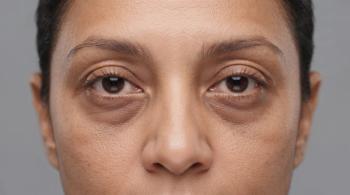
LRM will evaluate injectable rhPDGF-BB as a regenerative approach to infraorbital hollowing in a randomized phase 2b trial.
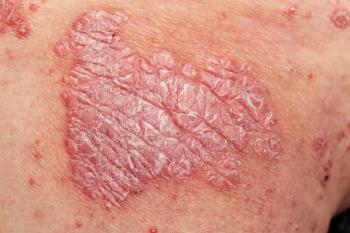
ORKA-001 achieved PASI 100 in 61% of high-dose patients at week 16 in the phase 2b EVERLAST-B trial of moderate-to-severe psoriasis.

Put your dermatology expertise to the test with Dermatology Times’ interactive quiz series.

Stratman discusses individualized eczema care, expanding treatment options, and the potential of precision medicine to guide therapy.

Face taping promises smoother skin and fewer wrinkles without injectables, but evidence suggests any visible benefits are largely temporary.
Advertisement
Advertisement