

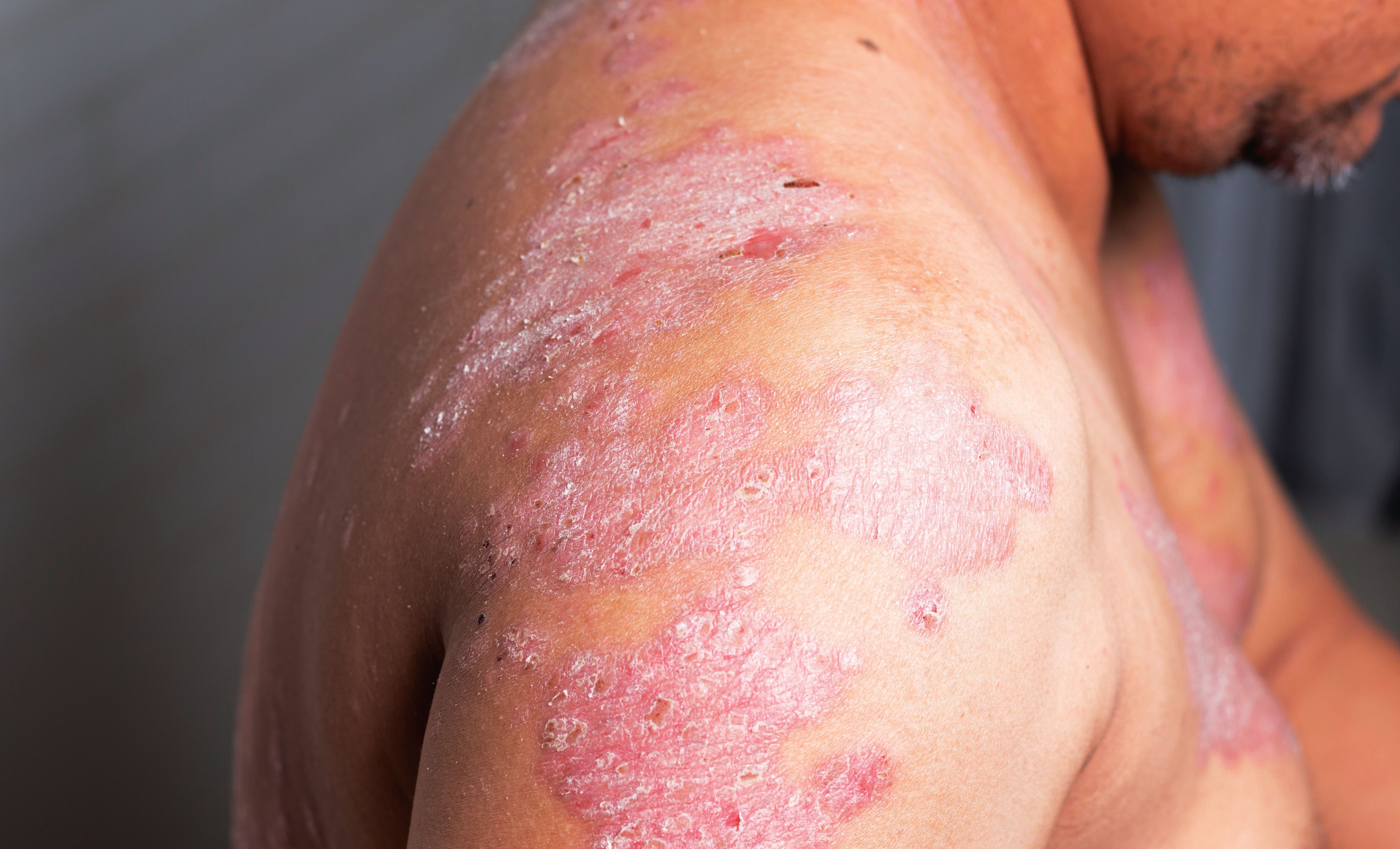

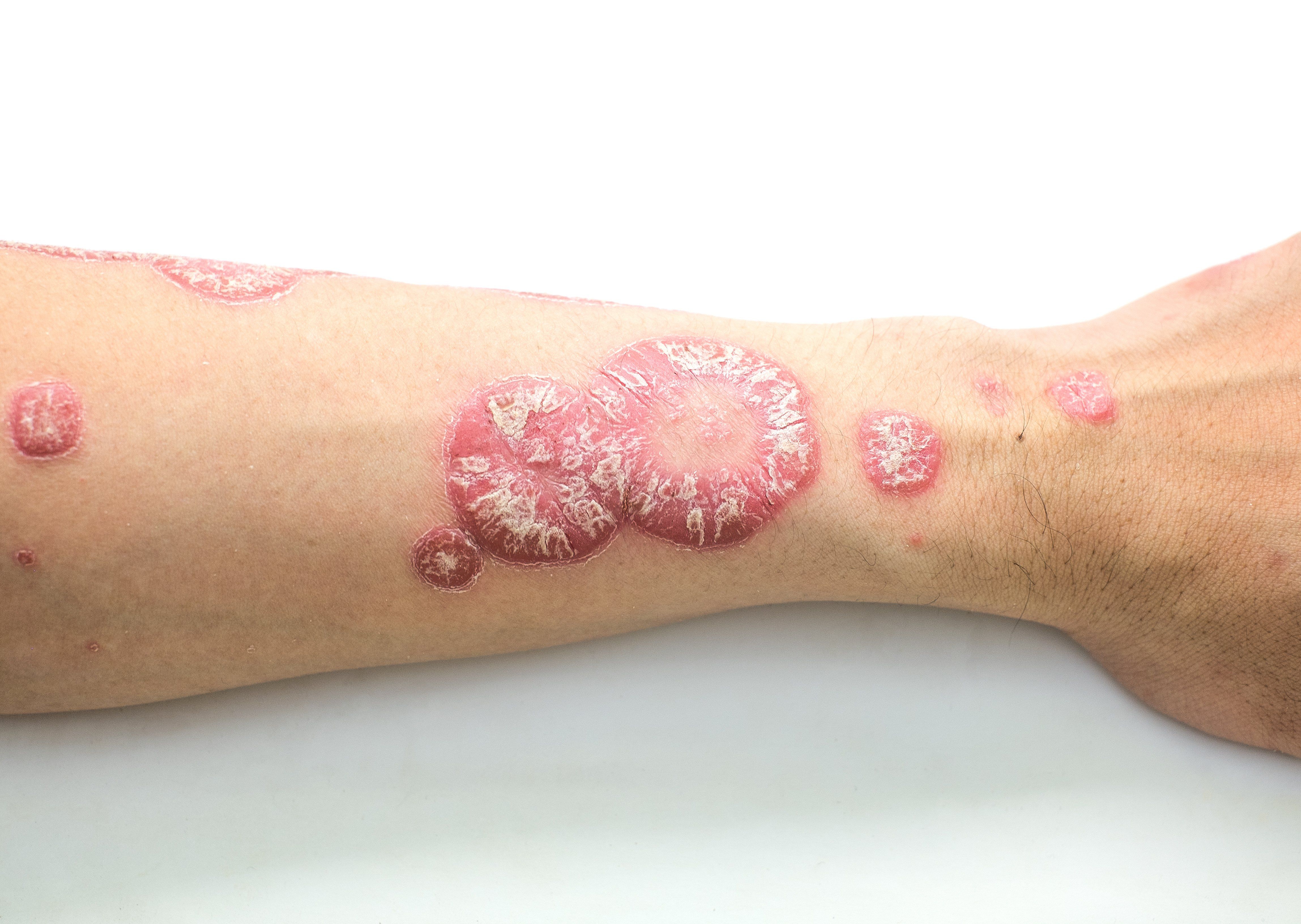



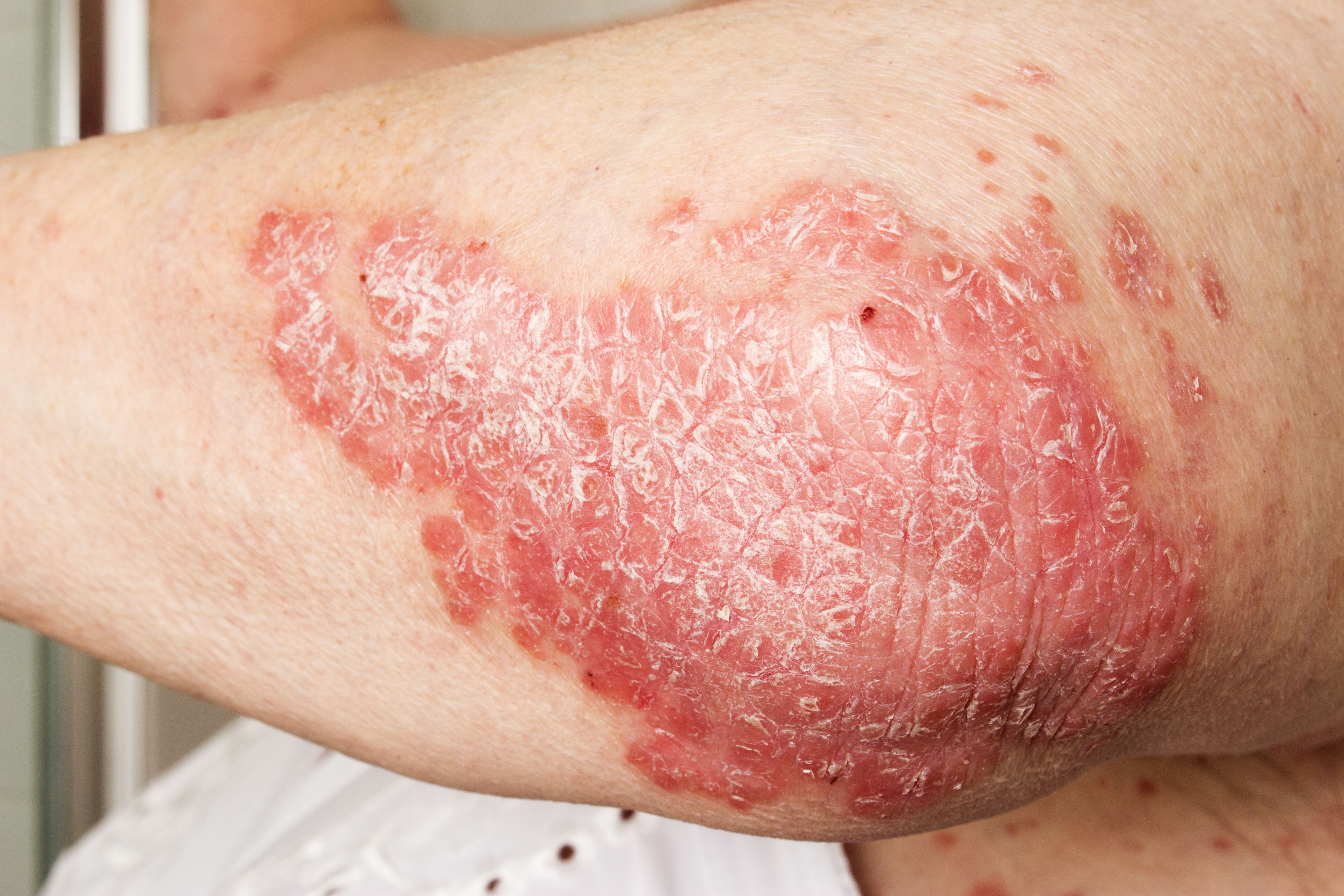
Psoriasis
Latest News
Advertisement
Advertisement

Treatment recommendations for psoriasis patients with specific comorbidities.

Based on current data, biosimilars are therapeutically equivalent to their progenitors, says these experts.

“The landscape of biologics and biosimilars is changing rapidly, and for the better,” says Mark Lebwohl, M.D. Biologics have given patients the possibility of complete psoriasis clearance and control of their psoriatic arthritis (PsA), which were not options 20 years ago, adds Alice Gottlieb, M.D., Ph.D.

With the high incidence of psoriasis and psoriatic arthritis among patients who are obese, it’s important for dermatologists to address weight and weight management. But, having that conversation is not always easy. Dr. Soltani-Arabshahi offers tips to help you talk to your psoriasis patients about their weight.

Data shows obesity is prevalent among patients with psoriasis and psoriatic arthritis, but the exact role weight plays in contributing to psoriatic disease and its severity is still unknown. At a minimum, industry experts agree that addressing obesity can be vital in treating psoriatic disease.
Patients often don’t talk about the impact of genital psoriasis because of the stigmatization, feeling shy or fear of judgement. It's up to dermatologists to proactively ask patients about their symptoms, urges a recent review.

There are more treatment options for psoriasis patients than ever before, so why do patient reported outcomes still suggest failure to meet patient expectations? Experts from the International Psoriasis Council (IPC) highlight factors that could be causing the perceived disparity between psoriasis treatment and patient satisfaction.

Do you recommend psychotherapy to your psoriasis patients? While there is a well-established connection between psoriasis and mental health, there is little data available on the impact of psychological interventions on psoriasis. These study authors look to fill that gap.

Test your knowledge by answering these five questions about different psoriasis cases.

Ortho Dermatologics announced that halobetasol propionate and tazarotene lotion, 0.01%/0.045% (Duobrii, Ortho Dermatologics) is now commercially available to healthcare providers, according to a press release issued June 25.
A recent study found that Psoriasis Epidemiology Screening Tool (PEST) may help dermatologists identify which patients need a rheumatology referral.

A recent study explored why black individuals with psoriasis are disproportionately under treated. Authors compared differences in the perceptions and understanding of psoriasis therapies in both black and Caucasian patients. Here’s what they found.
Psoriasis patients with skin of color experience psoriasis differently, often reporting worse health related quality of life outcomes compared to their Caucasian peers. Brodalumab may help, suggests a recent study.

The evaluation of psoriasis requires more than simply checking the severity and spread of the disease, a new report suggests. Rather, physicians should try to distinguish between stable and active disease with an eye toward the wider body-wide effects of the latter form.
Cognitive behavioral therapy (CBT) can successfully treat the physical symptoms of psoriasis and systemic treatment doesn't seem to provide an extra boost to its effectiveness, a new systematic review and meta-analysis finds.

Young African American patients with psoriasis are at a higher risk of atherosclerotic cardiovascular disease (ASCVD) and traditional cardiovascular risk factors than white patients with psoriasis of the same age group, says a recent study.
In psoriasis, many therapies offer roughly the same level of care, but that doesn’t mean any patient will respond well to any therapy. According to Mark Lebwohl, M.D., physicians should consider each treatment option in light of a patient's specific comorbidities.

Why do biologics lose efficacy over time? This physician discusses factors dermatologists should consider when they see this issue in their patients.

Continued psoriasis research has led to a translational revolution in inflammatory skin diseases. As a result, there are now a number of safer and more effective medications that can address a growing list of common immune-mediated skin diseases, such as atopic dermatitis, alopecia areata, vitiligo, hidradenitis suppurativa, acne, and rosacea.
More and more adults with psoriasis are using alternative remedies in place of traditional allopathic treatments, says a recent survey. One expert believes it’s due to undertreatment of the condition.

A recent study aimed to explore whether patients suffering from psoriasis carry serious medical morbidity, including cancer, that is not detected through history, physical exam and laboratory studies.

According to a recent study, patients with psoriatic arthritis may be at a greater risk for adult hearing loss than individuals without psoriatic arthritis.

Unlike prior generations of dermatologic drugs, Janus kinase (JAK) inhibitors show potential for treating numerous dermatologic indications. Brett King, M.D., Ph.D. explored what this class of drug has to offer in his presentation during AAD earlier this month.

Researchers found a significant inverse correlation between ustekinumab levels and PASI scores at week 52, suggesting that drug levels are associated with the change in the treatment response. Measuring ustekinumab levels can have major clinical implications.
Advertisement
Advertisement
Trending on Dermatology Times
1
Icotrokinra Sustains Skin Clearance at High-Impact Psoriasis Sites Through 2 Years
2
EADV 2026 Day 3: Long-Term Psoriasis Data and Emerging Therapeutic Targets Take Focus
3
Ritlecitinib Improves Repigmentation in Nonsegmental Vitiligo
4
EADV 2026 Day 2: Long-Term AD Data, GLP-1 Nail Findings, and Emerging Treatments Take Center Stage
5