


Opinion|Videos|March 26, 2026
The Dermatologist’s Role in Early HS Recognition and Long-Term Patient Outcomes
Author(s)Jennifer Hsiao, MD, Barry Resnik, MD, FAAD
Learn how clinicians spot hidradenitis suppurativa early—recurring abscesses, bridging comedones, atypical sites, and when MRI helps distinguish Crohn’s.
Advertisement
Episodes in this series
In this episode, ‘The Dermatologist's Role in Early HS Recognition and Long-Term Patient Outcomes,’ the panelists explore why dermatology is the specialty best equipped to take ownership of HS care. Dr. Resnik argues that dermatologists are natural leaders in HS management because of their visual diagnostic expertise, noting that once a clinician learns to recognize the full clinical picture of HS, including atypical presentations such as pyoderma gangrenosum on the legs or scalp involvement, they will never miss it again. Dr. Hsiao builds on this by emphasizing that HS requires both medical and surgical management, making dermatology the ideal specialty to serve as quarterback of care, coordinating referrals to other specialties and ensuring patients are screened for comorbidities through primary care. She expresses a vision in which HS becomes as routine a part of dermatology practice as psoriasis or eczema rather than being confined to specialty centers.
The conversation then turns to the critical importance of early treatment initiation. Dr. Resnik uses two vivid metaphors to convey urgency to patients, comparing untreated HS to driving down a one-way street where damage accumulates irreversibly, and to putting out a fire in only one room of a burning house. He draws a parallel to the evolving approach to acne, arguing that waiting for disease to worsen before initiating effective therapy is no longer acceptable. Dr. Hsiao reinforces this position by stressing that helping patients understand HS as a chronic inflammatory condition rather than an infection is foundational to gaining their acceptance of immunomodulatory therapies targeting TNF and interleukin-17. She also reframes the risk conversation, urging clinicians to highlight the very real dangers of leaving HS untreated, including depression, debilitation, and disability, rather than focusing solely on potential medication side effects. Both physicians agree that treating earlier, preventing tissue d
The next episode in this series, ‘Overcoming the Obstacles to Effective HS Treatment,’ features the panelists advancing their conversation on HS and focusing on the multifaceted reasons why so many patients with moderate to severe HS remain undertreated, from patient-side medical fatigue and distrust to physician hesitancy and the exhausting prior authorization process that stands between patients and the therapies they need.
Advertisement
Related to this article

A retrospective claims analysis of 2897 matched pairs found hazard ratios of 0.48 to 0.67 for new atopic disease with dupilumab vs systemic corticosteroids in children.
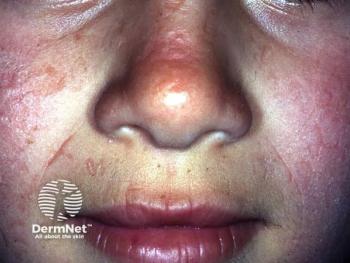
Disc Medicine reports the phase 3 APOLLO trial met all primary and secondary end points, with whole-blood PPIX reduced 41.4% vs placebo and an NDA resubmission planned by end of 2026.

Castor oil has become a popular social media remedy for thicker, longer hair, but evidence supporting its ability to stimulate hair growth remains limited.
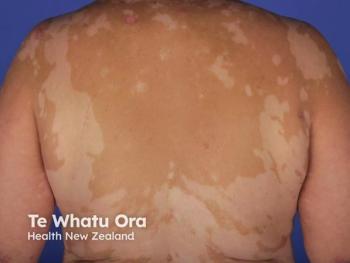
The FDA clearance allows Edesa to expand an ongoing placebo-controlled study of the CXCL10 antibody EB06 to US sites, with topline data expected in the fourth quarter of 2027.

The novel oral helicase-primase inhibitor demonstrated significantly higher rates of complete lesion healing compared with investigator’s choice treatment in the phase 3 PRIOH-1 trial.
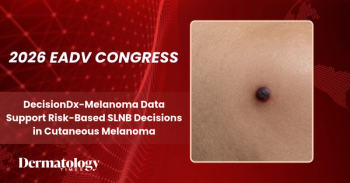
Prospective data suggest DecisionDx-Melanoma may help refine SLNB decisions and identify recurrence risk beyond conventional staging.

Falk G. Bechara, MD, discusses long-term tunnel control, structural damage, and the evolving role of biologics and surgery in HS care.
Galderma has agreed to acquire ZO Skin Health for $1.5 billion, adding the physician-dispensed skincare brand to a portfolio that already includes Cetaphil and Alastin.
Advertisement
Advertisement
Trending on Dermatology Times
1
Social Media Mythbusters: Can Castor Oil Really Grow Hair?
2
Bitopertin Meets All End Points in Phase 3 APOLLO Trial for EPP
3
EADV 2026 Atopic Dermatitis Highlights: Tilrekimig, RAC2 Inhibition, and Level Up Data
4
FDA Approves Pritelivir for Refractory Mucocutaneous HSV in Immunocompromised Adults
5