


Opinion|Videos|March 12, 2026
Overcoming Barriers to Delayed Diagnosis of HS
Author(s)Jennifer Hsiao, MD, Barry Resnik, MD, FAAD
This episode examines the persistent barriers that contribute to the delayed diagnosis of hidradenitis suppurativa, highlighting the need for greater disease awareness, proactive screening by frontline providers, and the growing role of patient self-advocacy in improving earlier detection.
Advertisement
Episodes in this series
In this episode, ‘Overcoming Barriers to Delayed Diagnosis of HS,’ the expert dermatologists address one of the most troubling realities in HS care, that patients wait an average of 10 years to receive a correct diagnosis. Dr. Resnik attributes much of this delay to a fundamental lack of disease awareness, describing HS as "the worst disease no one's ever heard of," and notes that while progress has been made through patient advocacy groups and the efforts of the HS Foundation, widespread recognition remains a significant challenge. He emphasizes that frontline providers including pediatricians, OB-GYNs, urologists, family practice physicians, and general surgeons must learn to recognize HS rather than dismissing lesions as isolated abscesses. For experienced dermatologists, HS is often a doorway diagnosis, immediately recognizable upon visual inspection, yet that same recognition does not translate across other specialties.
Both physicians highlight the growing role of patient self-advocacy, with Dr. Hsiao noting an increase in patients who self-refer after encountering information about HS on social media, underscoring the power of public education in driving earlier care-seeking behavior. Dr. Resnik shares a practical screening strategy he has employed for the past five years, routinely asking new acne patients about lesions in the axillae, groin, and buttocks. He stresses that simply asking the question plants a seed for patients who may have given up after years of inadequate care. Dr. Hsiao reinforces this approach, adding that routine skin checks can also reveal subtle signs of early HS, presenting an important opportunity for timely intervention given that the condition affects approximately 1 in 100 people globally.
The next episode in this series, ‘Addressing HS Misconceptions,’ features the panelists advancing their conversation on HS and focusing on the most common misconceptions surrounding HS, from false beliefs about poor hygiene and infection to assumptions about which patients can develop the disease, emphasizing that these myths contribute directly to diagnostic delays and patient harm.
Advertisement
Related to this article

A retrospective claims analysis of 2897 matched pairs found hazard ratios of 0.48 to 0.67 for new atopic disease with dupilumab vs systemic corticosteroids in children.
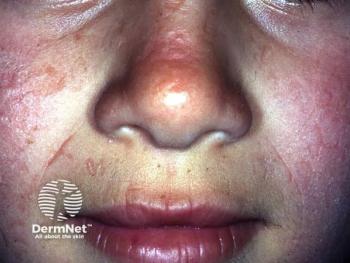
Disc Medicine reports the phase 3 APOLLO trial met all primary and secondary end points, with whole-blood PPIX reduced 41.4% vs placebo and an NDA resubmission planned by end of 2026.

Castor oil has become a popular social media remedy for thicker, longer hair, but evidence supporting its ability to stimulate hair growth remains limited.
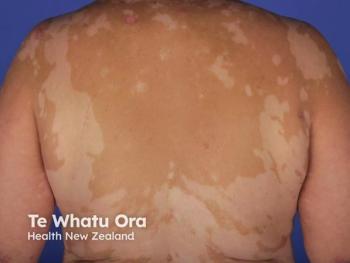
The FDA clearance allows Edesa to expand an ongoing placebo-controlled study of the CXCL10 antibody EB06 to US sites, with topline data expected in the fourth quarter of 2027.

The novel oral helicase-primase inhibitor demonstrated significantly higher rates of complete lesion healing compared with investigator’s choice treatment in the phase 3 PRIOH-1 trial.
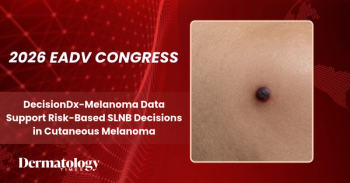
Prospective data suggest DecisionDx-Melanoma may help refine SLNB decisions and identify recurrence risk beyond conventional staging.

Falk G. Bechara, MD, discusses long-term tunnel control, structural damage, and the evolving role of biologics and surgery in HS care.
Galderma has agreed to acquire ZO Skin Health for $1.5 billion, adding the physician-dispensed skincare brand to a portfolio that already includes Cetaphil and Alastin.
Advertisement
Advertisement
Trending on Dermatology Times
1
Social Media Mythbusters: Can Castor Oil Really Grow Hair?
2
Bitopertin Meets All End Points in Phase 3 APOLLO Trial for EPP
3
EADV 2026 Atopic Dermatitis Highlights: Tilrekimig, RAC2 Inhibition, and Level Up Data
4
FDA Approves Pritelivir for Refractory Mucocutaneous HSV in Immunocompromised Adults
5