


Opinion|Videos|March 26, 2026
Overcoming the Obstacles to Effective HS Treatment
Author(s)Jennifer Hsiao, MD, Barry Resnik, MD, FAAD
Dermatologists spot hidradenitis suppurativa early, explain it’s inflammatory, and start medical-surgical care and biologics to prevent lasting damage.
Advertisement
Episodes in this series
In ‘Overcoming the Obstacles to Effective HS Treatment,’ our panel delves into the frustrating reality that despite the availability of FDA-approved therapies, a significant proportion of patients with moderate to severe HS remain undertreated. Dr. Resnik identifies barriers on both the patient and physician sides, noting that many patients arrive so worn down by years of failed treatments and dismissive care that they are unable to trust that anything will help them. He describes a pattern in which patients decline therapy, disappear to do their own research, and return years later with significantly worsened disease but finally ready to engage, underscoring how medical fatigue can delay access to effective care.
On the physician side, Dr. Resnik acknowledges that some clinicians remain hesitant around immunomodulatory therapies, though he stresses that the targeted biologics used in HS are far less broadly immunosuppressive than short courses of corticosteroids that clinicians prescribe routinely. He also highlights the considerable administrative burden of navigating prior authorization, describing a cycle of repeated denials, appeals, and peer-to-peer reviews that often involve reviewers with no relevant expertise in dermatology, placing enormous demands on clinical staff.
Dr. Hsiao echoes this frustration while praising the dedication of nurses and biologic coordinators who manage this process, and directs clinicians to the HS Foundation website, which offers prior authorization templates with supporting references to help streamline approvals for the three currently FDA-approved therapies, adalimumab, secukinumab, and bimekizumab. Both physicians close the segment on an uplifting note, reflecting on the profound, life-changing impact that successful treatment can have on patients, from regaining the ability to wear normal clothes and go on a date, to returning to school and thriving socially, as a powerful reminder of why persisting through these barriers is worthwhile.
Our next episode, ‘The Evolving HS Treatment Landscape: JAK Inhibitors and the Emerging Pipeline,’ further explores HS, highlighting the growing role of JAK inhibitors as emerging therapeutic options alongside the three currently FDA-approved biologics, while examining the exciting pipeline of novel agents that could soon expand treatment choices for patients with HS, including adolescents.
Advertisement
Related to this article

A retrospective claims analysis of 2897 matched pairs found hazard ratios of 0.48 to 0.67 for new atopic disease with dupilumab vs systemic corticosteroids in children.
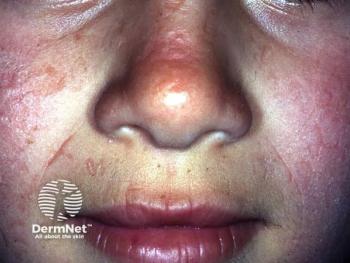
Disc Medicine reports the phase 3 APOLLO trial met all primary and secondary end points, with whole-blood PPIX reduced 41.4% vs placebo and an NDA resubmission planned by end of 2026.

Castor oil has become a popular social media remedy for thicker, longer hair, but evidence supporting its ability to stimulate hair growth remains limited.
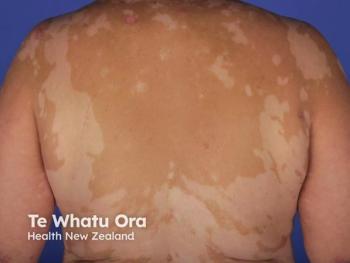
The FDA clearance allows Edesa to expand an ongoing placebo-controlled study of the CXCL10 antibody EB06 to US sites, with topline data expected in the fourth quarter of 2027.

The novel oral helicase-primase inhibitor demonstrated significantly higher rates of complete lesion healing compared with investigator’s choice treatment in the phase 3 PRIOH-1 trial.
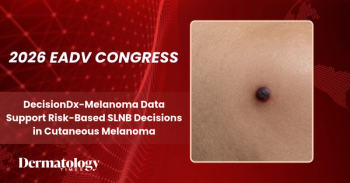
Prospective data suggest DecisionDx-Melanoma may help refine SLNB decisions and identify recurrence risk beyond conventional staging.

Falk G. Bechara, MD, discusses long-term tunnel control, structural damage, and the evolving role of biologics and surgery in HS care.
Galderma has agreed to acquire ZO Skin Health for $1.5 billion, adding the physician-dispensed skincare brand to a portfolio that already includes Cetaphil and Alastin.
Advertisement
Advertisement
Trending on Dermatology Times
1
Social Media Mythbusters: Can Castor Oil Really Grow Hair?
2
Bitopertin Meets All End Points in Phase 3 APOLLO Trial for EPP
3
EADV 2026 Atopic Dermatitis Highlights: Tilrekimig, RAC2 Inhibition, and Level Up Data
4
FDA Approves Pritelivir for Refractory Mucocutaneous HSV in Immunocompromised Adults
5