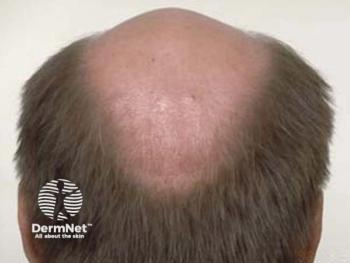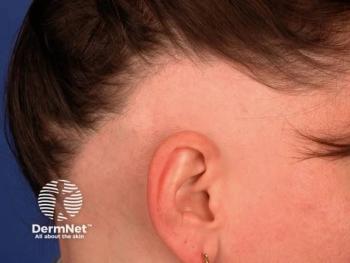
The FDA approval, based on 36-week data from the phase 3 BRAVE-AA-PEDS trial, extends baricitinib access to patients as young as 12 years old with severe alopecia areata.
Andrew Krakowski, MD, encourages involving both caregivers and children in treatment decisions, giving young patients a sense of ownership that can significantly improve adherence.
Pediatric dermatology is evolving quickly—and not always in ways that neatly translate from adult practice. Don’t Be Rash, a new podcast hosted by Andrew C. Krakowski, MD, in collaboration with the Society for Pediatric Dermatology, offers a clinically grounded look at how the specialty is changing in real time, from therapeutic breakthroughs to the practical realities of treating children and their families.
In this series, Krakowski, is a board-certified pediatric dermatologist and Chair of Dermatology at St. Luke’s University Health Network in Bethlehem, Pennsylvania, and SPD member, moves beyond textbook guidance to focus on what actually shapes care: when to escalate therapy, how to think about safety in younger patients, and how emerging science—like the role of the microbiome—may challenge long-held assumptions. Here, Krakowski addresses common questions in the treatment of pediatric patients.
The biggest pitfall is often treating children like small adults rather than accounting for weight-based dosing and their unique surface area-to-volume ratio. We also frequently see a “wait and see” approach for vascular birthmarks, such as port wine capillary malformations or infantile hemangiomas at risk for or actively ulcerating, that actually require earlier, more proactive intervention to get the best results.
I focus on validating their safety-first mindset while gently reframing the conversation to compare the known risks of the medication against the very real risks of leaving the skin condition untreated. Potential consequences of undertreating or not treating at all may be physical, psychosocial, or both, and those need to be considered and weighed in the risk-benefit analysis. It’s all about building a partnership where we use the most modern tools available to ensure the child isn’t just surviving their skin condition, but thriving.
Pediatricians are the true front line for early recognition, and their gut feeling about a rash or lesion is often the most valuable diagnostic tool we have. Collaboration improves when we move toward a “shared care” model, using streamlined communication to make the referral feel like a warm handoff rather than a one-way street or, worse, a dead end.
A referral is usually warranted when the differential diagnosis includes something that could threaten life or bodily function, when the diagnosis remains in doubt after initial workup, when standard first-line therapies aren’t working, or if the patient requires specialized procedural care like pediatric laser surgery. Another guiding principle is that if something is not responding as expected, then it is time to ask for help.
If the complexity of a systemic treatment in a young child starts to feel outside your comfort zone, that’s the perfect time to lean on a specialist. This goes for pediatricians referring to us, the pediatric dermatologists, but it also applies to the pediatric specialists we rely on for help.
I like to treat the visit as a “team huddle” where the caregiver handles the logistics and the child gets a say in the “how,” such as choosing between a cream or an ointment. Giving the child even a small amount of agency often transforms them from a passive subject into an active participant, which is the secret sauce for long-term adherence.
As the quarterback for skin conditions, I also rely on asking myself 2 questions that tend to land me where I need to be as it relates to shared decision-making: 1) What is this going to look like on the front cover of my local newspaper tomorrow morning? and 2) What would I want done for my mom, my wife, and my own 2 kids? Answering those questions truthfully usually keeps me on the right side of awesome.
As pediatric dermatology continues to evolve, conversations like these are becoming increasingly important—not only for specialists, but for any clinician involved in caring for children with skin disease. Through practical discussion and real-world clinical perspective, Don’t Be Rash highlights the nuances of treatment decision-making, multidisciplinary collaboration, and patient-centered care that can ultimately improve outcomes for children and their families.
The podcast, created in collaboration with the
3 months ago
Dermatology Times June 2026 Print Recap3 months ago
Preservatives: The Villain in the Bottle