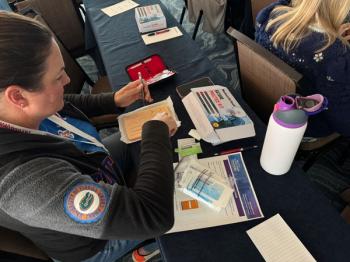
Alexandra Charrow, MD, discussed biologic selection, deroofing, and emerging procedural approaches to hidradenitis suppurativa at Maui Derm NP+PA Fall 2026.
Lim considers mentoring and helping develop the next generation of dermatologists one of his most meaningful contributions to the specialty.
In an exclusive interview with Dermatology Times, Henry W. Lim, MD, FAAD, former chair of dermatology at Henry Ford Health System and president of the International League of Dermatological Societies (ILDS), reflected on his distinguished career. Lim was recently awarded the American Academy of Dermatology’s (AAD) prestigious Gold Medal, the organization’s highest honor. Awarded on a highly selective basis, the medal recognizes individuals who have demonstrated outstanding service to the field through leadership, research, education, and clinical innovation. To celebrate this honor, Lim spoke about his work in expanding dermatology’s global impact, emphasizing mentorship, scientific contributions, and advocacy as central pillars of his professional journey.
Lim: I’m very, very proud of the fact that I have been able to play a role in the development and education of many of the younger dermatologists. I’ve been in academic medicine all my professional career. In that role, I have interacted and participated in the education of many dermatologists, and to see them successful, be it in private practice, be it in academic dermatology, be it in research, be it in organized dermatology, is very, very gratifying.
I’ve also been able to bring the importance of inclusion to the forefront of dermatology as past president of the AAD. Recognizing the manifestation, treatment, and management of skin diseases in different skin types continues to go on, and it is an important aspect of dermatology now.
Lim: In the very beginning, during my residency, a great mentor [of mine] was the chairman of dermatology at New York University [NYU], where I was trained. Rudolf L. Baer, MD, mentored me as to which direction I needed to go. I knew I wanted to go into academic dermatology, and he was able to guide me in that journey. I was a physician-scientist in the beginning, and Irma Gigli, MD, PhD, who was a professor of dermatology at NYU, was a great mentor in helping me to develop my skills and my thinking as a physician-scientist. She also helped to introduce me to some of the academic leaders in dermatology.
When I became the chief of staff at the Manhattan VA hospital, the chair of the Department of Dermatology at NYU, Irwin M. Freedberg, MD, was very helpful in helping me to navigate the structure of NYU Medical School [now NYU Grossman School of Medicine]. After that role, I became the chairman of dermatology at Henry Ford for 20 years. My immediate predecessors were Clarence S. Livingood, MD; and Edward A. Krull, MD. Both of them are giants in dermatology, and both of them were very helpful [in getting] me settled in the Henry Ford system.
Lim: My professional expertise and interest have been in photodermatology, ranging from the negative effects of sunburn and what makes proper sun protection to the use of light in the treatment of various skin diseases. So that has been an interest of mine throughout my career, and I think we have made a very significant contribution, so that has been great. We were the first to show that visible light could induce pigmentary alteration in darker-skinned individuals. [It’s] a very significant clinical challenge for this group of patients, so the fact that we were able to bring that awareness to the public and dermatology in general is very, very important for me throughout all this. I’ve been very fortunate also to have a photobiology group within Henry Ford, as well as the entire Department of Dermatology, to continue to support me in not only taking care of patients, but also to do these types of research activities.
Lim: I think the field, as well as our partners in industry and in the government, has improved quite a bit compared to many years ago, in recognizing this particular need and gap in our knowledge. There are now more treatments [and] more clinical studies that include subjects of all different skin types, so that we can appropriately evaluate the effect of treatment in diverse groups of patients and take care of them appropriately. So those are moving along very, very nicely. On the education front, for example, there is now a great understanding of making sure that when we educate our colleagues, our trainees, and the public, we show photos and images of different skin types.
Currently, as the president of the ILDS, I work quite a bit with international societies, and it is very gratifying. We are blessed in the US and developed countries that we have the resources to do that, but in many parts of the world, that is not the case. So part of ILDS’ mission is to help patients in these parts of the world have good access to skin health. For example, here in the US, the use of sunscreen is very, very easy. People can easily and very affordably purchase sunscreens. But in some parts of the world, sunscreen is not affordable or not available. And some patients are very prone to getting sunburn and developing skin cancer. So that is just one example of what we try to do to help patients from around the world.
Lim: Dermatology is a great specialty. It is something that is needed by all. There can be quite a long wait time to see a dermatologist. So there’s a tremendous need by the general patient population to have access to appropriate skin care. So be grateful to be a dermatologist and take good care of your patients. Get the appropriate treatment for them. And if you’re interested in participating in clinical research, do that.
My advice to people who are starting out is that you need to always grab onto the opportunities that are given to you and do the best you can. You’ll be recognized and appreciated for your contribution and efforts. We have to be grateful and do the best job possible. Enjoy the profession.
I’ve been blessed to have a very good and successful career, but I want to emphasize that this is a team sport. No one can be successful alone. You have to have people who support you, from mentors to peers and colleagues, who continue to support you as you continue to do your work. And of course, family is very, very important.
3 months ago
Dermatology Times June 2026 Print Recap3 months ago
Preservatives: The Villain in the Bottle