News|Articles|June 30, 2026

Dermatology Times

  • Dermatology Times, June 2026 (Vol. 47. No. 06)
  • Volume 47
  • Issue 06

Dermatology Times June 2026 Print Recap

Listen
0:00 / 0:00

Key Takeaways

  • Early-stage HS lacks FDA-approved topical options, and commonly used agents show limited evidence while failing to directly modulate key cytokine networks signaling through JAK/STAT.
  • A Mohs recruitment package with high guaranteed compensation, substantial infrastructure, and documented collections can still be undermined by internet-derived advice that misprices risk and value.
SHOW MORE

Learn more about the in-depth topics covered in the June 2026 print issue of Dermatology Times.

The June issue of Dermatology Times includes a collection of thought-provoking articles and topics as we examine emerging evidence for ruxolitinib cream in hidradenitis suppurativa, explore the exciting update in US sunscreen formulations, review the Sun Bus’ community impact, and more.
Don’t miss a moment of Dermatology Times by signing up for our e-newsletters and subscribing to receive the free print issue and supplement each month.

Filling the HS Treatment Gap: Ruxolitinib Targets Early-Stage Disease

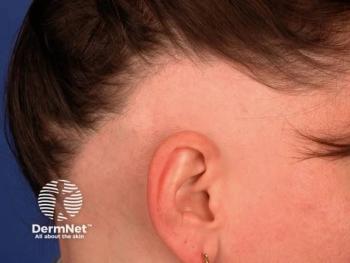
Each June, Hidradenitis Suppurativa (HS) Awareness Week (June 1-7) highlights the substantial clinical burden and quality-of-life impact associated with HS, emphasizing the need for more effective, targeted therapeutic approaches for this chronic inflammatory disease. HS is characterized by recurrent nodules, abscesses, and sinus tract formation that significantly impair quality of life. HS pathogenesis involves dysregulation of innate and adaptive immune pathways, including cytokines such as IL-1, IL-17, and tumor necrosis factor α, many of which signal through the JAK/STAT pathway. Although there are no topical therapies approved by the FDA specifically for HS, several agents have demonstrated some clinical efficacy in early-stage disease. Topical clindamycin; benzoyl peroxide (BPO) and clindamycin combination; topical resorcinol; topical corticosteroids; and antiseptic washes all show limited evidence for successful treatment of mild to moderate HS, but none directly target the immunologic pathways

Read more from Joshua Burshtein, MD

The Offer Was Good, the Internet Said Otherwise: When Bad Advice Costs More Than a Bad Contract

A colleague of mine spent the better part of 6 months recruiting a fellowship-trained Mohs surgeon. The colleague built the offer from scratch: tiered production-based compensation starting in the mid-40s percent range with escalators over 3 years, a first-year guarantee north of $850,000, a $100,000 sign-on bonus, 2 dedicated histotechnicians, a fully equipped onsite Mohs lab with 2 state-of-the-art cryostats, and a customized schedule built around the surgeon’s preference of 3 to 4 surgical days per week. What set the offer apart was the proof behind it: Six years of verified collected receipts from the existing surgical practice and a fully booked surgical schedule waiting on day 1. Not projections. Not forecasts. Six years of actual money that had come through the door on the same case mix the new hire would inherit.

Read more from Joseph Gatti, DMSc, MPAS, MBA, PA-C

Digital Twins in Dermatology: Your Patient’s Virtual Double Is Coming

What if, before you write that next prescription, you could test it first? Not on your patient, but on an exact digital copy of them. Same genetics, same microbiome, same skin barrier data, same stress levels. You run the simulation, watch how the virtual patient responds to dupilumab vs tralokinumab, and then walk into the exam room already knowing the answer. No more trial and error. No more waiting 6 months to find out a biologic isn’t working.

That is not a fantasy. That is where digital twin (DT) technology is heading, and dermatology is one of the fields best positioned to get there first.

In April 1970, Apollo 13’s oxygen tanks exploded in deep space. NASA engineers couldn’t touch the spacecraft, couldn’t send anyone up, and had minutes to think. What saved the crew was a set of simulators on the ground that mirrored the exact conditions of the damaged craft in real time. Engineers tested every possible fix virtually before radioing instructions to the astronauts. That was the first real-world DT in action, decades before anyone called it that. The term wasn’t coined until 2010 by NASA engineer John Vickers. Medicine is now borrowing that same logic, and it fits our specialty surprisingly well.

Read more from Hossein Akbarialiabad, MD, MSc, HMBA

The Sun Bus Model: Screening, Education, and Research on Wheels

As UV Awareness Month arrives each July, the dermatology community turns its attention once again to a familiar challenge: reaching the patients who are least likely to show up. For Karen Babcock Nern, MD, MBA, FAAD, a board-certified dermatologist and Mohs surgeon practicing in Colorado, that challenge has driven more than a decade of outreach work—and 2 innovations that are quietly changing how skin cancer screening and education reach underserved communities.

The Sun Bus began as a fundraiser. Around 2013, a conversation between a golf pro and Neil Box, PhD, the president of the Colorado Melanoma Foundation, sparked an idea for a melanoma research event. What evolved was something far more enduring: a free, mobile skin cancer screening clinic that has since traveled to 14 states and, as of this year, has reached its 10,000th free screening.

“It’s the only mobile clinic that we know of that’s run by clinicians and scientists,” said Nern. The program—which she cofounded and serves as medical director for—operates at the intersection of screening, education, and public health research, with Tamara Terzian, PhD, MS, a biomedical engineer and former University of Colorado faculty member, now leading day-to-day operations as executive director.

Read more

Click here to view all articles in the June issue.


Latest CME