

Publication|Articles|June 12, 2026
- Dermatology Times, June 2026 (Vol. 47. No. 06)
- Volume 47
- Issue 06
Digital Twins in Dermatology: Your Patient’s Virtual Double Is Coming
Author(s)Hossein Akbarialiabad, MD, MSc, HMBA
Listen
0:00 / 0:00
Key Takeaways
- Digital twins enable counterfactual “what-if” therapeutic simulations by updating dynamic patient models with genomics, proteomics, microbiome, barrier function, digital phenotyping, and exposure data.
- Dermatology’s measurable phenotypes and immunologically stratified diseases create a strong use case for predicting biologic response and reducing iterative switching in refractory atopic dermatitis, psoriasis, and hidradenitis suppurativa.
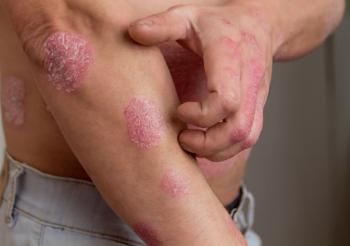
In clinical practice, digital twins could predict how individual patients respond to treatments based on factors such as genetics, skin barrier function, and lifestyle patterns.
Advertisement
What if, before you write that next prescription, you could test it first? Not on your patient, but on an exact digital copy of them. Same genetics, same microbiome, same skin barrier data, same stress levels. You run the simulation, watch how the virtual patient responds to dupilumab vs tralokinumab, and then walk into the exam room already knowing the answer. No more trial and error. No more waiting 6 months to find out a biologic isn’t working.
That is not a fantasy. That is where digital twin (DT) technology is heading, and dermatology is one of the fields best positioned to get there first.
A Crisis 200,000 Miles Away
In April 1970, Apollo 13’s oxygen tanks exploded in deep space. NASA engineers couldn’t touch the spacecraft, couldn’t send anyone up, and had minutes to think. What saved the crew was a set of simulators on the ground that mirrored the exact conditions of the damaged craft in real time. Engineers tested every possible fix virtually before radioing instructions to the astronauts. That was the first real-world DT in action, decades before anyone called it that. The term wasn’t coined until 2010 by NASA engineer John Vickers. Medicine is now borrowing that same logic, and it fits our specialty surprisingly well.
So Exactly What Is a DT?
Think of it as a living, continuously updated virtual replica of your patient. Not a snapshot like a chart note, but a dynamic model pulling in genomics, proteomics, microbiome data, skin barrier measurements, wearable sensor outputs, and environmental exposures all at once. These models integrate devices, digital phenotyping, and artificial intelligence to simulate real-world health outcomes with a level of precision that static records simply cannot match.1 The twin evolves as the patient does, and clinicians can run “what if” scenarios on it without touching the real person.
Why Dermatology, Why Now?
Dermatology is uniquely set up for this. The skin is visible, measurable, and imageable in ways that internal organs are not. Conditions such as atopic dermatitis, psoriasis, and hidradenitis suppurativa are driven by highly individual combinations of immune dysregulation, environmental triggers, and lifestyle factors. Highly targeted biologics already exist. What the field lacks is a reliable way to know upfront which patients respond to which drugs. DTs offer a framework to close that gap,2 and for patients who have already cycled through 2 or 3 biologics with no luck, that matters enormously.
The Laboratory Counterpart
A particularly compelling development in this space is the convergence of DTs with skin-on-a-chip technology. Organ-on-a-chip systems are microfluidic devices lined with living human skin cells that replicate the structural and physiological properties of real skin, including barrier function, immune cell trafficking, and inflammatory signaling. When paired with a DT model, the chip provides real biological validation while the twin handles the computational simulation. Together, they create a closed loop: The chip generates wet-lab data that feeds the twin, and the twin predicts outcomes that can be tested back on the chip.
This pairing has direct relevance to dermatology drug discovery. Rather than relying solely on animal models that poorly replicate human skin immunology, skin-on-a-chip platforms can be used to test how a Janus kinase inhibitor or a biologic modulates cytokine cascades at the tissue level, then feed that data into a patient-specific DT to simulate systemic response.3 For rare genodermatoses where patient tissue is scarce, and animal models are inadequate, this approach opens a genuinely new avenue for therapeutic development.
What’s the Practicality?
Picture a 34-year-old woman in your office. She has moderate to severe atopic dermatitis, has not had success using dupilumab (Dupixent; Regeneron and Sanofi), and is anxious about trying anything else. A DT built from her FLG mutation status, transepidermal water loss readings, transcriptomic profile, and stress patterns runs a simulation. It predicts a significantly better response trajectory with tralokinumab (Adbry; LEO Pharma) and suggests that a structured stress-reduction program moves the needle further. You walk in with data, not a guess.
Beyond individual prescribing, DTs are being applied as virtual control arms in clinical trials, which is especially valuable for rare genodermatoses such as epidermolysis bullosa where placebo-controlled trials carry significant ethical and logistical burden.2 This application has been formalized in the literature as a strategy to reduce trial size, accelerate enrollment, and improve statistical power without compromising rigor. DT-based frameworks have also been explored in dermatology education, offering trainees a way to work through complex diagnostic and therapeutic scenarios on simulated patients before encountering them in clinic.4 Patients with orphan diseases stand to benefit most from a technology that lets you model treatment outcomes in a population too small to study by conventional means.5
What Is Still in the Way
To be fair, this is not landing in your electronic health record next year. Health system data remain siloed. Regulatory pathways for DT-guided clinical decisions are still being established. Privacy governance around continuous biometric data collection needs real structural enforcement. And these tools will only be as good as the populations used to train them. Meaningful diversity in DT development is not optional if the goal is to avoid encoding existing health disparities into the next generation of clinical tools.
The Bottom Line
You do not need to act on this today, but it is worth understanding now. Within the next decade, DT-informed recommendations will likely be embedded in clinical decision support tools already in use. Trials will enroll patients using virtual controls. The dermatologists who are fluent in this technology now will be better positioned to shape how it gets implemented and where its limits get drawn.
The skin is the most observable organ in the human body. Dermatology has always led medicine in visual precision. DTs are inviting the specialty to lead in computational precision as well.
Hossein Akbarialiabad, MD, MSc, HMBA, is a transitional year resident physician at Washington University in St Louis, Missouri, and an adjunct associate lecturer at The University of New South Wales in Australia.
References
1. Akbarialiabad H, Pasdar A, Murrell DF. Digital twins in dermatology, current status, and the road ahead. npj Digit Med. 2024;7(1):228. doi:10.1038/s41746-024-01220-7
2. Akbarialiabad H, Pasdar A, Murrell DF, et al. Enhancing randomized clinical trials with digital twins. npj Syst Biol Appl. 2025;11(1):110. doi:10.1038/s41540-025-00592-0
3. Akbarialiabad H, Murrell DF. A new dawn for orphan diseases in dermatology: the transformative potential of digital twins. J Eur Acad Dermatol Venereol. 2024;38(12):2309-2310. doi:10.1111/jdv.20062
4. Akbarialiabad H, Seyyedi MS, Paydar S, Habibzadeh A, Haghighi A, Kvedar JC. Bridging silicon and carbon worlds with digital twins and on-chip systems in drug discovery. npj Syst Biol Appl. 2024;10(1):150. doi:10.1038/s41540-024-00476-9
5. Akbarialiabad H, Melin MM, Bunick CG. Digital twins in dermatology education: a systematic review and pilot study framework. J Invest Dermatol. 2025;145(suppl 8):S23.
Articles in this issue
3 months ago
Dermatology Times June 2026 Print Recap3 months ago
Preservatives: The Villain in the BottleAdvertisement
Related Content
Advertisement
Advertisement
Advertisement
Trending on Dermatology Times
1
How Emerging Androgenetic Alopecia Therapies Target DHT at the Scalp Level
2
Tildrakizumab Partially Reverses Epigenetic Aging in Psoriasis, Pilot Study Shows
3
Field-Directed Therapy Favored for Actinic Keratosis Management
4
Social Media Mythbusters: Beef Tallow
5