

News|Videos|July 27, 2026
How NPs/PAs and Dermatopathologists Can Collaborate for Better Pediatric Skin Diagnoses
Learn from Adnan Mir, MD, PhD, on how better biopsies and direct lab communication help APPs and dermatopathologists boost pediatric skin diagnoses and outcomes.
Advertisement
At the
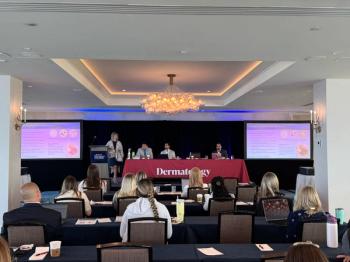
Mir explained that while dermatology residents receive extensive dermatopathology training during residency, advanced practice providers (APPs) often have fewer opportunities for formal education in the specialty. His presentation aimed to bridge that gap by providing a foundational understanding of how clinicians can optimize biopsy interpretation.
“I wanted to give them a primer into what I'm looking at under the microscope when I'm helping to diagnose their patients,” Mir told Dermatology Times.
A central theme of the session was that obtaining a useful pathology result begins well before the specimen reaches the laboratory. Mir stressed the importance of selecting the appropriate biopsy technique based on the suspected diagnosis and ensuring that requisition forms contain comprehensive clinical information. Details such as lesion duration, distribution, size, and other key clinical characteristics help provide essential context that guides microscopic interpretation and narrows the differential diagnosis.
Beyond written documentation, Mir encouraged clinicians to view dermatopathology as an ongoing collaborative process rather than a single pathology report. When histopathologic findings do not align with the clinical presentation, direct communication between the treating clinician and dermatopathologist can be invaluable, even if it feels intimidating to reach out. Follow-up discussions regarding treatment response, disease evolution, or additional clinical observations may prompt reconsideration of the differential diagnosis and ultimately improve diagnostic accuracy.
“We're a team when we are working on a patient together…if things don't make sense, I need to hear about it because I may not have the whole picture just based on what's written on the requisition form,” Mir said. “It's as simple as sending an email or calling.”
For NPs and PAs seeking to strengthen their dermatopathology knowledge, Mir recommended educational resources available through the American Academy of Dermatology, including lectures designed for practicing clinicians and structured dermatopathology curricula developed for trainees. He noted, however, that educational opportunities specifically tailored to experienced APPs remain limited, representing an area for future growth within the specialty.
Outside of his educational efforts, Mir highlighted his ongoing research interests in giant congenital melanocytic nevi. His work focuses on both the medical management of these patients and the significant psychosocial challenges associated with the condition. As his patient cohort continues to grow, Mir hopes to further improve understanding of the disease while advancing multidisciplinary care that addresses both clinical outcomes and quality of life for affected children and their families.
To catch up with all the exciting interviews, posters, and news from
Advertisement
Related Content
Advertisement
Latest CME


Advertisement
Advertisement
Trending on Dermatology Times
1
How Emerging Androgenetic Alopecia Therapies Target DHT at the Scalp Level
2
Social Media Mythbusters: Beef Tallow
3
Dermatology Times Inaugural NP/PA Connect Cutaneous Oncology Workshop Kicks Off in Tampa
4
25 Years Later: Remembering September 11 Through the Lens of Dermatologic and Burn Care
5