

Nurses help bridge clinical outcomes and patient experience through holistic, person-centered dermatologic care.
Nurses help bridge clinical outcomes and patient experience through holistic, person-centered dermatologic care.

Amanda Caldwell, MSN, APRN-C, discussed assessing psoriasis beyond body surface area and incorporating patient preferences into treatment decisions.

Daniel Condie, MD, shares kid-friendly sun safety tips, tanning bed warnings, and early skin cancer detection advice that clinicians can share with families and teens.

Daniel Condie, MD, debunks common Gen Z tanning myths, warns base tans and sunscreen fears fuel early skin cancer, and explains Mohs care challenges.
In this episode, Daniel Walker, MD, FAAD, explains how GLP-1 drugs may be effective for psoriasis and HS, linking skin inflammation with weight and heart health.
GLP-1 agonists may aid psoriasis, wound healing, and cardiometabolic health—Daniel Walker, MD, FAAD, explains why dermatologists should start to pay attention.
GLP-1 therapy may calm psoriasis and hidradenitis suppurativa beyond weight loss, and holistic metabolic care can address aesthetic concerns, according to Walker.

Dermatologists are exploring GLP-1 drugs for psoriasis and HS, but evidence is early—weight-loss benefits may help as add-ons, not replacements.

Women often present with sudden skin, hair, and vascular changes that may signal perimenopause rather than normal aging.

Explore the latest advancements in dermatology for 2026, featuring innovative therapies and treatments for skin conditions, hair loss, and more.
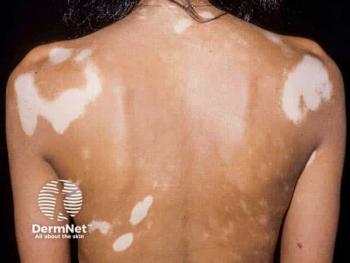
Experts discuss innovative strategies for vitiligo treatment, emphasizing the role of topical Janus kinase inhibitors and effective patient communication for optimal outcomes.

A mother shares her personal journey with her daughter's chronic spontaneous urticaria, highlighting the emotional and treatment challenges faced by families.


Lindsay Ackerman, MD, FAAD, shares practical insights on managing vitiligo with topical ruxolitinib, addressing patient expectations, safety, and evolving research gaps.
Lindsay Ackerman, MD, explains the importance of transparency when prescribing medications with boxed warnings.
The Phoenix-based dermatologist encourages innovative and patient-tailored strategies to optimize pigment restoration.
Lindsay Ackerman, MD, outlines how ruxolitinib topical has transformed the clinical approach to vitiligo.
Benjamin Lockshin, MD, noted long half-life biologics may allow patients to maintain remission with minimal injections.

Rural patients face critical delays in dermatology care, highlighting the urgent need for expanded access and support for NPs and PAs in underserved areas.

Ben Lockshin, MD, FAAD, covered ways in which GLP-1 RAs can be utilized when treating psoriatic disease.

Amanda Caldwell, MSN, APRN-C, is fostering community and collaboration for NPs and PAs as the new president of the SDNP.

Amanda Caldwell, MSN, APRN-C, is promoting accessibility, education, and relatability as the newly inducted president of the Society for Dermatology Nurse Practitioners.

Panelists discuss how age restrictions for PDE4 inhibitors affect treatment decisions for pediatric patients with atopic dermatitis, addressing parental concerns and highlighting the benefits of a single treatment option like roflumilast for managing overlapping inflammatory dermatologic conditions; they also explore current guidelines for corticosteroid use, the potential impact of PDE4 inhibitors on these guidelines, and the future of topical PDE4 inhibitors in dermatology, including the integration of new agents into treatment paradigms and key considerations for patient education and decision-making.
Panelists discuss how age restrictions for PDE4 inhibitors affect treatment decisions for pediatric patients with atopic dermatitis, addressing parental concerns and highlighting the benefits of a single treatment option like roflumilast for managing overlapping inflammatory dermatologic conditions; they also explore current guidelines for corticosteroid use, the potential impact of PDE4 inhibitors on these guidelines, and the future of topical PDE4 inhibitors in dermatology, including the integration of new agents into treatment paradigms and key considerations for patient education and decision-making.

Benjamin Lockshin, MD, FAAD, discussed combining biologics with topical innovations like tapinarof and roflumilast to address plaque psoriasis treatment gaps.
Panelists discuss common misconceptions about the mechanism of action of PDE4 inhibitors in clinical practice, emphasizing that not all PDE4 inhibitors are created equal and how these differences can significantly impact their efficacy and safety profiles.
Panelists discuss the current landscape of topical treatments for atopic dermatitis, focusing on the evolution of nonsteroidal options over the past decade, and explain the mechanism of action of PDE4 inhibitors in specifically targeting inflammatory pathways associated with the condition.
Panelists discuss how topical PDE4 inhibitors compare to traditional treatments like corticosteroids in terms of efficacy, safety, and long-term disease control, while also examining the unique formulations of roflumilast and crisaborole and their implications for skin penetration and patient experience; they highlight practical considerations for application, the management of adverse effects such as stinging and burning, and the distinct advantages of PDE4 inhibitors in addressing specific gaps in atopic dermatitis management for various patient subgroups.
Panelists discuss the current landscape of topical treatments for atopic dermatitis, focusing on the evolution of nonsteroidal options over the past decade, and explain the mechanism of action of PDE4 inhibitors in specifically targeting inflammatory pathways associated with the condition.
Panelists discuss how to optimize plaque psoriasis treatment in a 32-year-old man, with a specific focus on addressing genital plaques to enhance patient comfort and improve overall treatment outcomes.