

Dermatology experts discuss a patient case concerning a 60-year-old woman with chronic intertriginous psoriasis who is taking a biologic drug for inflammatory bowel disease.
Dermatology experts discuss a patient case concerning a 60-year-old woman with chronic intertriginous psoriasis who is taking a biologic drug for inflammatory bowel disease.
Dawn L. Sammons, DO, FAOCD, FAAD, and Benjamin Lockshin, MD, FAAD, review a case of a female patient with a family history of plaque psoriasis.
Experts discuss the unique mechanism of action of tapinarof and its use in the treatment of plaque psoriasis.
James Q. Del Rosso, DO, and Dawn L. Sammons, DO, FAOCD, FAAD, review the efficacy of a new topical agent in the treatment of plaque psoriasis, tapinarof, highlighting the remittive data.
Experts in dermatology discuss newer topical treatments, such as tapinarof, in the management of plaque psoriasis.
Nicholas Brownstone, MD, comments on how newer treatments in plaque psoriasis can impact residency training.
Dawn L. Sammons, DO, FAOCD, FAAD, shares her approach to using topical vs systemic therapy in plaque psoriasis, focusing on patient preference as the driving factor for treatment selection.
Brad Glick, DO, FAOCD, highlights topical therapy as a targeted treatment of plaque psoriasis.
Benjamin Lockshin, MD, FAAD, comments on how the evolution of the pathophysiology of plaque psoriasis has led to more targeted therapies to treat the disease.

Treatment safety and efficacy for atopic dermatitis has seen significant growth over the last decade.
Andrew F. Alexis, MD, MPH, and Benjamin N. Lockshin, MD, talk about how clinical approaches and understanding of risk/benefit profiles are evolving in light of the emerging long-term data.

Andrew F. Alexis, MD, MPH, and Benjamin N. Lockshin, MD, review the impact of the open-label extension data on the current atopic dermatitis landscape.

Thought leaders discuss the importance of rapid onset of action in atopic dermatitis care amid the backdrop of compelling 4-year efficacy and safety data for dupilumab.
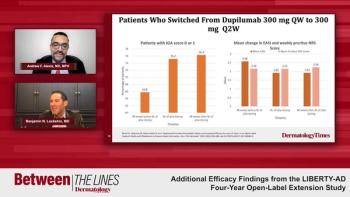
Continuing their discussion about efficacy, Andrew F. Alexis, MD, MPH, and Benjamin N. Lockshin, MD, review long-term results on pruritus. Additionally, they explore data for patients who switched from weekly to every-other-week dupilumab treatment.
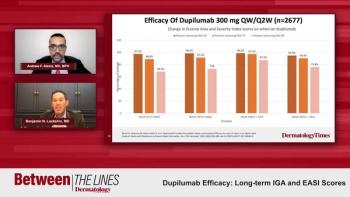
Andrew F. Alexis, MD, MPH, and Benjamin N. Lockshin, MD, discuss the relevance of the 4-year efficacy data for dupilumab in adults with moderate to severe atopic dermatitis, with a focus on IGA and EASI scores.

Continuing their discussion about safety, Andrew F. Alexis, MD, MPH, and Benjamin N. Lockshin, MD, take a closer look at conjunctivitis data from the long-term use of dupilumab

Andrew F. Alexis, MD, MPH, and Benjamin N. Lockshin, MD, review the design of the LIBERTY-AD open-label extension trial and share clinical context regarding safety findings.

Thought leaders share strategies for talking to patients about the importance of treatment adherence in the long-term management of atopic dermatitis.

Andrew F. Alexis, MD, MPH, and Benjamin N. Lockshin, MD, evaluate the effect of the rapidly changing therapeutic landscape in atopic dermatitis.

Andrew F. Alexis, MD, MPH, and Benjamin N. Lockshin, MD, review the burden of atopic dermatitis and discuss how they talk to patients about the impact their disease has on their lives.

An expert dermatologist evaluates the role of dupilumab in decreasing the clinical burden of severe atopic dermatitis on patients and their caregivers and shares insight on the future outlook of dupilumab in disease management.
Benjamin Lockshin, MD, FAAD, reviews key findings from a phase 2 trial evaluating the safety and efficacy of single-dose dupilumab in children with severe atopic dermatitis.
Benjamin Lockshin, MD, FAAD, comments on the significance of recent expansions of therapeutics options for patients with atopic dermatitis and unmet needs in the field.

Experts offer their treatment tips and protocols for melasma prevention and management.