


Google search trends and TikTok view counts were used to analyze the public popularity of cosmeceutical ingredients like retinol, hyaluronic acid, and niacinamide.
Google search trends and TikTok view counts were used to analyze the public popularity of cosmeceutical ingredients like retinol, hyaluronic acid, and niacinamide.
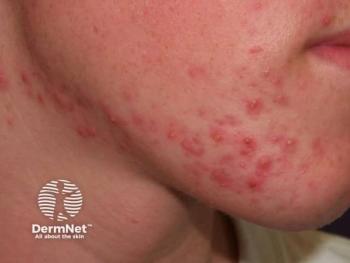
Microneedles successfully penetrated simulated skin barriers, suggesting their effectiveness in reaching sebaceous glands.

Henry Lim, MD, discusses the ILDS’ renewed WHO relations status and the global crisis of corticosteroid misuse in skin-bleaching products.

For Rosacea Awareness Month, Zoe Diana Draelos, MD, spoke to Dermatology Times about skinbetter’s Mystro Active Balance Serum and its NRS Seal of Acceptance.
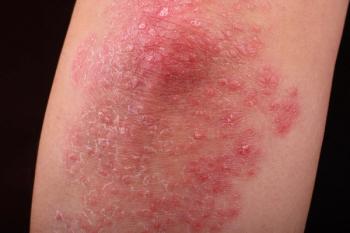
A new subgroup analysis revealed higher rates of clear or almost clear skin at week 16 vs placebo with a favorable safety profile.

Bill Damsky, MD, PhD, pioneers molecular diagnostics to close the gap between research and clinical care in inflammatory skin disease.

Catch up on dermatology news, highlights, and insights from the past 24 hours.
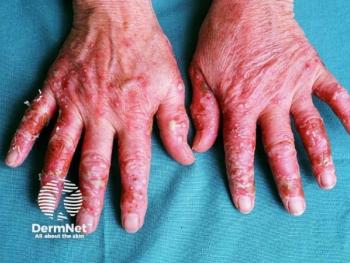
The study revealed high disease burden, poor quality of life, and need for more effective, targeted treatments.

Physicians can customize treatment depth and intensity with Avava’s system, improving results for various skin concerns.

Raj Chovatiya, MD, PhD, MSCI, discusses his approach to diagnosing and treating chronic hand eczema.

Although both methods were well tolerated, enzymatic debridement worked faster in randomized controlled trials.
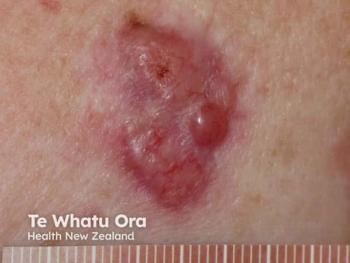
Treatment decisions are increasingly guided by patient values, preferences, and quality-of-life considerations.

Researchers identify a blood biomarker linked to worse outcomes in diffuse cutaneous systemic sclerosis, paving the way for early detection and treatment.

Raj Chovatiya, MD, PhD, MSCI, explores case-based approaches to managing atopic dermatitis, focusing on treatment strategies, challenges, and clinical insights for improving patient outcomes.

Recent literature shows that children from racial minority groups with lower-income families have higher disease prevalence but reduced access to care.

This review of the latest dermatologic studies includes insights into disparities in pediatric atopic dermatitis, nurse-led models for skin cancer detection, and more.

Catch up on dermatology news, highlights, and insights from the past 24 hours.

The Kesty Redness Scale offers a validated, easy-to-use tool to reliably assess facial redness in clinical dermatology.

The product was safe and effective after 4 weeks of topical use, specifically on patients with darker skin types.

Compared to untreated patients, dupilumab-treated women showed no increased risk for spontaneous abortion, gestational diabetes, or hypertensive disorders.

A new case report demonstrated the JAK inhibitor’s efficacy at improving disease severity up to 6 months.

After fine-tuning, the VGG16 convolutional neural network outperformed other deep learning models in 2 of 3 key classification tasks.

Alphyn Biologics has dosed the first patient in a global phase 2b trial of zabalafin hydrogel for mild to moderate atopic dermatitis.

Dermatology Times' Editor in Chief Christopher Bunick, MD, PhD, discusses patient safety in the wake of AAD 2025, focusing on BPO recalls, corticosteroid risks, and JAK inhibitor innovations.

Catch up on dermatology news, highlights, and insights from the past 24 hours.

Patients reported the face, neck, and inner arms as the most affected body regions before treatment.
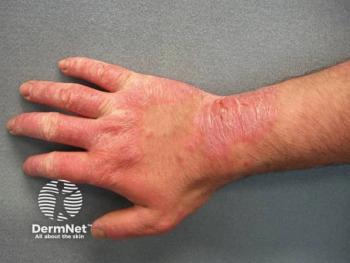
Researchers conducted a comprehensive review of ACD, detailing the condition’s epidemiology, pathophysiology, clinical manifestations, diagnostic approaches, and therapeutic options.

The guide prepares students to critically engage with AI tools and understand their real-world implications.

Long-pulsed KTP laser showed promise as a safe, effective alternative to PDL for treating port-wine birthmarks over 3 years.
Current JAK inhibitors are approved only for those 12 and older, leaving younger patients without access.