







Vitiligo
Latest News
Advertisement
Latest Videos




Advertisement
More News

By week 24 of the phase 3 study, a quarter of participants felt their vitiligo had improved.

Following 2 phase 3 trials, the European Medicines Agency Committee for Medicinal Products for Human Use gives positive opinion on the use of ruxolitinib cream as a treatment for facial-involved non-segmental vitiligo.

Research has begun to explore natural compounds that address the oxidative stress, autoimmunity, and altered melanogenesis that drive vitiligo pathogenesis.

Latin America presents a patchwork of challenges and opportunities in vitiligo management according to a review published in the Journal of Dermatological Treatment.

Clinicians should strive to address the unique medical and aesthetic challenges seen in vitiligo.

PDT has an advantage in that it can combine easily with other therapies, thereby increasing its effectiveness rates.

Several dietary approaches have been proposed to play a role in the pathogenesis, management, and/or therapy of diseases such as vitiligo.

Seemal Desai, MD, shares highlights from his session at Winter Clinical Hawaii.

Two specialists discuss prevalence, patient communication, and exciting new therapy.
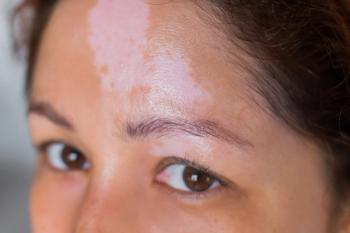
The melanocytes attacked by the autoimmune disease are present in the eyes and ears, not just the skin, so vitiligo can adversely affect vision and hearing.

Because vitiligo affects appearance, people with vitiligo are disproportionately affected by psychiatric conditions, including depression.

Phototherapy can serve an important role in the therapeutic armamentarium of vitiligo as it is safe, cost-effective, and can treat patients with large areas of disease.

Vitiligo can have a profound effect on mental health and quality of life.

Nada Elbuluk, MD, and David Rosmarin, MD, provide advice to physicians on the management of vitiligo.
Nada Elbuluk, MD, and David Rosmarin, MD, share their thoughts on future treatments in the pipeline for vitiligo.
Experts in dermatology discuss ruxolitinib, an exciting new therapy approved for repigmentation of the skin for patients with vitiligo.
Nada Elbuluk, MD, and David Rosmarin, MD, review treatments in vitiligo, including corticosteroids and phototherapy.

Israeli researchers find more than five fold risk of developing systemic sclerosis among people with vitiligo.
Nada Elbuluk, MD, and David Rosmarin, MD, discuss the role of the health care provider in helping patients understand their vitiligo and treatment options.
Experts in dermatology share their approaches to communicating with patients about their vitiligo, highlighting family history and genetic awareness.
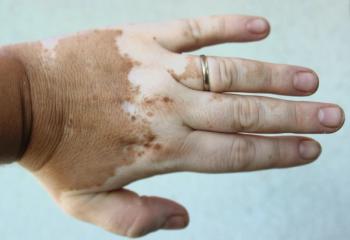
A recent systematic review on surgical therapies for vitiligo examined surgical therapies such as punch grafting, suction blister epidermal grafting, and cellular grafting techniques

Vitiligo, an autoimmune skin condition that causes depigmentation, can have a large effect on a patient’s quality of life and psychosocial well-being.
Nada Elbuluk, MD, and David Rosmarin, MD, discuss screening patients with vitiligo for common comorbidities.
Nada Elbuluk, MD, and David Rosmarin, MD, provide an overview of vitiligo, its prevalence, and potential triggers.

At the 2022 Fall Clinical Dermatology Conference, 5 practitioners share their best tips for treating their patients
Advertisement
Advertisement
Trending on Dermatology Times
1
From Mechanism to Management: Navigating Male Pattern Hair Loss and New Topical Therapies
2
FDA Approves Baricitinib for Adolescents With Severe Alopecia Areata
3
Tremfya Meets Primary, Major Secondary Endpoints in Phase 4 STAR Study of Axial PsA
4
Dr. Charrow Highlights Earlier Biologic Use and Deroofing in Hidradenitis Suppurativa
5