


Skin Cancer
Latest News
Advertisement
Latest Videos
CME Content



Advertisement
More News

Renata Block, DMSc, MMS, PA-C, explores how AI could enhance dermatology, improving skin cancer diagnosis while emphasizing the vital role of human clinicians in patient care.
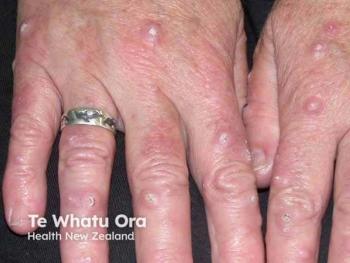
Findings suggest immune dysregulation and chronic inflammation in atopic dermatitis may contribute to increased skin cancer susceptibility.

An AI-powered handheld spectroscopy device is showing promise in improving melanoma detection accuracy among primary care physicians, addressing critical gaps in early diagnosis and timely referral.

Phio Pharmaceuticals reveals promising results for PH-762, a novel siRNA therapy targeting skin cancer, showcasing effective tumor clearance and safety.
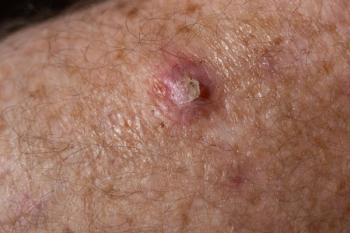
Medicus Pharma has initiated a phase 2 trial in the United Arab Emirates (UAE), exploring noninvasive treatment for basal cell carcinoma (BCC) using innovative microneedle technology.

The resubmission includes additional data and analyses addressing prior FDA concerns and is now classified as a complete response under a Class II review.
Vishal A. Patel, MD, discusses cemiplimab's FDA approval as a groundbreaking adjuvant therapy for high-risk cutaneous squamous cell carcinoma patients.

The CHMP opinion follows recent US FDA approval, positioning Libtayo as the first immunotherapy approved for adjuvant treatment in high-risk CSCC.
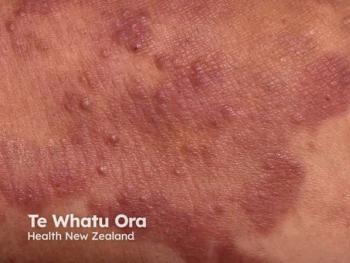
A recent case reinforced excimer laser therapy as a precise, efficient, and well-tolerated approach in managing cutaneous T-cell lymphoma variants.

Regeneron's cemiplimab-rwlc gains FDA approval as the first immunotherapy for high-risk cutaneous squamous cell carcinoma, significantly improving disease-free survival.

The vaccine is designed to stimulate T cell responses against IDO1- and PD-L1–positive cells within the tumor microenvironment.
Elena Hawryluk, MD, PhD, shares groundbreaking insights on pediatric dermatology and melanoma management at Maui Derm NP+PA, emphasizing innovative treatments.

Discover expert insights on cutaneous oncology from George Martin, MD, focusing on innovative treatments for skin cancers at Maui Derm NP+PA Fall.
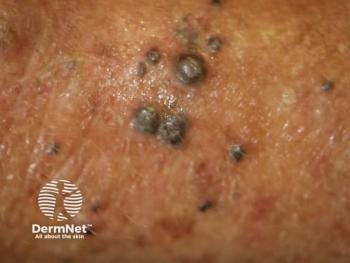
A new hybrid model combining deep learning with clinical data achieved high accuracy in predicting sentinel lymph node metastasis in melanoma.

Thazin Aung, PhD, discusses AI's role in standardizing immune cell evaluation in melanoma, enhancing diagnostic consistency and clinical decision-making.

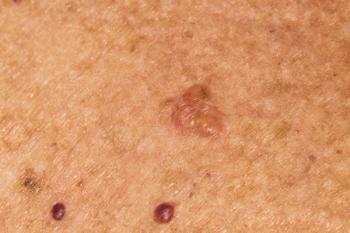
Medicus Pharma has initiated a phase 2 trial in the UAE for a non-invasive BCC treatment, aiming to revolutionize skin cancer care.
Greater awareness of UV risks and stricter sun protection have contributed to declining invasive melanoma rates.

COVID-19 significantly delayed melanoma diagnoses and treatments, leading to increased disease severity and advanced cases, highlighting urgent health care needs.

While survival rates were similar across income levels, lower-income patients consistently presented with more aggressive disease.

The FDA cited concerns about patient population heterogeneity and confirmatory trial design.

Nemvaleukin alfa produced a disease control rate of 50% in advanced melanoma and RCC.
The test now provides 3 validated insights: risk of metastasis, response to ART, and risk of recurrence.

A case report presents a unique case of Bowen's disease affecting the lower extremities in a 75-year-old woman, which was initially misdiagnosed as a fungal infection.

At DERM 2025, David Cotter, MD, PhD, shared how GEP testing revolutionizes skin cancer management and enhances patient care at the forefront of dermatology innovation.
Advertisement
Advertisement
Trending on Dermatology Times
1
Social Media Mythbusters: Can Castor Oil Really Grow Hair?
2
EADV 2026 Atopic Dermatitis Highlights: Tilrekimig, RAC2 Inhibition, and Level Up Data
3
FDA Approves Pritelivir for Refractory Mucocutaneous HSV in Immunocompromised Adults
4
GLP-1 Agonists Address Metabolic Risk in Psoriatic Disease
5