


Skin Cancer
Latest News
Advertisement
Latest Videos

Shorts
1:00
Resources for Clinicians From the Melanoma Research Foundation
3 months ago
by
Miriam Pomerantz Kadosh, MSW, LCSW

1:00
Stop Calling Them Side Effects: Pro-Tips for Photodynamic Therapy
4 months ago
by
Neal Bhatia, MD
1:11
Celebrating National Sunscreen Day 2026
4 months ago
by
Whitney Hovenic, MD
1:00
Red Light vs Blue Light for sBCC: What the Data Says
4 months ago
by
Todd Schlesinger, MD, FAAD, FASMS

1:00
Why Patients May Prefer PDT Over Surgery For sBCC
4 months ago
by
Neal Bhatia, MD
1:13
Why It's Not Too Late to Prevent Skin Cancer
4 months ago
by
Daniel Condie, MD
1:00
Solving Systemic Side Effects in Cancer Treatment With PH762
4 months ago
by
Mary C. Spellman, MD
0:45
26 Million People Gain Access to Innovative Skin Therapy
5 months ago
by
Christopher G. Bunick, MD, PhD(+1 more)
0:34
The Changing Outlook on Metastatic Melanoma
5 months ago
by
Darrell Rigel, MD, MS
0:46
Red vs Blue Light for Superficial Basal Cell Carcinoma
7 months ago
by
Todd Schlesinger, MD, FAAD, FASMS

Advertisement
More News

New trends around cheeky swimwear and tanning myths are leading to rising rates of melanomas in sensitive areas; read July's cover story to learn more.
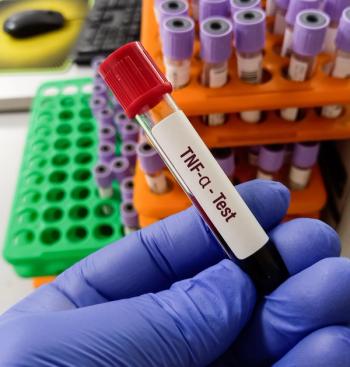
Long-term TNF inhibitor use was associated with significantly increased risks of melanoma and nonmelanoma skin cancer in a large cohort study.
Dermatologists and oncologists at a Dermatology Times Evolving Paradigms event in Boston compared immunotherapy selection, referral practices and surveillance strategies in advanced cutaneous squamous cell carcinoma.
Dermatologists and oncologists at a Dermatology Times Evolving Paradigms event in Dallas compared immunotherapy selection, adverse event management, and referral practices in advanced cutaneous squamous cell carcinoma.
At a recent Dermatology Times Evolving Paradigms event led by Mark Nestor, MD, PhD, FAAD, dermatologists, Mohs surgeons, and oncologists compared immunotherapy mechanisms and referral thresholds for advanced CSCC.
The Cutaneous Connection: Representation, Education, and Revolutionizing Sunscreen for Skin of Color
In this episode, Black Girl Sunscreen CEO Shontay Lundy reveals why skin of color needs photoprotection, better formulas, and stronger clinician-industry collaboration.
At a recent Dermatology Times Evolving Paradigms event, Nikhil Khushalani, MD, led dermatologists, Mohs surgeons, and oncologists in comparing systemic immunotherapy selection, referral practices, and adverse event management in advanced cutaneous squamous cell carcinoma.
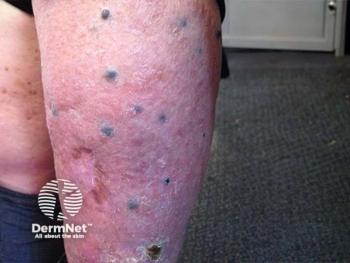
The FDA has accepted Replimune's third resubmitted BLA for RP1 plus nivolumab in advanced melanoma, setting an August 2 PDUFA date.
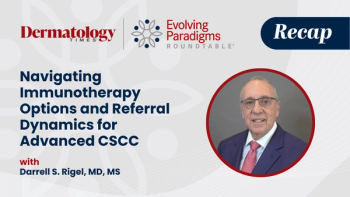
An Evolving Paradigms event led by Darrell S. Rigel, MD, MS, compared PD-1/PD-L1 immunotherapies for advanced cutaneous squamous cell carcinoma, with referral guidance and toxicity alerts.
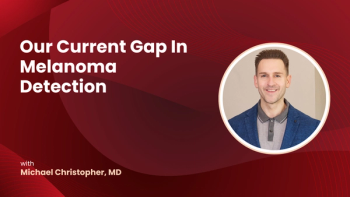
State melanoma reporting data reveals a striking gap between one Arizon dermatologist's detection rates and his peers, and a possible explanation rooted in how dermoscopy is taught.

New data show that nearly two-thirds of Sun Bus participants had never visited a dermatologist, highlighting persistent gaps in access to skin cancer care.
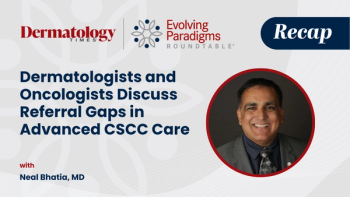
Neal Bhatia, MD, led an Evolving Paradigms event on advancing multidisciplinary care in cutaneous squamous cell carcinoma to compare systemic immunotherapy data and referral practices.
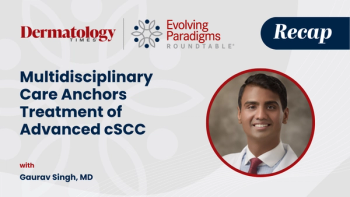
Cosibelimab joins cemiplimab and pembrolizumab as a first-line option for advanced cSCC unsuitable for curative surgery or radiation.

Because BCC and cSCC have high tumor mutational burdens driven by UV-induced DNA damage, they are particularly well suited to immune checkpoint inhibition.

The June issue of Dermatology Times highlights the latest advances in skin cancer, psoriasis, atopic dermatitis, hidradenitis suppurativa, and emerging dermatology technologies.

Deborah Sarnoff, MD, president of the Skin Cancer Foundation, discusses actinic keratosis detection, treatment, and clinician resources provided by the Skin Cancer Foundation.
Miriam Pomerantz Kadosh, MSW, LCSW, director of education and patient engagement at the Melanoma Research Foundation, outlines free resources available to dermatology practices and communities.
Deborah Sarnoff, MD, president of the Skin Cancer Foundation, shares the importance of the "Hats On for AK" social media campaign designed to bring awareness to sun protection and reducing actinic keratosis risk.
This month, we asked our experts: What is the craziest social media trend or myth you’ve seen about sunscreen, suncare, tanning?
Deborah Sarnoff, MD, president of the Skin Cancer Foundation, discusses recognizing actinic keratosis, clinical indicators for biopsy, and strategies for counseling patients on cumulative sun damage in response to AK Awareness Day.
Neal Bhatia, MD, describes a protocol spanning antihistamine pretreatment, in-room talk anesthesia, and post-procedure skin care to improve tolerability of photodynamic therapy.

At 6-month follow-up, no behavioral outcomes — including sunscreen use, hat use, or reapplication — showed statistically significant improvement over baseline levels.
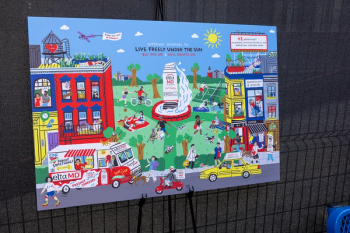
Learn how community events, like the recent Walk Under the Sun event, help turn sunscreen into a daily habit, explain hidden UV exposure, and debunk viral tanning myths.
Neal Bhatia, MD, outlines the clinical rationale for incorporating photodynamic therapy into skin cancer treatment algorithms, from field cancerization management to emerging applications in superficial basal cell carcinoma.
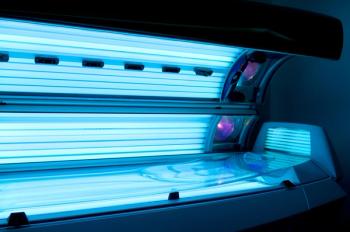
The proposed rule, first introduced in 2015, aimed to prohibit indoor tanning for individuals under 18 because of the known cancer risks associated with UV radiation.
Advertisement
Advertisement
Trending on Dermatology Times
1
FDA Grants Priority Review to Zasocitinib for Moderate-to-Severe Plaque Psoriasis
2
FDA Accepts Bezuclastinib NDA for Advanced Systemic Mastocytosis
3
Genetic Study Links Higher BMI to Perceived Facial Aging, but Causality Remains Unproven
4
FDA Approves Ameluz Red Light PDT for Superficial Basal Cell Carcinoma
5