

Skin Cancer
Latest News
Advertisement
Latest Videos




CME Content



Advertisement
More News
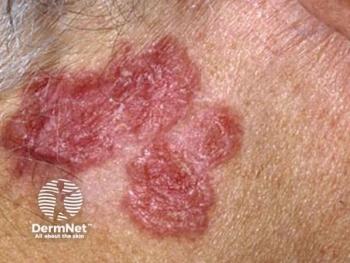
Estrogen therapy and certain diuretics may increase skin cancer risk, highlighting the need for careful patient counseling and sun exposure management.

John Strasswimmer, MD, PhD, spoke on the difficulty of managing adverse effects, the role of interdisciplinary clinical relationships, and the challenges in complex and older patients.

A 30-year-old patient with dermatofibrosarcoma protuberans faced a recurrence after initial surgery. Mohs micrographic surgery was used for precise excision, reducing recurrence risk and improving outcomes.

The expert discussion focused on patient management strategies, treatment modalities, and the role of multidisciplinary collaboration.

Christopher B. Zachary, MBBS, MRCP, FRCP, shares insights in apoptosis-based skin care treatment.

Elizabeth Berry, MD, FAAD, reviewed dysplastic nevi as risk markers and highlighted the need for more data on severe cases at AAD 2025.

An analysis of 70 studies shows that MMS reduces local recurrence to 5.0% compared to 17.7% for WLE in anogenital SCC cases.
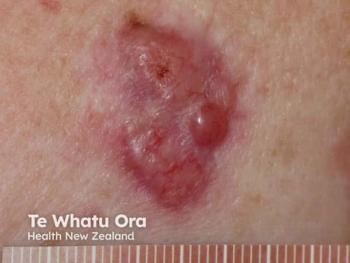
Medicus’ previous phase 1 study confirmed D-MNA’s safety, with some participants achieving complete BCC clearance.

Satisfaction levels rose and recovery outcomes greatly improved with Cicaglocal compared to the placebo.
A dermatology expert panel confirms IGSRT as a safe, effective first-line treatment for select nonmelanoma skin cancer cases.

A recent study found sunscreen use is higher among women but often not reapplied properly.

A novel AI model was able to achieve 99.86% accuracy for diagnosing skin conditions, even in people with darker skin tones or excessive hair.

Trauma-induced melanocyte implantation can lead to subcutaneous melanoma, mimicking melanoma of unknown primary but with distinct diagnostic criteria.

Study author Erin McClure, MD, discusses how IGSRT offers consistent NMSC recurrence rates across socioeconomic and comorbidity factors, reinforcing its role as a first-line treatment.

High concentrations of particulate matter can potentially lessen the exposure to UV radiation.

As newly appointed Executive Director of the Foundation, Becky Kamowitz is combining public education with clinical needs in the fight against skin cancer.
George Washington University recently earned a Skin Smart Campus designation, championing skin cancer prevention through education, free sunscreen, and UV safety measures.
Three posters supporting VP-315's treatment efficacy and outcomes were presented at the Winter Clinical Miami conference.

Explore the role of immunohistochemical stains in enhancing diagnostic accuracy during Mohs surgery, aiding treatment of challenging skin cancers.

Cemiplimab demonstrated a 68% reduction in recurrence risk for high-risk CSCC in the phase 3 C-POST trial, according to Regeneron’s latest findings.

Data augmentation techniques like cropping and blurring allow AI models to overcome limited datasets, improving skin cancer detection rates.

Post treatment discontinuation, most centers conduct imaging every 3 months during the first year of remission.

As 2024 comes to a close, Dermatology Times is taking a look back at the studies, therapies, and advances in skin cancer this year.

Join Dermatology Times’ quarterly editor in chief Aaron Farberg, MD, as he highlights significant advancements in gene expression profile testing for cutaneous melanoma.

Discover 2024 skin cancer breakthroughs, including FDA approvals, innovative therapies, and updated clinical guidelines for melanoma and nonmelanoma care.
Advertisement
Advertisement
Trending on Dermatology Times
1
Social Media Mythbusters: Can Castor Oil Really Grow Hair?
2
EADV 2026 Atopic Dermatitis Highlights: Tilrekimig, RAC2 Inhibition, and Level Up Data
3
FDA Approves Pritelivir for Refractory Mucocutaneous HSV in Immunocompromised Adults
4
GLP-1 Agonists Address Metabolic Risk in Psoriatic Disease
5