




The U.S. Food and Drug Administration has approved FMX103 (ZILXI, Menlo Therapeutics), a topical 1.5% minocycline foam for the treatment of inflammatory lesions of rosacea in adult patients.
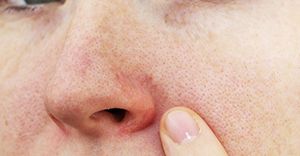
The U.S. Food and Drug Administration has approved FMX103 (ZILXI, Menlo Therapeutics), a topical 1.5% minocycline foam for the treatment of inflammatory lesions of rosacea in adult patients.
Mast cells appear to play an intricate role in the pathophysiology of rosacea and could serve as potential targets for future therapies, according to recent study findings.

Recent evidence of increased mast cell activity suggests mast cell stabilization as a target for rosacea treatment.
LEO Pharma announces azelaic acid foam 15% (Finacea) is now available on the market to treat inflammatory papules and pustules of mild-to-moderate rosacea.

Designating April as Rosacea Awareness Month, the National Rosacea Society aims to increase public understanding of the condition and lead individuals who may be a ffected to seek medical help before their condition becomes worse.
Published results from two 12-week, vehicle-controlled phase 3 studies show that a novel topical foam formulation of minocycline 1.5% may be effective in reducing inflammatory lesions.

Rhinophyma is a disfiguring condition with deleterious psychosocial and functional consequences, and its pathogenesis remains unclear. Deborah S. Sarno ff, M.D., offers insight on its etiology, and treatment options in this article.

Topical ivermectin cream, 1% (Soolantra, Galderma) represents an advance in treatment for rosacea, o ffering superior e fficacy and tolerability compared with previously available therapies, says Je ffrey S. Fromowitz, M.D., who spoke at the Orlando Dermatology Aesthetic & Clinical Conference.
Positive phase 3 results from two clinical trials suggests that Sol-Gel’s novel 5% microencapsulated benzoyl peroxide cream may offer quick, effective relief for patients with papulopustular rosacea.
A combination of ivermectin 1% cream and oral 40-mg doxycycline has the potential to be an effective therapy for some people with moderate to severe rosacea after the publication of results from a phase 3b/4 study examining the combination’s efficacy and safety compared to ivermectin as a monotherapy.

Susan C. Taylor, M.D., shares distinguishing characteristics of differential diagnoses to keep in mind when examining skin of color patients for rosacea.

It's thought that rosacea affects about 10% of the population, but this estimation may not be completely accurate as the condition is often underdiagnosed – especially in individuals with darker skin types.

Sol-Gel announces updates to their drug pipeline and their goals for 2020, which include submitting multiple provisional patents and NDAs for the treatment of a variety of skin conditions.
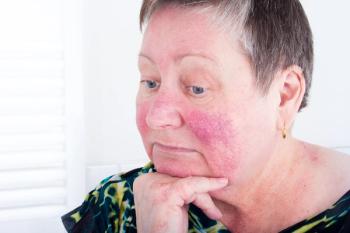
Hovione recently published results of a phase 2b study showed a topical gel formulation of 1% and 3% minocycline proved to be an effective and safe treatment for papulopustular rosacea.

Drs. López and Kaufman discuss two new studies that examine the use of ultrasound technology as a new modality for treatment of erythematotelangiectatic and refractory rosacea.

There is still room for improvement to the National Rosacea Society Expert Committee's updated classi fication schema for rosacea, according to William James, M.D.

A web-based survey indicates erythema severity correlates with rosacea’s quality-of-life impact.

Abnormal proliferation of the Demodex mites is frequent among patients with erythematotelangiectatic rosacea (ETR), according to one expert.
A recent preclinical trial reveals that oxymetazoline in combination with pulsed dye laser may increase vascular shutdown in patients with rosacea and other cutaneous vascular diseases.
Evidence that points to interleukin-17 playing a role in the development and progression of rosacea also indicates research should investigate IL-17 inhibition as a therapeutic option for some patients, an expert says.
Stay up to date on the latest recommendations for rosacea diagnosis, classification and management from the global ROSacea COnsensus (ROSCO) 2019 panel.

Rosacea is often underdetected and misdiagnosed in skin of color patients. This expert wants to increase dermatologists’ awareness of how rosacea might present differently in skin of color and how best to treat it without causing post-inflammatory hyperpigmentation.
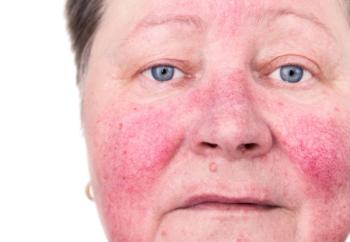
Patients with rosacea appear to have a significant increase in the risk of breast cancer when compared to those without this skin condition, according to a new study.
New options may be possible for treatment-resistant and severe rosacea with the use of IL-17 inhibitors as researchers conduct studies on effectiveness.
Novel treatments for rosacea such as intradermal botulinum toxin-A and light therapies show promise, but more data is needed to prove their efficacy and safety in this patient population, says a recent paper.