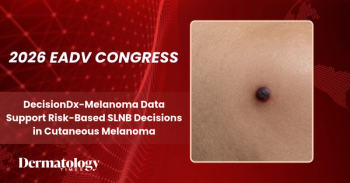
Prospective data suggest DecisionDx-Melanoma may help refine SLNB decisions and identify recurrence risk beyond conventional staging.
Highlighting conditions like lichen planus, which has no FDA-approved treatments, Lio underscores why clinicians must be comfortable prescribing beyond the label.
At the 2026
For clinicians who treat pediatric patients, off-label prescribing is less an exception than a norm. As Lio noted, “We, as dermatologists, and particularly those who see kids, are experts in off-label therapy,” largely because for decades many inflammatory and autoimmune skin diseases had no FDA-approved options at all. He pointed to lichen planus as a striking example. Despite being a well-established diagnosis described in the earliest dermatology textbooks, “How many FDA-approved treatments are there for lichen planus? There are exactly zero.” The implication is clear: If clinicians limited themselves strictly to labeled indications, many patients would simply go untreated.
Yet the rationale for off-label therapy extends beyond regulatory gaps. Even when approved treatments exist, real-world patients do not always follow textbook expectations. As Lio put it, sometimes “the patient, so to speak, didn’t read the textbook.” Therapies fail, adverse events occur, and comorbidities complicate decision-making. In those moments, clinicians face a choice. “It is not completely illogical to tell a patient, ‘I’m sorry, we have nothing else for you.’ I guess a computer system would say that…. But that’s not what we’re in the business of.” For Lio, the physician’s role is to thoughtfully explore alternatives grounded in pathophysiology and clinical experience.
He described this process as “cross-pollinating” ideas across diseases that share immune pathways or mechanistic overlap. Such translational thinking has historically driven innovation. A recent example involves dupilumab, initially approved for atopic dermatitis. Off-label use in bullous pemphigoid began after clinicians observed potential mechanistic relevance. Despite early skepticism, clinical experience accumulated, and dupilumab ultimately became “the first and only approved medication for bullous pemphigoid.” What began as exploratory use informed formal regulatory approval.
Importantly, Lio broadened the definition of off-label care to include over-the-counter regimens. Whether one adopts a “maximalist” approach—strategically layering cleansers, moisturizers, and barrier-supportive products for synergy—or a minimalist strategy, these recommendations are rarely label-specific. Nonetheless, they meaningfully influence outcomes.
Throughout, Lio emphasized transparency and safety. Off-label prescribing is not improvisation; it is a deliberate, evidence-informed process accompanied by candid discussion: “We’re gonna use this in an off-label way…. I want to make sure you’re comfortable with that before we jump in.”
For experienced clinicians, the message resonates. Off-label therapy, when grounded in sound science and shared decision-making, is not a departure from good medicine—it is often its engine.