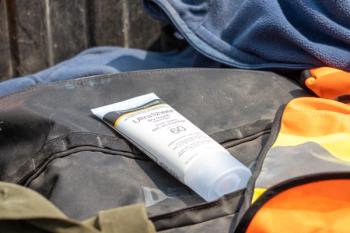
Two new Neutrogena facial sunscreens incorporate bemotrizinol, the first new sunscreen active ingredient added to the US OTC monograph in decades.
In case you missed it, this week we had news about the FDA approvals of guselkumab for pediatric plaque psoriasis and PsA, along with remibrutinib for CSU, LEO Pharma's acquisition of spesolimab for GPP, and more.
To stay up-to-date with the latest dermatology news, sign up to receive our
Phase 3 PROTOSTAR data support new indications, expanding treatment options for children impacted by chronic immune-mediated diseases.
Explore the top headlines of the month, including insights on regulatory updates, expert pearls, and more.
Learn more about the in-depth topics covered in the September 2025 print issue of Dermatology Times.
Miiskin integrates generative AI into dermatology, enhancing efficiency and patient access while reducing clinician workload and administrative tasks.
Mary W. Chang, MD, discusses the expanded FDA approval of ruxolitinib cream for children with atopic dermatitis and its role in addressing treatment gaps, safety, and real-world use.
Many HS patients still require more aggressive or advanced treatments due to incomplete response to current options.
Dermatology Times is recapping our exclusive expert interviews from the month of September.
Both treatments were well tolerated, with only mild, self-limiting adverse effects reported.
Test your knowledge of key words and terms associated with dermatology news from the last month.
Explore insights from Renata Block DMSc, MMS, PA-C, and James Del Rosso, DO, on interpreting clinical trial data in dermatology for enhanced patient care and outcomes.
Dermatology Times is looking back on the top stories in dermatology from the month of September.
Fewer than 20% of eligible patients currently receive injectable therapies, highlighting the need for oral alternatives.
Explore insights from Renata Block DMSc, MMS, PA-C, and James Del Rosso, DO, on interpreting clinical trial data in dermatology for enhanced patient care and outcomes.
While VELA-1 achieved statistical significance under all analyses, VELA-2 narrowly missed its composite primary endpoint due to higher-than-expected placebo outcomes.
Dermatology Times has compiled a list of dermatological meetings taking place during the month of October.
World Urticaria Day raises awareness about chronic spontaneous and inducible urticaria, highlighting treatment advancements and patient challenges.
Patient advocate Danielle Jonas shares her journey with atopic dermatitis, emphasizing the importance of trusted products and clinician support during Eczema Awareness Month.
Lisa Espinoza, MD, discusses key insights from Allergan's Hyaluronic Acid Injectable Fillers Report, highlighting patient satisfaction and evolving aesthetic trends.
ORKA-001 builds on the proven success of existing IL-23 inhibitors used in psoriasis treatment.
Heather Gates, PA-C, brings her dermatology expertise into a conference management business to enhance education for professionals of all levels.
The vaccine is designed to stimulate T cell responses against IDO1- and PD-L1–positive cells within the tumor microenvironment.
Jorge Garcia-Zuazaga, MD, MBA, FAAD, FACMS, shares how Apex Skin is improving trial adherence through bilingual staff, modernizing operations with digital tools, and strengthening community.
Disc Medicine filed an NDA for bitopertin to treat erythropoietic protoporphyria (EPP) and X-linked protoporphyria (XLP) in patients ≥12 years.
Lisa Espinoza, MD, highlights the importance of patient education and tailored HA filler treatments for achieving natural cosmetic results.
Trial data show up to 30% of patients achieved complete response and 70% demonstrated some benefit from treatment.
Quality of life improvements paralleled clinical efficacy in the CUPID studies of dupilumab.
WHO includes adalimumab and ustekinumab for psoriasis, plus sunscreen for albinism, enhancing global skin health and access to essential treatments.
Brian Kim, MD, FAAD, explores the Cell Symposia: Neuro-immune Axis, highlighting neuroimmunology's impact on dermatology and systemic medicine.
Spesolimab joins LEO Pharma’s dermatology portfolio to further expand spesolimab’s reach for patients worldwide with generalized pustular psoriasis.