

News|Articles|September 30, 2025
Excimer Laser Plus Tacrolimus Shows Superior Psoriasis Results
Listen
0:00 / 0:00
Key Takeaways
- Combining excimer laser phototherapy with tacrolimus ointment significantly improves plaque-type psoriasis outcomes compared to topical therapy alone, as evidenced by greater PASI reduction.
- Personalized dosing based on minimum erythema dose (MED) and lesion characteristics enhances treatment efficacy, reflecting a tailored medicine approach.
Both treatments were well tolerated, with only mild, self-limiting adverse effects reported.
Advertisement
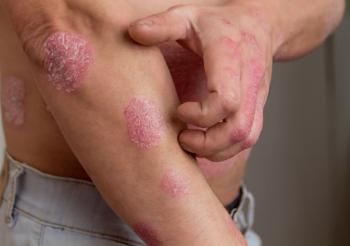
A newly published peer-reviewed study in Lasers in Medical Science provides evidence that combining targeted phototherapy with topical immunomodulation may improve outcomes for patients with plaque-type psoriasis. The research, conducted by Gao, Du, Zeng, Li, and Shen, investigated the clinical efficacy of a 308 nm excimer laser used alongside 0.1% tacrolimus ointment compared to topical therapy alone.1
Dolev Rafaeli, PhD, Strata’s president and CEO, said in a news release, “This important new study highlights the relevance and scientific rigor behind our Excimer laser technology. As clinicians increasingly seek personalized, flexible, and safe treatment options, our XTRAC system continues to meet the moment by integrating seamlessly with topical and systemic therapies."
“With more than 400 clinical publications backing Excimer therapy and a strong safety track record, this newest publication adds further weight to our case with CMS to expand reimbursement, especially as demand for non-biologic, in-office treatment options continues to grow,” he added.
Study Design and Population
The retrospective observational trial evaluated 100 adult patients with plaque-type psoriasis treated between January 2023 and January 2024. Participants were divided evenly into 2 groups:
- Control group (n=50): Received topical tacrolimus 0.1% ointment twice daily for eight weeks.
- Observation group (n=50): Received the same topical regimen combined with excimer laser phototherapy twice weekly.
Importantly, dosing for laser therapy was individualized based on each patient’s minimum erythema dose (MED) and lesion characteristics. This approach reflects a personalized medicine model, allowing treatment intensities to be tailored to patient-specific thresholds.2
Clinical Outcomes
Efficacy was primarily assessed using the Psoriasis Area and Severity Index (PASI).
- In the control group, mean PASI decreased from 18.62 at baseline to 5.23 after 8 weeks.
- In the observation group, mean PASI decreased from 18.36 to 3.30 during the same period.
The reduction observed in the combination group was statistically significant (p < 0.01), suggesting that the addition of excimer laser phototherapy provided superior clinical benefit compared to tacrolimus monotherapy.
Safety Profile
No serious adverse events were reported in either treatment arm. Researchers noted mild, transient adverse effects such as localized irritation and eczema occurred in a small number of patients but resolved without medical intervention. These findings are consistent with the established safety record of both tacrolimus and excimer phototherapy when used in dermatologic practice.
Mechanistic Rationale
The observed clinical improvement is thought to result from complementary mechanisms of action. Excimer laser irradiation selectively induces apoptosis in activated T lymphocytes and suppresses keratinocyte hyperproliferation within psoriatic plaques. Tacrolimus, a topical calcineurin inhibitor, reduces local cytokine release and modulates immune activity. When combined, these therapies target different aspects of psoriatic pathophysiology, potentially accelerating lesion clearance and prolonging remission.
Broader Implications
The study adds to a growing body of literature supporting the integration of excimer laser therapy with topical and systemic agents in psoriasis management. With more than 400 clinical publications evaluating excimer-based phototherapy to date, this new evidence further substantiates its role as both a standalone and adjunctive treatment option.
For clinicians, these findings underscore the utility of personalized phototherapy dosing, which can maximize therapeutic effect while minimizing unnecessary exposure of unaffected skin. For patients, the combination strategy may represent a cost-effective, non-systemic alternative to biologics and traditional immunosuppressants, particularly in cases where systemic therapy is contraindicated or undesired.
Conclusion
The combination of excimer laser phototherapy with topical tacrolimus ointment demonstrates superior efficacy compared to topical monotherapy in patients with plaque-type psoriasis, without additional safety concerns. These findings reinforce the relevance of personalized, targeted treatment approaches in dermatology and highlight the potential of multimodal strategies to optimize clinical outcomes.
References
- STRATA Skin Sciences receives continued validation for its personalized approach with new published study highlighting XTRAC excimer laser treatment combined with a topical drug in psoriasis. News release. Strata Skin Sciences. Published September 30, 2025. Accessed September 30, 2025.
https://www.globenewswire.com/news-release/2025/09/30/3158574/23161/en/STRATA-Skin-Sciences-Receives-Continued-Validation-for-its-Personalized-Approach-with-New-Published-Study-Highlighting-XTRAC-Excimer-Laser-Treatment-Combined-with-a-Topical-Drug-in.html - Heckman CJ, Chandler R, Kloss JD, et al. Minimal erythema dose (MED) testing. J Vis Exp. 2013 May 28;(75):e50175. doi: 10.3791/50175. PMID: 23748556; PMCID: PMC3734971.
Advertisement
Related Content
Advertisement



Advertisement
Advertisement
Trending on Dermatology Times
1
How Emerging Androgenetic Alopecia Therapies Target DHT at the Scalp Level
2
Tildrakizumab Partially Reverses Epigenetic Aging in Psoriasis, Pilot Study Shows
3
Field-Directed Therapy Favored for Actinic Keratosis Management
4
From Biopsy to Biomarkers: Experts Navigate Skin Cancer Diagnosis and Staging
5