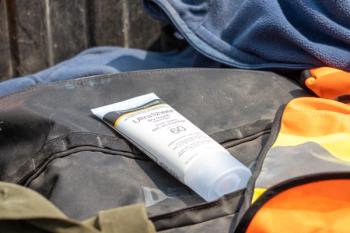
Two new Neutrogena facial sunscreens incorporate bemotrizinol, the first new sunscreen active ingredient added to the US OTC monograph in decades.
Learn more about the in-depth topics covered in the September 2025 print issue of Dermatology Times.
The September issue of Dermatology Times includes a collection of thought-provoking articles and topics ranging from patient-centered approaches to Mohs surgery to the impact of biologic utilization management programs in atopic dermatitis. Be sure to read the highlights from the issue below. Also, don’t miss a moment of Dermatology Times by signing up for our
Balancing Cure and Cosmesis in Mohs Surgery
The precise margin control and success rates of Mohs micrographic surgery (MMS) position it as a specialized method of treating skin cancers, particularly nonmelanoma types such as basal cell carcinoma and squamous cell carcinoma. It is the most effective treatment for skin cancer today, with the highest cure rate for most skin cancers—up to a 99% success rate. With MMS, the Mohs surgeon functions as both the surgeon and pathologist, working meticulously to ensure successful outcomes and patient safety. Surgical management becomes increasingly complex in tumors in anatomically challenging regions such as the nose, eyelid, lips, scalp, and nails, where functional and aesthetic outcomes are intertwined. Different technical considerations, reconstructive methodologies, and clinical strategies are employed in MMS for these areas. Herein, we discuss each area and present a case vignette.
Undertreated, Underdiagnosed: Experts Address Genital Psoriasis
Genital psoriasis, while affecting an estimated 6 million Americans, remains an underrecognized and undertreated subset of the broader psoriasis spectrum. This condition, which disproportionately impacts psychological well-being, intimacy, and daily function, is the focus of a recent publication by the Genital Psoriasis Wellness Consortium. Its 14 consensus statements—published in the Journal of the European Academy of Dermatology and Venereology (JEADV) Clinical Practice—represent a pivotal step toward standardizing care, improving patient-provider dialogue, and expanding treatment access for patients with genital involvement.
Upadacitinib Shows Strong Efficacy in Second Pivotal Phase 3 Study for Severe Alopecia Areata
Building on its momentum in alopecia areata (AA) research, AbbVie recently announced new positive top-line results from the second pivotal study in its phase 3 UP-AA clinical program evaluating upadacitinib (Rinvoq; AbbVie) for severe AA. In the second study of the UP-AA program (NCT06012240), both the 15 mg and 30 mg once-daily dose cohorts receiving treatment with upadacitinib achieved the primary end point, with 44.6% and 54.3% of patients, respectively, achieving greater than or equal to 80% scalp hair coverage (Severity of Alopecia Tool [SALT] ≤ 20) by week 24.
These responses were statistically superior to placebo (3.4%; P < .001), confirming upadacitinib’s potential as a targeted oral therapy for severe AA. Upadacitinib outperformed placebo across all ranked secondary end points, including more stringent thresholds of hair regrowth (SALT ≤ 10 and SALT = 0) and regrowth of eyebrows and eyelashes.
Impact of Biologic Utilization Management Programs in Atopic Dermatitis
Treatment for atopic dermatitis (AD) has evolved from primarily topical and oral therapy (largely generic) to include subcutaneously injected biologicals. Despite biologics’ increased efficacy, their high cost leads health plans and pharmacy benefit managers to implement utilization management (UM) programs to control spending, with equal or improved overall outcomes. UM programs may include prior authorization (PA) for initial prescriptions, reauthorizations for dose changes or continued use, step therapy, and clinical and/or prescriber requirements. UM programs may manage costs but introduce unintended barriers to optimizing patient outcomes, such as administrative burdens on providers, delayed treatments, and increased health care resource use. In an American Medical Association (AMA) survey, 93% of respondents indicated PAs lead to treatment delays, 82% stated PAs lead to treatment abandonment, and 29% indicated PAs lead to adverse events in their patients. In an American Hospital Association survey, most patients (62%) have had medical care delayed because of their insurance provider in the past 2 years, and 43% of those patients say their health has gotten worse as a result. A reevaluation of UM policies for AD is needed to address barriers, reduce costs, and maximize outcomes.
12 months ago
Cosmeceutical Myths12 months ago
Research-Inspired Tips From DERM 2025about 1 year ago
Balancing Cure and Cosmesis in Mohs Surgeryabout 1 year ago
Undertreated, Underdiagnosed: Experts Address Genital Psoriasisabout 1 year ago
A New Perspective on Seborrheic Dermatitis Managementabout 1 year ago
What Works for Patients with Alopecia Areata